The essentials in one glance
- Use crusty Spanish-style bread or a firm baguette, not soft sandwich bread.
- Keep the filling focused: one main ingredient and, at most, one or two accents.
- Extra virgin olive oil, ripe tomato, and salt do more work than heavy sauces.
- Ham, Manchego, tortilla, tuna, and roasted peppers are the safest classic directions.
- In Basque-style bars, pintxos are smaller and more composed, while bocadillos are the bigger handheld option.
- For UK kitchens, the best shortcut is to buy good bread and better filling, not more filling.
What makes a bocadillo different from an ordinary sandwich
A bocadillo is not just any sandwich with a Spanish accent. It is usually built on a split crusty loaf, often a baguette-style bread or a Spanish barra, and the structure matters as much as the filling. The bread is meant to carry the flavour, not disappear behind it.
That is why the ingredient list stays short. In the versions I trust most, you get one clear main filling and a small amount of support from olive oil, tomato, cheese, or a pepper. I think the biggest mistake is trying to turn it into a deli tower; the best bocadillos feel direct, not crowded.
| Format | Base | Typical size | Ingredient style |
|---|---|---|---|
| Bocadillo | Split crusty bread | Handheld meal or substantial snack | One main filling, minimal extras |
| Tapa | Any small serving | Shared plate or small portion | Broader range, hot or cold |
| Pintxo | Often bread or a skewer | One- or two-bite bar snack | Compact, composed, usually neat |
That difference matters because the same Spanish pantry can behave very differently depending on the format. A bocadillo wants comfort and structure; a tapa wants flexibility; a pintxo wants precision. Once you see that, the ingredient choices start to make more sense.
The ingredients that matter most
When I build a bocadillo, I do not start with the filling. I start with the pieces that make the filling taste alive. These are the ingredients that do the heavy lifting.
| Ingredient | Typical amount for 1 large bocadillo | Why it matters | Good UK-friendly choice |
|---|---|---|---|
| Bread | 1 split loaf, about 25 to 30 cm | Gives crunch, structure, and most of the texture | Crusty baton, baguette, or tight-crumb country bread |
| Extra virgin olive oil | 1 to 2 tbsp | Adds fruitiness, moisture, and a clean finish | Use a peppery, good-quality oil, not a bland one |
| Tomato | 1 small ripe tomato or 1/2 large one | Brings freshness and light acidity | Ripe plum, vine, or similar tomatoes |
| Salt | 1 small pinch | Makes the bread, oil, and filling taste clearer | Fine sea salt or flaky salt |
| Main filling | 80 to 100 g | Gives the sandwich its identity | Ham, cheese, tuna, tortilla, calamari, or chorizo |
| Accent ingredient | 20 to 30 g | Creates contrast without taking over | Roasted peppers, olives, or piparras |
The pattern is simple: bread, moisture, salt, and one strong personality in the middle. If you get those right, the sandwich feels Spanish even before you start choosing the filling.

Classic fillings that earn their place
The combinations I reach for first are the ones that taste honest and do not need fussing. They are classic because they solve a real problem: they make a handful of ingredients taste complete.
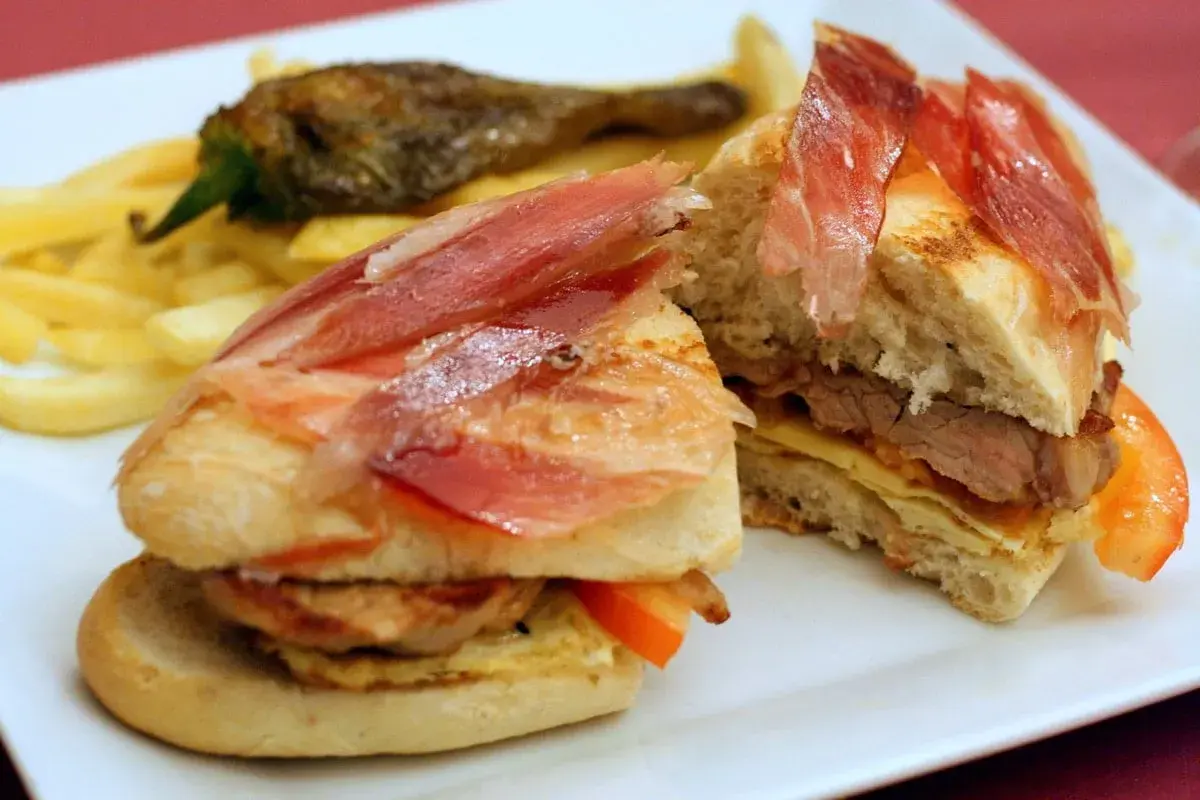
- Serrano ham, tomato, and olive oil - This is the cleanest starting point. The saltiness of the ham meets the sweetness of the tomato, and the oil ties everything together. If you only make one bocadillo, make this one.
- Serrano ham and Manchego - The ham brings salt and depth, while Manchego adds a firm, nutty edge. It is a strong UK-friendly choice because both ingredients are now easy enough to source without much hunting.
- Tortilla espanola and roasted peppers - Thick slices of Spanish omelette give a more filling, almost lunch-like feel. I like it with peppers because the sweetness keeps the egg and potato from tasting heavy.
- Tuna in olive oil with olives or piparras - This is sharper and lighter than many people expect. Olive-oil-packed tuna tastes more considered than a mayonnaise-heavy tuna mix, especially when the bread is good.
- Fried calamari with lemon - A Madrid-style favourite that proves a bocadillo does not need a long ingredient list to feel complete. The calamari should stay crisp; too much sauce will blur the whole thing.
- Chorizo with mild cheese - This one is warmer and more robust. I prefer it when the bread is sturdy enough to hold the fat and spice without turning limp.
What connects all of them is contrast. Salty with fresh, rich with sharp, soft with crisp. That balance is more important than any single ingredient name on its own.
How tapas and pintxos change the ingredient choice
Tapas and pintxos are close relatives of the bocadillo, but they do not behave the same way. Tapas can be almost anything served in a small portion, hot or cold, while pintxos are usually more structured and often built on bread. In the Basque style, a pintxo is commonly held together with a skewer or toothpick, which is why the ingredients tend to be compact and tidy.
That changes how I think about assembly. A bocadillo can handle a little more moisture because the filling is enclosed, but a pintxo needs balance and architecture. The bread should support the topping without becoming soggy, and the topping should look finished rather than thrown on.
| Style | Ingredient logic | Best approach |
|---|---|---|
| Tapas | Flexible, varied, often shared | Use ingredients that can sit well on a plate and travel between bites |
| Pintxos | Small, composed, often skewered | Use compact toppings that hold shape and stay neat |
| Bocadillos | Enclosed, more substantial, handheld | Keep the filling focused and the sauces light |
This is why a Gilda, with anchovy, olive, and piparra, feels so Basque: the ingredients are tiny, but the balance is precise. The same logic works in a bocadillo, only on a larger, more relaxed scale.
How I would build one in a UK kitchen
When I make a bocadillo at home, I keep the process very plain. The fewer decisions I have to make at the last minute, the better the result usually is.
- Choose a crusty loaf with a tight crumb. In the UK, a good baton or baguette is usually closer to the target than a soft roll.
- Split it lengthwise and, if the bread is very soft, toast it lightly. You want enough structure to hold the filling without turning brittle.
- Rub the cut side with ripe tomato if the filling benefits from freshness, then drizzle 1 to 2 tablespoons of olive oil.
- Add the main filling in a thin, even layer. For ham, 80 to 100 g is usually enough for one large sandwich; for cheese, 30 to 40 g is plenty if the flavour is strong.
- Finish with a pinch of salt if the filling needs it, close the bread, press gently, and eat it while the texture still feels lively.
The best UK adaptation is not a compromise on flavour; it is a compromise on sourcing. You may not always find a perfect barra, but you can still choose bread with enough crust and enough bite. That does most of the work.
The mistakes that make the flavour feel generic
The line between a proper bocadillo and an ordinary sandwich is thinner than most people think. These are the mistakes I see most often.
- Using soft bread - It collapses too easily and makes the filling feel flat. A bocadillo needs some chew.
- Overfilling it - Too many layers turn the sandwich into a mess. One main ingredient plus one accent is usually enough.
- Letting the tomato flood the bread - Tomato should refresh, not soak. Use it with control and always season it.
- Relying on heavy sauces - Mayonnaise can work in a few styles, but too much of it pushes the sandwich away from its Spanish character.
- Serving cold, dense fillings straight from the fridge - Ham and cheese taste better when they are not icy. A few minutes at room temperature changes the whole thing.
- Forgetting that bread is part of the flavour - The bread should not just hold the filling; it should contribute something crisp and slightly wheaty.
If a sandwich needs extra garnishes to feel complete, I usually take that as a sign that the structure is off. The better answer is almost always to simplify.
A small pantry that keeps the style easy at home
Once you have the right cupboard basics, it becomes much easier to move between bocadillos, tapas, and pintxos without planning a full menu. I would keep these ingredients on hand:
- Good crusty bread or the ingredients to buy it fresh
- Extra virgin olive oil
- Fine sea salt or flaky salt
- Ripe tomatoes
- Serrano ham or another good dry-cured ham
- Manchego or a similar firm cheese
- Tuna packed in olive oil
- Roasted peppers, piparras, or olives
- Leftover tortilla espanola, if you have it
My rule is simple: keep the ingredient count low, but keep the quality high. If the filling is bold, let the bread and oil stay quiet; if the filling is mild, let tomato, peppers, or a good cheese carry the lift. That is the difference between a sandwich that merely looks Spanish and one that actually tastes the part.
