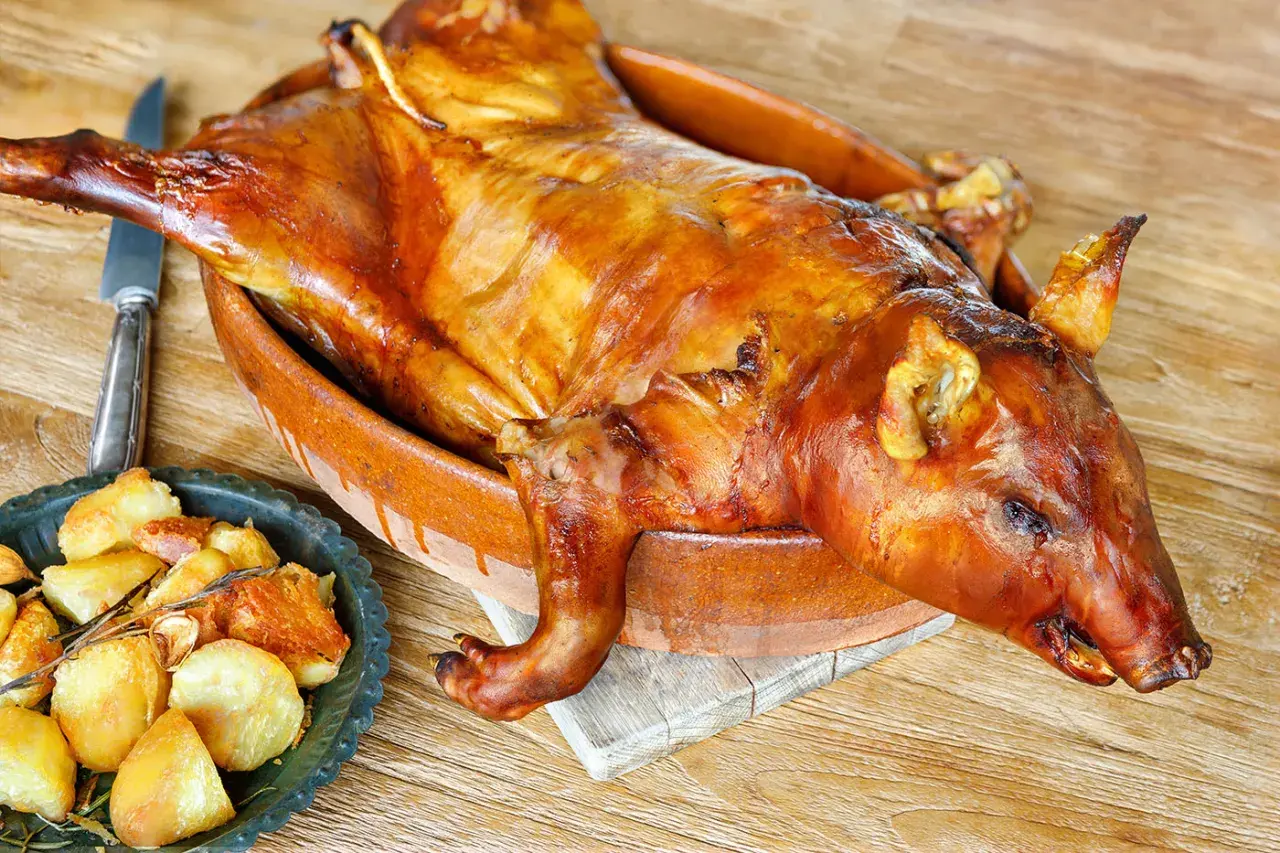
A good suckling pig roast is built on restraint: the meat is young and delicate, the skin needs to stay dry, and the flavour should feel clean rather than crowded. In this article I cover how to choose the right size, how to roast it for proper crackling, which seasoning paths work best, and what I would serve with it in a Basque-leaning meal. The aim is to make the dish practical at home without flattening its character.
The simplest formula is salt, heat, and a sharp contrast on the plate
- For the best texture, the skin must be dry before the pig goes into the oven.
- A 3 to 6 kg pig is the most manageable range for a home oven; larger animals become a logistics exercise.
- Use a rack or slats so the pig roasts above any water in the pan rather than steaming in it.
- In the UK, I still check the thickest part reaches 70°C for 2 minutes before serving.
- The most useful sides are simple: a crisp salad, potatoes, and a drink with enough acidity to cut the richness.
What makes suckling pig different from ordinary roast pork
Suckling pig is not just another pork roast. Because the animal is very young, the flesh is finer, the fat layer is thinner, and the skin can turn beautifully crisp when the heat is controlled well.
That is why whole roasting works so well. You get a contrast of tender meat and brittle skin that feels celebratory, which is exactly how I like to serve it in a Basque-leaning meal. I would not bury it under a heavy rub or a sweet glaze; those flavours belong to sturdier cuts.
The cleanest version depends on confidence, not complexity. Once you accept that, the rest of the recipe decisions become much easier.
Once you understand that balance, the next job is choosing the right size and equipment.
How I choose the right pig and the kit to roast it
For a home kitchen in the UK, I think in practical numbers first. A 3 to 6 kg pig is the easiest range to handle in a normal oven, and anything larger starts to demand serious tray space and patience.
| Weight | Rough servings | Guide cooking time | Best use |
|---|---|---|---|
| 3 to 4 kg | 4 to 6 | About 2.5 to 3 hours | Family meal or small dinner |
| 5 to 6 kg | 6 to 10 | About 3 to 4 hours | Proper centrepiece for a gathering |
| 7 to 9 kg | 10 to 14 | About 4 to 5 hours | Large table, more oven management |
I would not attempt it without a deep roasting tin, a rack or wooden slats to lift the pig above the water, and a probe thermometer. The liquid in the tray is there to help create steam and protect moisture, but the meat should never sit in it directly. If you want the skin to crisp, that separation matters.
If you are ordering from a butcher, ask for the pig cleaned and ready to roast, and make sure you know whether it is whole or split. A split pig is easier to manage in a domestic oven, while a whole one makes a stronger centrepiece. Either way, the method below still holds.
With the size sorted, the actual roasting method becomes much easier to control.
How I roast it for crackling skin and tender meat
My default approach is simple: dry skin, steady heat, final blast. It is not the flashiest method, but it is the one I trust when the pig needs to taste like itself.
- Dry the skin thoroughly. I pat the pig dry, then salt it generously, including the cavity. If I have time, I leave it uncovered in the fridge for several hours so the skin loses surface moisture.
- Season with restraint. If I add aromatics, I keep them inside the cavity rather than coating the skin. Garlic, thyme, bay, and a little lemon zest are enough.
- Roast above the water. The pig should sit on a rack or slats, not in the liquid. That lets the oven heat circulate and keeps the flesh roasting rather than steaming.
- Use heat in stages. I start hot at 220 to 230°C conventional, then drop to 170 to 180°C for the middle of the cook. For a 3 to 4 kg pig, I start checking after about 2.5 hours; for 5 to 6 kg, after about 3 hours; for larger pigs, later still.
- Check the centre, not the clock. The thickest part should reach 70°C for 2 minutes if you are following UK safety guidance. The skin should be deep golden and blistered by the end.
- Rest before carving. I give it 20 to 30 minutes before slicing. That keeps the juices in the meat and stops the board from becoming the main event.
If the skin is colouring too slowly near the end, I increase the heat for the final stretch instead of rushing the whole roast. That gives me a cleaner crackle and less chance of drying out the meat.
Once the method is clear, the next question is how far you should push the flavour.
The flavour directions that suit it best
Basque-leaning cookery tends to favour a lighter hand, and I think that suits suckling pig perfectly. The point is not to disguise the meat; it is to give it just enough support to taste more vivid at the table.
| Style | What I use | Why it works |
|---|---|---|
| Basque-leaning classic | Sea salt, a little olive oil, water in the tray | Keeps the pork flavour front and centre and helps the crackling stay clean |
| Cider and garlic | Garlic, thyme, bay, a splash of dry cider in the pan juices | Adds aroma and a gentle sweetness without turning the roast heavy |
| Citrus and herb | Lemon or orange zest, rosemary, parsley stems | Lifts the richness and works well for a festive meal |
If I had to pick one for a dinner in the UK, I would start with the classic version or the cider-and-garlic variation. They give enough character to feel intentional without burying the pork under strong seasoning.
I would avoid sugary glazes, thick spice pastes, and anything that turns the skin tacky before it enters the oven. With this cut, too much help is usually the wrong help.
Once the roast is seasoned, the plate around it becomes just as important.
What I serve with it at a Basque-leaning table
I like the table to feel bright and a little rustic. Rich meat needs acid and crunch, so I keep the sides simple and let them cut through the fat rather than compete with it.
- Salad: iceberg lettuce and spring onion with cider vinegar and extra virgin olive oil.
- Potatoes: roast, crushed, or gently fried until the edges catch.
- Vegetables: blistered peppers, charred leeks, or greens with garlic.
- Bread: plain bread or a good crusty loaf for the juices.
- Drink: txakoli, a dry cider, or a light white wine with enough acidity to keep the meal lively.
I prefer to carve at the table if the crackling is behaving itself. That first slice tells you immediately whether the skin has kept its crunch and whether the centre is still juicy.
The biggest failures usually happen before the pig ever reaches the table.
The mistakes that ruin the texture
Most bad suckling pig comes down to the same handful of errors. They are all avoidable, and none of them are glamorous.
- Starting with wet skin. Dry it well and do not drown it in marinade.
- Letting the pig sit in the liquid. Use a rack or slats so the heat circulates and the meat roasts, not steams.
- Relying on high heat alone. A strong start helps the crackling, but the middle of the cook should be controlled.
- Skipping the thermometer. I still want a core temperature of 70°C for 2 minutes in the thickest part.
- Carving too soon. Rest it for 20 to 30 minutes, or the juices run out onto the board.
- Using heavy sauces. If the sauce needs to rescue the dish, the roast is already off balance.
The rule I keep coming back to is simple: if the skin is already working hard, do not ask the flavouring to do too much as well.
Once those traps are out of the way, the last few minutes are mostly about restraint.
The last checks before the pig reaches the table
Before serving, I give the roast one final check: the centre is safe, the skin is set, and the resting time has been respected. If the crackling has softened in the minutes before carving, I prefer a short blast in a very hot oven over any kind of sauce-based fix.
Leftovers are worth planning for, but they need a different approach from the first serving. Keep the crackling separate from the meat, chill both quickly, and reheat the pork gently so it stays tender; once the skin picks up steam, there is no real way back. That is why the best suckling pig recipes feel almost spare - they trust the meat, protect the skin, and let the meal build its own drama at the table.
