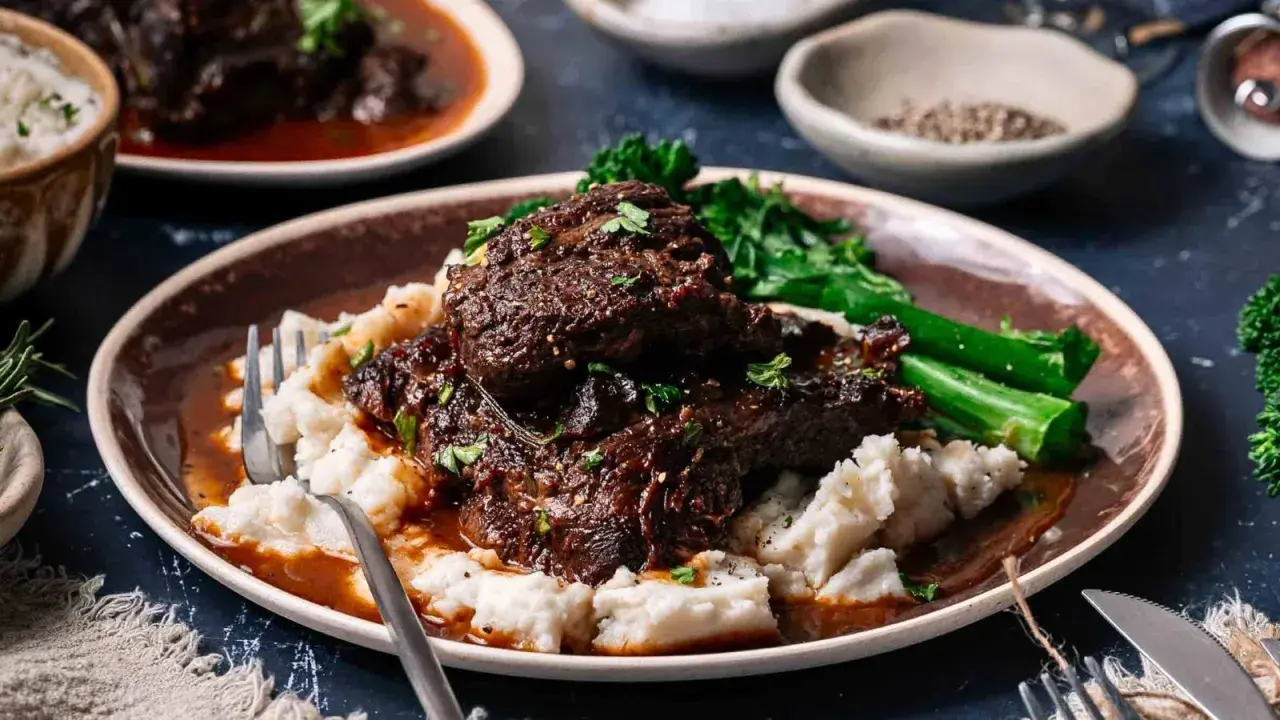
The appeal of beef cheek Spanish dishes is simple: the cut looks ordinary, but when you braise it properly it gives you deep flavour, a lacquered sauce and meat that turns silky instead of dry. I’d approach it as a slow-cooked comfort dish with a clear Spanish accent - paprika, sherry, tomato, garlic and enough time for the collagen to melt. This guide covers how to choose the meat, how to build the flavour, which cooking method works best and how I would serve it in a British kitchen.
What matters most before you start cooking
- Beef cheeks need low, slow cooking because they are rich in collagen and connective tissue.
- A Spanish-style flavour base usually starts with onion, garlic, tomato, smoked paprika and dry sherry or red wine.
- Oven braising at 150-160C fan for about 3 to 4 hours usually gives the best balance of tenderness and sauce depth.
- Pressure cooking is faster, but you usually lose some of the layered flavour that comes from a long braise.
- Resting the dish overnight improves the texture and makes the sauce easier to skim and finish.
- Serve it with mash, polenta, crusty bread or buttery greens rather than delicate sides that disappear under the sauce.
Why Spanish-style beef cheeks work so well
Beef cheeks are one of those cuts that reward patience more than technique. They come from a hard-working muscle, so they are dense, sinewy and packed with connective tissue. That sounds like a disadvantage until you braise them, because the collagen melts gradually and turns into a rich, glossy sauce instead of leaving you with dry meat.
That is why I like them for Spanish and Basque-inspired cooking. The cuisine is often built around a few strong ingredients that do a lot of work: good olive oil, onion, garlic, tomatoes, peppers, wine, paprika and stock. You do not need a long ingredient list. You need restraint, heat control and time.
| Cut | Best texture after slow cooking | Why I would choose it | What to expect |
|---|---|---|---|
| Beef cheeks | Silky and spoon-tender | Deepest sauce and richest mouthfeel | Needs the longest braise, but pays it back |
| Beef shin | Firm, meaty strands | Great for everyday stews | Slightly less unctuous than cheeks |
| Beef chuck | Soft chunks with more bite | Useful if you want a budget braise | Less gelatin, so the sauce feels lighter |
Once you understand how the cut behaves, the next question is what to buy and how much trimming you should expect before the pan even goes on the heat.
How to choose and trim them in the UK
If I am buying cheeks in the UK, I ask for either trimmed cheeks or whole cheeks that I can finish myself. Whole cheeks are usually better value, but they come with more silverskin and hard outer membrane. Trimmed cheeks are easier for a weeknight cook because the butcher has already done the awkward part.
| What you buy | What it means in practice | My take |
|---|---|---|
| Whole cheeks | More trimming, more waste, usually better value | Best if you do not mind a little prep |
| Trimmed cheeks | Ready to season and brown | Worth paying more when time matters |
| Frozen cheeks | Convenient and often solid quality | Fine if thawed slowly in the fridge overnight |
I like to plan for roughly 300-500 g per cheek, depending on how the butcher has trimmed them. For four people, 1.2-1.5 kg is usually enough if you are serving proper sides. If you want generous leftovers, I would go closer to 1.8 kg.
Trim off any thick, hard membrane, but do not obsess over removing every trace of connective tissue. Some of that is exactly what gives the sauce body. The important thing is to cut away the obviously tough bits that will never soften.
Once the meat is sorted, the real character of the dish comes from the flavour base, and that is where the Spanish identity starts to show.
The flavour base that gives the dish its Spanish character
I keep this part disciplined. A good Spanish-style braise should taste confident, not crowded. The base is usually a softened mix of onion, garlic and sometimes carrot or celery, cooked until sweet, then lifted with tomato, paprika and wine. In Spanish cooking, that kind of foundation is often called a sofrito, which simply means the aromatic base has been cooked slowly enough to lose its raw edge.
For this kind of beef cheek dish, I would use smoked paprika for warmth, not heat; tomato paste for depth; dry sherry or red wine for acidity and complexity; and a small amount of stock to carry everything into a sauce. A bay leaf and a sprig of thyme are enough for herbiness. If I want a Basque accent, I might add a little Espelette pepper or a few strips of roasted red pepper, but I would keep the overall seasoning clean.
| Ingredient | What it adds | Why it matters |
|---|---|---|
| Onion and garlic | Sweetness and savoury depth | They stop the sauce tasting flat |
| Carrot and celery | Body and background sweetness | Useful if you want a more rounded braise |
| Smoked paprika | Spanish warmth and colour | Use enough to register, not enough to dominate |
| Tomato paste | Umami and a darker sauce | It gives the braise a more finished flavour |
| Dry sherry or red wine | Acidity and complexity | Helps balance the richness of the meat |
| Bay leaf, thyme, parsley | Freshness and structure | Keeps the dish from feeling heavy |
I would avoid overloading the pot with spices. Too much paprika, chilli or sweetness can turn a good braise muddy. The point is to let the beef cheeks taste like themselves, only richer and more polished. That balance becomes even clearer once you decide how you want to cook them.
Which cooking method gives the best result
There is more than one way to get tender cheeks, but not every method gives the same kind of result. If I want the deepest sauce and the cleanest flavour, I usually choose the oven. If I need convenience, a slow cooker is useful. A pressure cooker can save time, but it often needs extra finishing on the hob to bring the sauce back to life.
| Method | Typical time | What it does well | Trade-off |
|---|---|---|---|
| Oven braise | 3 to 4 hours at 150-160C fan | Best overall flavour and sauce control | Needs a little more attention than a slow cooker |
| Slow cooker | 7 to 8 hours on low | Very easy and forgiving | Sauce can taste thinner unless reduced at the end |
| Pressure cooker | 60 to 75 minutes plus finishing | Fastest route to tenderness | Less developed flavour, so finishing matters more |
| Stovetop | 3 to 4 hours at a gentle simmer | Good if you like to monitor the sauce closely | More hands-on and easier to overheat |
My own preference is the oven because the heat is even and the sauce reduces in a more controlled way. That leaves the meat tender without forcing it, which is exactly what you want from a cut like this.

My braising method for meltingly tender cheeks
For four to six people, I usually start with 1.2-1.5 kg beef cheeks, 2 tbsp olive oil, 1 large onion, 2 carrots, 2 celery sticks, 4 garlic cloves, 2 tbsp tomato paste, 1 tbsp smoked paprika, 150 ml dry sherry, 250 ml red wine, 500-750 ml beef stock, 2 bay leaves and a few thyme sprigs. That is enough to create a deep sauce without drowning the meat.
1. Brown the meat properly
Pat the cheeks dry, season them well and sear them in batches over a hot pan until you get a dark brown crust. I would not rush this. Four to five minutes per side is a good guide, and the pan should be hot enough to make the meat sizzle immediately. If the cheeks are wet, they steam rather than brown, and you lose flavour before the braise even begins.
2. Build the base slowly
Once the cheeks are out, lower the heat and soften the onion, carrot and celery for 8 to 10 minutes. Add the garlic, tomato paste and paprika for about 30 seconds, just long enough to wake everything up without burning the paprika. Then pour in the sherry and scrape up the browned bits from the pan. Those bits are not residue; they are the flavour.
3. Braise gently, not aggressively
Return the beef, add stock until it comes about halfway up the meat, tuck in the bay leaves and thyme, then cover and cook at 150-160C fan for about 3 to 4 hours. The pot should barely bubble. If it boils hard, the sauce can turn greasy and the meat tightens instead of relaxing into tenderness. I check for doneness when a fork twists through the flesh with very little resistance.
Read Also: Perfect Roast Lamb - Juicy, Tender & Flavorful Every Time
4. Rest, skim and finish the sauce
When the cheeks are done, I let the pot rest for 20 to 30 minutes, or ideally overnight in the fridge. That resting time makes a real difference: the fat rises, the sauce settles and the meat firms up just enough to handle cleanly. Before serving, I skim the surface, reduce the sauce if it is too loose, and taste for salt and acidity. If it feels heavy, a teaspoon of sherry vinegar can sharpen it without making it sour.
That process sounds long on paper, but most of it is passive. The main job is to keep the heat gentle and resist the temptation to hurry the cut. Once the braise is right, the final question is what to put beside it so the plate feels complete rather than overloaded.
What to serve with it in a Basque-leaning meal
I like sides that absorb sauce, add freshness or bring a bit of contrast. That is how the dish stays rich without becoming monotonous. For a Basque-leaning table, I would keep the accompaniments simple and seasonal.
- Mashed potatoes for the classic, comforting version. They soak up the sauce better than almost anything else.
- Buttery polenta if you want a smoother, slightly more restaurant-style plate.
- Crushed potatoes with olive oil if you want something rustic and less heavy than mash.
- Buttered cabbage or cavolo nero to cut through the richness with a green note.
- Roasted peppers or piperade-style vegetables to lean more clearly into Spanish and Basque flavours.
- Crusty bread because some sauces are too good to leave on the plate.
For wine, I would stay in Spain and go for something with enough acidity to handle the sauce, such as Rioja or another medium-bodied red. If the meal is more casual, dry cider also works surprisingly well with the richness of the meat. The point is balance, not ceremony.
Once the serving plan is clear, it becomes easier to see where this dish usually goes wrong, because most mistakes are not about flavour ideas. They are about heat, timing and restraint.
Where cooks usually lose the dish
The biggest mistake is trying to cook cheeks like a faster braise. They are not a quick dinner cut, and they do not reward impatience. If I had to pick the most common problems, they would be these:
- Skipping the browning step - the sauce ends up flatter and less complex.
- Using too much heat - the meat tightens and the sauce can split or become greasy.
- Adding too much liquid - cheeks should braise, not swim.
- Overdoing smoked paprika - the flavour becomes dusty or bitter instead of warm.
- Serving it too early - the sauce tastes less coherent before it has rested.
If the sauce feels thin at the end, reduce it uncovered for 10 to 15 minutes. If it tastes heavy, add a splash of vinegar rather than more salt. And if the meat is still chewy after the expected time, do not panic and do not raise the heat; give it more gentle cooking. Cheeks often need a little longer than people expect, especially if the pieces are large.
Those small corrections are what turn a decent braise into a memorable one, and they lead neatly to the version I would actually cook first in a British home kitchen.
The version I would make first for a British table
If I were cooking this at home, I would keep the recipe focused: well-trimmed beef cheeks, onion, carrot, garlic, smoked paprika, tomato paste, dry sherry, a modest splash of red wine, bay leaf, thyme and a good beef stock. I would braise it in the oven, rest it overnight and serve it with mashed potatoes and tender greens. That is the cleanest route to the deep, Spanish-leaning flavour people usually want from this dish.
- Best make-ahead window: 24 hours, because the sauce improves after resting.
- Best reheating method: low oven, covered, until the meat and sauce are hot through.
- Best leftover use: spooned over mash, folded into pasta or tucked into a pie.
- Best finishing move: a small handful of parsley and a tiny splash of sherry vinegar.
That is the version I trust most: restrained, slow and built around the meat rather than heavy seasoning. If you keep the heat gentle and the sauce balanced, Spanish-style beef cheeks become the kind of dish that feels generous enough for a weekend table but practical enough for a British home cook.
