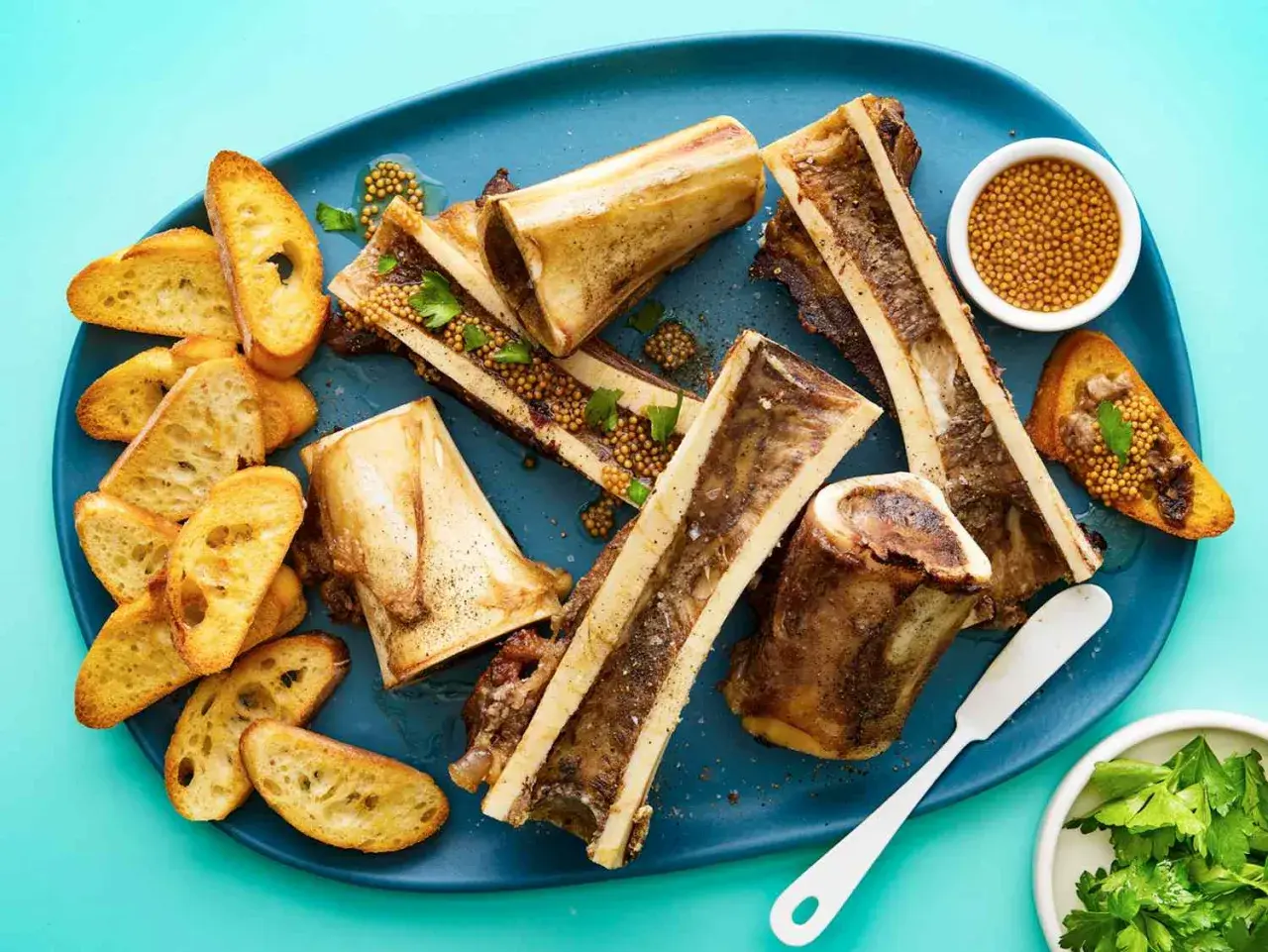
Roasted marrow is one of those dishes that looks minimal on the plate but depends on a few precise choices: the right bones, a hot oven, enough salt, and something sharp to cut the richness. This bone marrow recipe keeps the method simple and practical, then shows how I like to serve it with toast, herbs, and a Basque-leaning finish that feels at home on a restaurant table. The payoff is a starter that tastes deep, savoury, and indulgent without becoming heavy.
What matters most when cooking marrow
- Ask a butcher for split or canoe-cut marrow bones so the centre cooks evenly and is easy to scoop.
- Use a hot oven and keep a close eye on the bones after 12 minutes.
- The marrow should be soft and glossy, not fully melted out of the bone.
- Serve it with toast and something acidic, such as lemon, capers, pickled peppers, or a sharp herb salad.
- Beef bones give a deeper flavour; veal bones are milder and more delicate.
- Do not let the plate sit around before serving, or the bread will go soggy and the texture will suffer.
What marrow tastes like and why it needs contrast
Marrow is rich, buttery, and deeply savoury, but it is not a dish I would ever plate on its own and call it complete. It behaves more like a luxurious spread than a meat cut, which is exactly why contrast matters: you need salt, acid, and crunch to keep the fat from dominating the whole bite.
I usually think of it as nose-to-tail cooking at its cleanest. There is very little to hide behind, so the quality of the bones, the heat of the oven, and the sharpness of the garnish all matter more than an elaborate sauce ever would. Veal marrow is lighter and a little more refined; beef marrow is meatier, rounder, and better if you want a stronger flavour.
Choose the right bones and supporting ingredients
| Ingredient | Amount for 4 as a starter | Why it matters |
|---|---|---|
| Split marrow bones | 4 large beef bones, or 6 smaller veal bones | Split bones roast evenly and are much easier to serve. |
| Flaky sea salt and black pepper | To taste | Simple seasoning is enough; the marrow already brings plenty of flavour. |
| Sourdough or country bread | 4 thick slices | It needs a sturdy base that can hold the fat without collapsing. |
| Flat-leaf parsley | 1 large bunch | Fresh herbs keep the plate bright and stop the dish feeling too dense. |
| Shallot and capers | 2 shallots and 1 to 2 tbsp capers | They add sharpness, salt, and texture. |
| Lemon or vinegar | 1 lemon, or 1 tbsp sherry or red wine vinegar | Acid is what keeps the richness in check. |
| Optional extras | Garlic, pickled peppers, or a little chopped tarragon | These work well if you want a more Basque-leaning finish. |
In the UK, I would ask the butcher for center-cut, split bones rather than whole rounds. If the bones look very bloody or have been sitting in storage, I sometimes soak them in cold salted water for 20 to 30 minutes, then dry them thoroughly. That step is not mandatory, but it gives a cleaner flavour and a better roast.

How I roast marrow bones without losing the texture
- Heat the oven to 220C, or 200C fan, and line a roasting tray with baking paper or foil.
- If needed, soak the bones briefly in cold salted water, then drain and pat them completely dry.
- Set the bones cut-side up, season lightly with salt and pepper, and keep them spaced out so the heat can move around them.
- Roast for 12 to 18 minutes, checking early if the bones are small or veal-based.
- Take them out when the marrow is soft, glossy, and just beginning to bubble at the edges. Do not wait until it runs out of the bone.
- Toast the bread during the last few minutes so everything lands on the table hot.
I like to give marrow only the shortest possible rest, usually a minute at most. Any longer and the texture starts to lose its edge. If I am working with veal bones, I check them a little earlier because they can go from perfect to overly loose very quickly.
How to serve it so the richness stays in balance
My default is simple: one split bone per person as a starter, or two bones shared between two people if there is steak or roast meat to follow. Spoon the marrow onto hot toast, sprinkle over the salad, and finish with a little extra salt. A marrow spoon is useful, but a small teaspoon works fine if that is what you have.
For the salad, I usually keep the dressing sharp and spare. The marrow already brings the richness, so the garnish should do the opposite job.
| Serving style | What to pair with it | Why it works |
|---|---|---|
| Classic starter | Parsley, shallot, capers, lemon, toast | This is the cleanest and most reliable version. |
| With steak | Sirloin, ribeye, or chips | The marrow adds depth without needing a heavy sauce. |
| Basque-leaning plate | Pickled peppers, grilled bread, olive oil, herbs, and a dry Basque white such as txakoli | The acidity and freshness keep the dish lively. |
| Shared small plate | Radishes, bitter leaves, and extra toast | Good when you want something rich but not overwhelming. |
If I want the dish to feel a little more restaurant-like, I add one crisp green element and one pickled element, but I stop there. Once you start piling on creamy sauces or multiple rich sides, the marrow stops feeling elegant and starts feeling blunt.
The mistakes that make marrow feel too heavy
- Overcooking the bones until the marrow liquefies and disappears into the tray.
- Skipping the acid, which leaves the dish flat and cloying.
- Using thin bread that collapses as soon as the marrow hits it.
- Seasoning too late, after the marrow has already cooled slightly.
- Building the plate too early, which makes the bread soggy and the texture muddy.
The biggest mistake is usually not lack of flavour but lack of restraint. Marrow is already intense, so I prefer one clear seasoning path: salt, acid, herbs, toast. That is enough to make the dish feel complete.
Why restraint makes the dish better than cleverness
If I were serving this in a Basque-inspired setting, I would keep the marrow itself classic and use the surrounding elements to shape the mood. Think grilled sourdough rubbed with garlic, a parsley salad loosened with lemon or sherry vinegar, a few chopped pickled peppers, and maybe a spoon of olive oil with capers for extra brightness. That gives the plate a regional feel without distracting from the marrow.
The reason this works is simple: Basque cooking often respects a strong ingredient and gives it clean, direct support instead of burying it under layers. I would do the same here. For me, the sweet spot is one hot bone, one sharp salad, and one sturdy piece of toast. When those three parts are right, the dish feels generous, polished, and far more satisfying than a more complicated version ever needs to be.
