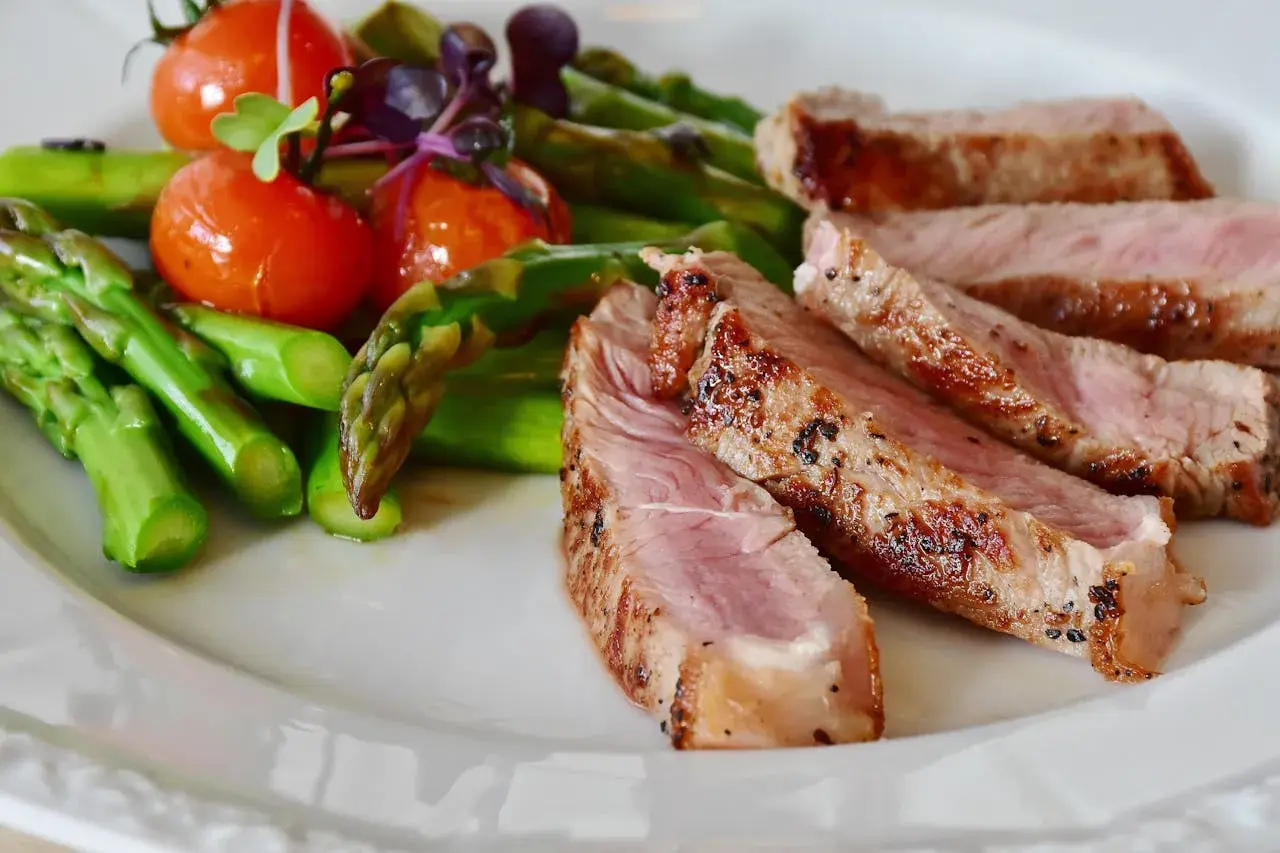
A good Iberico pork chop recipe is mostly about control, not complexity. I keep the seasoning restrained, render the fat slowly, and finish with enough heat to build a crust without stealing the chop’s natural sweetness. In the sections below, I walk through the cut to buy, the prep I trust, the cooking timings, and the way I serve it in a Basque-leaning meal.
The few decisions that make the chop succeed
- Choose a bone-in chop about 2.5 to 3 cm thick so the fat can render without drying the meat.
- Salt early if you can; a short dry brine gives a better crust and more even seasoning.
- Start fat-side down on medium-low heat, then finish with a hotter sear and a short rest.
- Use a thermometer if you want consistency; the UK benchmark is stricter than the medium finish many cooks prefer.
- Keep the sauce light: cider, shallot, herbs, and a little vinegar are enough.
What makes these chops different from regular pork
Iberico pork has a deeper, nuttier flavour and more intramuscular fat than the lean chops many British cooks are used to. That marbling is the whole point: it gives you a richer bite, but it also means the chop needs a gentler approach than a standard weeknight pork steak. If you blast it too hard from the start, the outside can brown before the fat has properly rendered, and the texture turns greasy instead of silky.
I always look for bone-in chops around 2.5 to 3 cm thick. Thin chops cook too quickly, which makes it harder to get a good crust without overshooting the centre. Bone-in cuts also keep a little more moisture in the meat and give you a more forgiving window at the pan. Once you understand that balance, the rest of the method becomes much simpler.
| Cut | Why I like it | What to avoid |
|---|---|---|
| Bone-in, 2.5 to 3 cm thick | Best flavour, best fat render, easiest to cook evenly | Very little, as long as the pan is not overcrowded |
| Boneless, medium-thick | Faster to cook and easier to slice | Drying out if the heat is too high for too long |
| Thin supermarket-style chop | Convenient when time is tight | Hard to render properly, easy to overcook |
That is why I treat Iberico more like a well-marbled steak than a standard pork chop. With the right thickness, the cooking method can stay simple and still feel special.
What I set out before the pan
I do not bury Iberico under a long marinade. The meat already has enough character, so I build flavour in layers: salt, a little fat, a few herbs, and a light acidic finish. For two chops, this is what I usually use:
| Ingredient | Amount | Why it matters |
|---|---|---|
| Iberico pork chops | 2 chops, 250 to 350 g each | The centrepiece; thick enough to sear without drying out |
| Fine sea salt | About 1 tsp total | Improves seasoning and helps dry the surface |
| Black pepper | About 1/2 tsp | Sharpens the flavour without masking the pork |
| Neutral oil or light olive oil | 1 tbsp | Helps the first sear without burning |
| Butter | 1 tbsp | For basting and a glossy finish |
| Garlic and thyme or rosemary | 2 cloves and 2 sprigs | Gives the fat and pan juices a clean aromatic lift |
| Dry cider or white wine | 100 ml | Optional pan sauce base |
| Sherry vinegar or lemon juice | 1 tsp | Brightens the final sauce |
If I have the time, I dry-brine the chops: I salt them, place them on a rack, and leave them uncovered in the fridge for 4 to 12 hours. That gives a better crust and more even seasoning. If I am cooking on the same day, I still salt them at least 20 minutes ahead and pat them dry before they hit the pan.
With the prep done, the actual cooking is straightforward and very repeatable.

The cooking method I use for a restaurant-style result
I use a cast-iron or other heavy pan because it holds heat steadily. A light pan will still work, but it is easier to lose control when the fat starts to render. The sequence matters here: render first, sear second, baste near the end, then rest.
- Take the chops out of the fridge 20 to 30 minutes before cooking so they lose the worst of the chill. Pat them very dry with kitchen paper.
- If there is a thick fat cap, score it lightly with a sharp knife. Do not cut into the meat; you only want to help the fat relax in the pan.
- Heat the pan over medium-low heat and add the oil. Set the chops in fat-side down first, using tongs to hold them upright if needed.
- Let the fat render slowly for 5 to 7 minutes, until it looks golden and some of the excess fat has melted out. This is the part most people rush, and it is usually the difference between a beautiful chop and a heavy one.
- Turn the heat up to medium-high and sear the flat sides for about 1 to 2 minutes per side, just long enough to build colour.
- Add the butter, garlic, and herbs. Tilt the pan and spoon the foaming butter over the chops for 30 to 60 seconds.
- If the chop is especially thick, move the pan to a 180°C fan oven for another 2 to 4 minutes. I only do this when the centre still needs a little help after the stovetop sear.
- Rest the chops on a board or warm plate for 5 to 10 minutes before serving. This is not optional if you want juicy meat.
At this point, the only thing left is to stop cooking at the right moment, which is where a thermometer saves a lot of guesswork.
How I judge doneness without guessing
Colour alone is not enough with Iberico. The meat can stay a little rosy and still be perfectly cooked, so I rely on temperature first and texture second. In the UK, the conservative public-health benchmark for fully cooked food is 70°C for 2 minutes, and that is the setting I use when I am cooking for anyone who needs a more cautious approach.
| Target | What it gives you | When I use it |
|---|---|---|
| 63 to 65°C, then rest | Juicy, slightly pink centre with a soft bite | My preferred finish for a thick chop from a good supplier |
| 68°C, then rest | Less pink, still tender | A middle ground when I want a little more reassurance |
| 70°C for 2 minutes | Fully cooked, firmer texture | Best for cautious home cooks and more vulnerable diners |
If you do not have a thermometer, press the chop gently with your finger or tongs. It should feel springy, not floppy, and the juices should run clear enough that you are confident it has had enough time on the heat. I still prefer a probe, though, because Iberico is too good to leave to guesswork.
Once the chop is rested, the last decision is what to put around it so the plate feels complete without hiding the pork.
What I serve with it when I want a Basque-leaning plate
I like to keep the accompaniments bright and fairly simple. Iberico is rich, so it benefits from salt, acid, and vegetables with a little bite. In a Basque-leaning meal, I would normally build the plate around one starchy side, one green element, and one sharp or fruity finish.
- Charred peppers or piquillo peppers for sweetness and acidity.
- Crisp potatoes or crushed new potatoes to catch the pan juices.
- Green beans, cabbage, or a bitter leaf salad to stop the plate feeling heavy.
- Apple, plum, or a spoon of fruit compote if I want a softer, more seasonal note.
- Dry cider or a light red wine if I am serving drinks alongside it.
For a fast pan sauce, I tip off most of the fat, leave a small spoonful in the pan, add a finely sliced shallot, and cook it for a minute. Then I deglaze with about 100 ml of dry cider, reduce it by half, add a teaspoon of Dijon mustard, a splash of sherry vinegar, and finish with a small knob of butter. That gives me something clean and sharp, not a heavy gravy that hides the meat.
The better the side dish, the less you need to do to the chop itself. That balance is also what keeps the common mistakes easy to spot.
The mistakes that ruin a good chop
Most bad pork chops come from a small number of errors. The good news is that each one is easy to fix once you know what to watch for.
- Using a thin chop - the fat cannot render properly before the meat dries out. Buy thicker cuts if you can.
- Starting with wet meat - surface moisture blocks browning. Always pat the chop dry.
- Going in with full heat too soon - the outside colours before the fat has had time to melt. Start lower, then raise the heat later.
- Skipping the rest - the juices run straight onto the board. Resting is part of the cooking, not an afterthought.
- Over-marinating - strong garlic pastes, sugar-heavy glazes, or long acidic marinades can mask the pork’s flavour. Keep the seasoning light.
- Crowding the pan - the temperature drops, the meat steams, and the crust suffers. Cook in batches if you need to.
If I had to name the single biggest mistake, it would be impatience with the fat. Iberico rewards a slower first stage more than almost any other pork chop I cook.
The version I would cook tonight
If I wanted the simplest possible dinner, I would season two thick chops with salt, leave them to dry-brine while I prep potatoes and peppers, then cook them fat-side down until the fat turns golden. After that I would give them a short, hard sear, baste with butter, garlic, and thyme, and rest them while I finish a quick cider sauce. That is enough to make the pork taste expensive without making the plate fussy.
My last rule is simple: cook the chop with restraint, then season the plate with contrast. Iberico already brings depth, so the smartest move is usually to protect that flavour and let the rest of the meal stay clean, bright, and precise.
