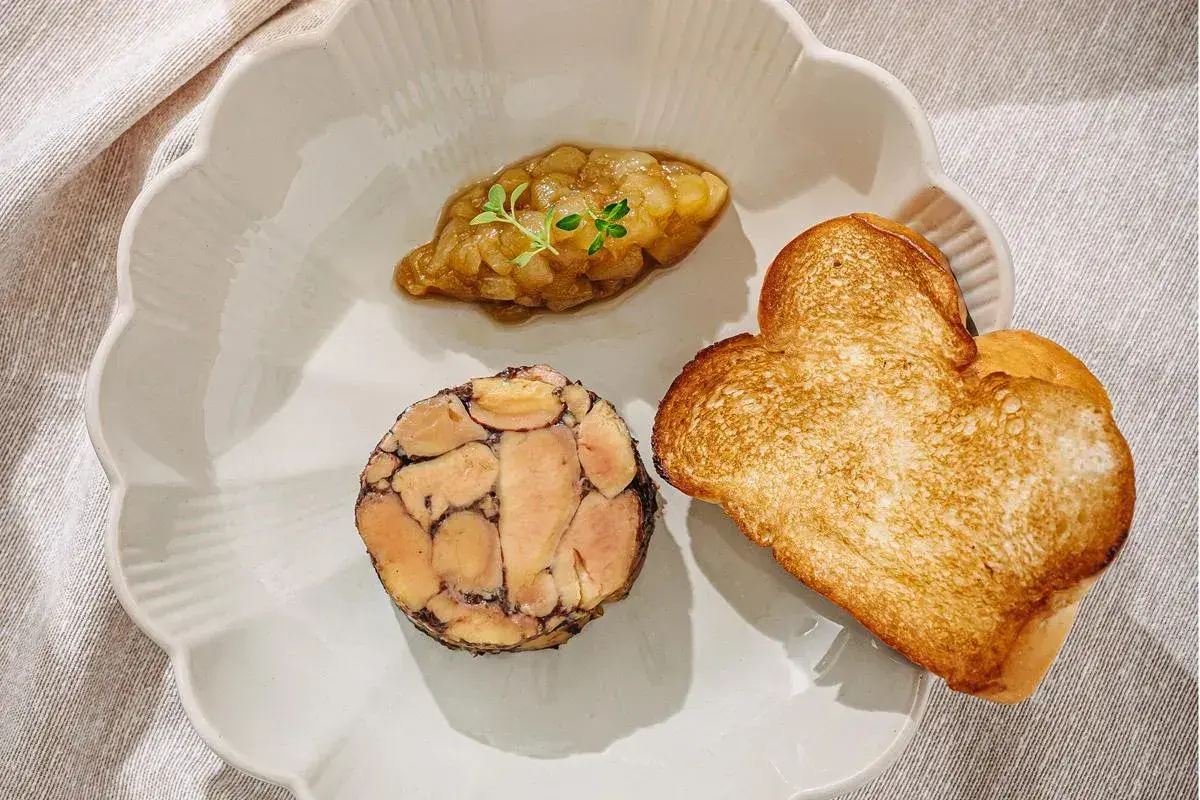
Duck terrine is one of those dishes that looks formal but behaves like practical charcuterie: rich enough for a dinner party, sturdy enough to make ahead, and flexible enough to serve in either a French or Basque-leaning starter. In this article I explain what it is, how the texture should feel, how to serve it well in the UK, and what separates a memorable slice from a heavy one.
The practical points that matter before you buy or make it
- It is a cooked, chilled savoury loaf made from duck-based forcemeat or pâté set in a mould.
- Texture is the deciding factor: it should slice cleanly, not smear like a spread or crumble like dry mince.
- Sharp accompaniments matter more than elaborate garnish; acidity keeps the richness in check.
- Homemade versions need time for packing, gentle cooking, pressing, and an overnight chill.
- For UK entertaining, it works best as a starter, picnic dish, or part of a cold buffet.
What a duck terrine is and why the texture matters
A terrine is both the mould and the finished dish: a mixture of meat, seasoning, and fat cooked gently, then chilled until firm enough to turn out and slice. In the duck version, the filling is usually a forcemeat, which simply means meat that has been ground, chopped, or pounded into a bound mixture. That sets it apart from a looser pâté, which is often smoother, softer, and meant to be spread.
That distinction matters because the whole pleasure of the dish comes from the slice. I want a clean edge, a moist centre, and enough structure that the slice holds together on toast or a plate. If it behaves like a spread, it has drifted toward pâté. If it falls apart, the balance of fat, seasoning, and pressing has gone wrong.
| Characteristic | Terrine | Pâté |
|---|---|---|
| Texture | Coarser and sliceable | Smoother and spreadable |
| Serving style | Cut into neat slices | Scooped or spread |
| Structure | Held together by chilling, pressing, and often layers | Usually softer and more uniform |
| Best use | Starter, buffet, picnic board | Toast, crackers, small plates |
Once that basic difference is clear, the next question is what makes one slice feel luxurious and another merely heavy.
What makes the flavour and slice work
The best versions are built on restraint rather than excess. I judge them on four things: the meat mix, the fat balance, the seasoning, and the way the loaf is set. Duck legs bring deeper flavour and natural richness; breast meat adds cleaner, more recognisable duck character. A little pork fat or another supporting fat is often useful because duck can become dry if the mix is too lean.
Seasoning needs to be more assertive than people expect. Cold food dulls flavour, so a terrine that tastes perfectly seasoned while warm can seem flat once chilled. Salt, pepper, thyme, juniper, orange zest, garlic, and a small splash of brandy or Cognac all make sense here, but only if they support the meat rather than drowning it.
Collagen also matters. It is the connective tissue in meat that melts into gelatin during cooking and helps the slice stay moist. That is one reason duck legs are so useful in this sort of preparation: they contribute flavour and a little natural binding power. If you use only very lean breast meat, the result can be neat but less forgiving.
For the texture, I prefer a coarse, hand-finished mix over a perfectly smooth paste. A little visible grain gives the dish character and makes it feel handmade. The other non-negotiable is time: an overnight chill, and often 12 to 24 hours, is what turns a warm loaf into a clean slice. Once the structure is right, the question becomes how you put it on the table.

How I would serve it for a Basque-leaning starter
This is where the dish comes alive. I like to think in contrasts: rich meat, sharp pickle, good bread, and one bright fruit element. The plate should feel composed, not cluttered. In a Basque-inspired setting, that balance is easy to build because the cuisine already understands how to use acidity, pepper, and fruit to keep richness under control.
Bring the terrine out of the fridge for about 15 to 20 minutes before serving so the flavour opens up, then slice it around 8 to 10 mm thick. Too thin and it loses presence; too thick and it becomes heavy. I usually serve it with toasted sourdough or walnut bread, a small salad, and one sharp condiment rather than three competing ones.
| Accompaniment | Why it works | My note |
|---|---|---|
| Walnut bread or sourdough | Supports the texture without adding sweetness | Toast it lightly so it stays firm under the slice |
| Cornichons or pickled shallots | Cut through the fat | Keep the pickles small and crisp |
| Cherry, apple, or quince relish | Adds fruit and acidity without making the plate sugary | Cherry works especially well if you want a Basque feel |
| Little leaf salad with mustard vinaigrette | Keeps the starter fresh | Use just enough dressing to gloss the leaves |
| Dry cider, Txakoli, or a light red | Matches the richness without flattening the palate | I lean toward something crisp rather than oaky |
The same logic works whether you are building a rustic board for lunch or a more polished first course for guests. Once the dish is on the plate, the real decision is whether to make it yourself or buy a good one.
How to make one at home or choose a good one
At home, the job is less mysterious than it sounds. You need duck, seasoning, a mould, and patience. The most reliable method is to chop or mince the meat coarsely, season it thoroughly, pack it tightly into a lined terrine mould, cook it gently in a water bath, then weight it as it cools so the loaf compacts neatly.
- Use enough duck flavour to make the dish feel like duck, not just generic charcuterie.
- Season the mix slightly more than you think you should, because chilling mutes flavour.
- Pack the mould firmly and remove air pockets; they are the enemy of clean slicing.
- Cook gently rather than aggressively. For a straightforward home-cook safety target, I would aim for a safe poultry centre temperature of about 74C / 165F.
- Let it cool under weight, then chill it overnight before slicing.
If you prefer to buy one, the label tells you most of what you need to know. Look for a high duck content, visible meat texture, and seasoning that does not read as overly salty or sweet. A good shop-bought version should taste like a proper starter, not a uniform paste.
| Option | What you gain | What you give up |
|---|---|---|
| Homemade | Full control over seasoning, texture, and accompaniments | Time, equipment, and a bit of discipline |
| Shop-bought | Speed and consistency | Less control, and sometimes more filler than you would like |
Whichever route you take, the same mistakes can still spoil the result, and those are usually easier to spot than people think.
The mistakes that flatten the whole thing
I see the same errors again and again, and none of them are dramatic on their own. They just add up until the dish tastes flatter than it should.
- Overprocessing the meat - the terrine loses bite and starts to feel like a generic spread.
- Underseasoning - cold meat needs a firmer hand with salt and pepper than a roast does.
- Skipping the press - without weight while cooling, the slice often looks ragged and loose.
- Serving it too cold - the aroma stays locked up and the fat can feel dull on the palate.
- Pairing it only with sweet condiment - the richness becomes one-dimensional.
- Trying to make the plate too clever - a terrine needs balance, not theatrical decoration.
The fix is usually simple: keep the texture a little coarse, season properly, press firmly, and bring in enough acidity on the side. Once those basics are under control, storage and make-ahead planning become the easy part.
How long it keeps and how I handle it for guests
A homemade terrine is a make-ahead dish by nature, which is one of the reasons I like it for entertaining. After it has cooled and set, I keep it refrigerated and treat 48 to 72 hours as the best window for flavour and appearance. The first day is good; the second day is often better because the seasoning settles and the slice firms up.
For a party, I would make it the day before at minimum. Two days ahead is even more comfortable if you want the flavours to knit properly. Keep it well wrapped once cut, because the exposed surface dries and darkens faster than most people expect. I also avoid freezing it if I care about a refined slice, because the texture usually turns softer and less elegant after thawing.
Just as important, do not leave it sitting out for long before service. Bring it to a slightly warmer serving temperature, slice what you need, and return the rest to the fridge promptly. Once you know that rhythm, the final question is not whether the dish is old-fashioned, but whether it still earns a place on a modern table.
Why this starter still feels right on a modern table
It does, because it solves several problems at once. It is rich without needing a sauce, elegant without needing extra cooking at the last minute, and adaptable enough to take Basque accents such as cherry, peppers, piment d'Espelette, or a dry cider on the side. In other words, it is useful food, which is often the best kind of luxury.
If I were building a meal around it, I would keep the rest of the menu light and sharp: good bread, a crisp salad, and something refreshing to drink. That way the terrine stays central, and the dish tastes deliberate rather than heavy. A well-made version does not shout for attention; it earns it with balance, texture, and a clean finish.
