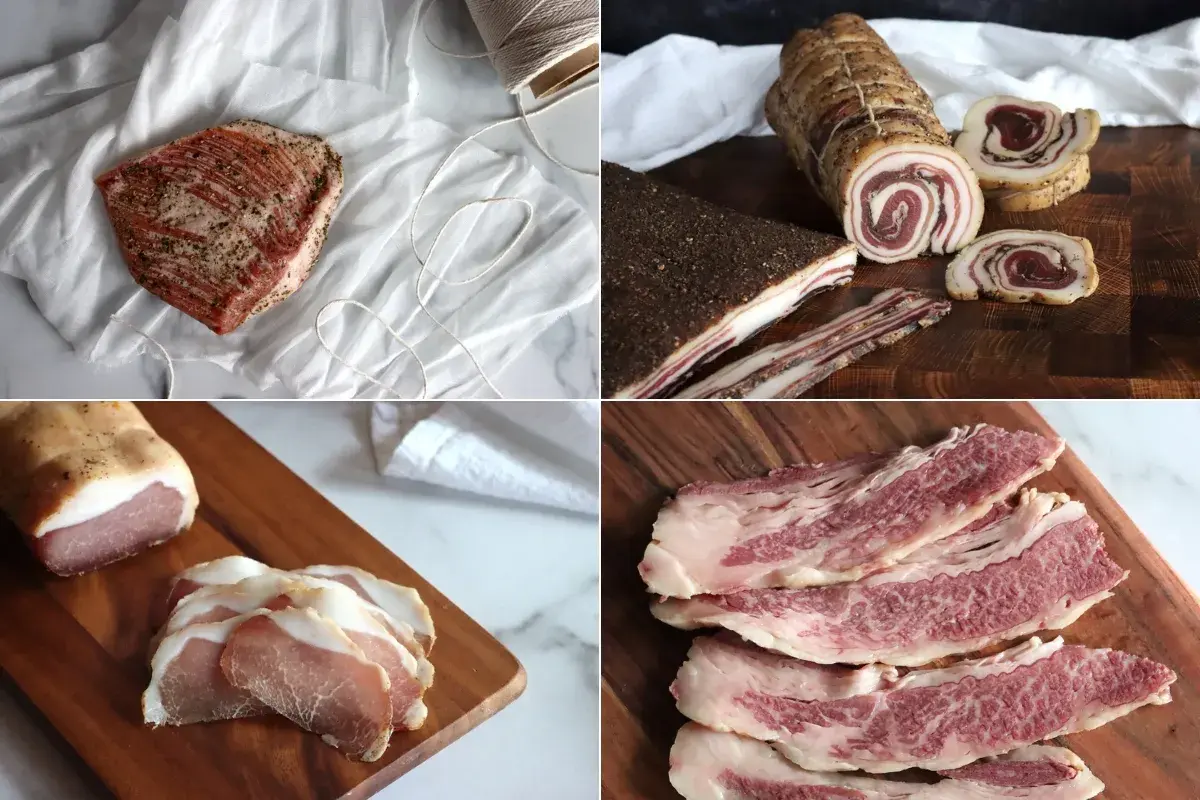
Spanish cured pork belly is one of those ingredients that looks modest until it hits a pot of beans or a pan of potatoes. Used well, it adds salt, body, and a slow savoury depth that feels rustic rather than smoky. I focus here on what it is, how it differs from bacon and pancetta, how I cook with it, and what to look for when buying it in the UK.
The practical version before you buy or cook it
- In Spanish cooking, the cut is usually used as a flavour base, not as a breakfast meat.
- The most useful label to look for is panceta curada, especially if you want cured belly rather than pure fat.
- It is usually less smoky than British bacon, which makes it better for beans, lentils, and stews.
- For a 4-person pot, 100 to 150 g is usually enough to shape the flavour.
- Once opened, I use it within 3 days or freeze it for later if I am not cooking soon.

What Spanish tocino really means in the kitchen
In everyday Spanish, tocino can mean pork fat, the fatty layer under the skin, or a bacon-like cut depending on the region and the cook. When I want the ingredient used in cooking, I usually think in terms of cured pork belly or panceta curada, because that is the version that actually behaves well in a stew. It is also not the sweet Filipino version that gets marinated and fried for breakfast.
That distinction matters more than it first appears. If you ask for the wrong thing, you may get something too fatty, too lean, or simply intended for a different dish. For a Basque table or a northern Spanish pot of beans, the goal is not a crisp strip on its own; it is a piece of pork that melts into the dish and leaves behind flavour.
Once that is clear, the next step is to work out what it is closest to in English terms, because that is where most substitutions either succeed or go wrong.
How it differs from bacon and pancetta
People often reach for the nearest familiar word, but the differences matter. Bacon is not automatically wrong, yet it brings a different smoke level, saltiness, and texture. Pancetta is closer in spirit, but it is still an Italian product with its own seasoning and shape.
| Product | What it usually means | Smoke | Best use | My take |
|---|---|---|---|---|
| Tocino | Broad Spanish term, often very fatty pork used to season dishes | Usually unsmoked | Beans, soups, rustic stews | Best seen as a flavour base |
| Panceta curada | Cured pork belly with a better fat-to-meat balance | Usually unsmoked, sometimes lightly smoked | Stews, pan-frying, tapas-style plates | The most useful label to ask for |
| UK streaky bacon | Cured belly, often from supermarket packs | Often smoked | Breakfast, quick frying, sandwich use | A workable fallback, but the smoke changes the dish |
| Italian pancetta | Cured pork belly, often seasoned and sold as a slab or roll | Usually unsmoked | Pasta sauces, braises, bean dishes | The closest everyday substitute in many UK kitchens |
If a recipe calls for cured Spanish belly and I only have panceta curada, a 1:1 swap by weight is usually fine. If I use streaky bacon, I reduce any extra salt and accept a slightly smokier result. I would not treat back bacon as the same thing; it is a different cut and it changes the dish more than most people expect.
That brings us to the part most home cooks care about: how to use the cut without turning the whole pan salty or greasy.
How to cook with it without making the dish too salty
I treat cured pork belly as a seasoning ingredient first and a meat second. That mindset keeps the dish balanced. One mistake I see often is using enough pork for the whole meal and then adding salt as if the pot were empty. It is not empty; the pork is already doing work.
For beans and stews
For a 4-serving pot, I usually use 100 to 150 g of cured pork belly. Dice it small if you want the flavour dispersed, or leave it in a larger piece if you want to lift it out later. In a stew, it usually needs 20 to 40 minutes to share enough flavour with the broth, depending on how thick the cut is.
For the pan
If I am frying it for potatoes, eggs, or vegetables, I start with a cold pan and let the fat render slowly over medium heat. Diced pieces usually take 6 to 8 minutes to turn golden and release enough fat for the rest of the dish. If you rush this step, the outside can scorch before the inside has done its job.
Read Also: Cochinillo Asado Ingredients - The Simple Secret to Perfect Skin
For lighter dishes
If the piece tastes aggressively salty, I sometimes blanch it for 60 to 90 seconds before cooking. I do not do this every time, because it trims flavour as well as salt, but it helps when the cut is meant to season a dish rather than dominate it. The safer habit is to taste the dish before adding any extra salt at the end.
Once you know how to handle the salt and fat, the next question is where to find a good piece in the UK without settling for the wrong substitute.
How to buy and store it in the UK
In the UK, I would start by looking for panceta curada, cured pork belly, or a good Spanish deli counter rather than assuming supermarket bacon will do the same job. If the label only says panceta, check whether it is curada or fresh. Fresh belly is useful in its own right, but it is not the same ingredient.
When I am choosing a pack, I look for a few practical signs:
- Visible layers of white fat and pink meat, not a piece that is almost all fat.
- A clean pork smell, not a sour or overly sharp one.
- A firm texture that holds together when sliced.
- Unsmoked or only lightly smoked if I want a more Spanish flavour.
- Thick slices or a slab if I plan to cube it for cooking.
For storage, I follow the label date if the pack is sealed and chilled properly. After opening, I keep it cold and use it within 3 days if I am cooking from the fridge, or freeze it for up to 2 months if I want to keep the texture and flavour in good shape. In practical terms, that means I buy only as much as I can use in a couple of meals.
If you want the dish to taste as close as possible to Spanish home cooking, buying the right cut matters less than using it in the right kind of recipe, which is where the Basque and northern Spanish connection really comes in.
Where it feels most at home in Basque and northern Spanish cooking
This is the part I like most, because it shows why the cut exists in the first place. Spanish cured pork belly is not usually the hero of the plate. It is the ingredient that gives a bean pot structure, makes greens taste rounder, and stops a rustic stew from feeling flat.
In Basque-style and northern Spanish cooking, I would use it in dishes like these:
- Bean pots - one small piece can season the whole broth and give depth to alubias-style dishes.
- Lentil stews - it adds richness without needing a heavy stock base.
- Potatoes with eggs - rendered pork belly gives you a better pan fat than plain oil alone.
- Cabbage and leafy greens - a little salt and fat help soften bitterness and make the dish feel complete.
- Simple soups - even a modest amount can turn water, vegetables, and legumes into something far more satisfying.
What I find most authentic about this style of cooking is the restraint. You do not need a lot of meat to make the dish feel generous. A small piece, used properly, often gives a better result than a larger amount cooked carelessly.
That restraint also explains the small details that separate a balanced pot from one that tastes heavy or muddled.
The small details that keep it tasting balanced
If I had to reduce this ingredient to a few habits, they would be these: choose the right cut, keep the smoke low, and salt late. Those three decisions do more for the final result than any fancy technique.
- Choose fat with purpose - very lean pieces lose the point of using cured pork belly, while very fatty pieces can disappear into grease without enough flavour.
- Keep the smoke in check - if a dish is built around beans, vegetables, or eggs, too much smoke tends to flatten rather than improve the flavour.
- Do not overbrown it - golden is enough; dark and bitter usually means the fat has gone too far.
- Let the dish absorb it - stews need time for the pork to season the liquid, so I give them enough simmering time instead of rushing to the table.
- Taste before salting again - this is the simplest rule, and the one that saves the most meals.
When I cook with Spanish cured pork belly, I am looking for quiet depth rather than a loud bacon effect. Used that way, it gives beans, potatoes, and vegetable dishes the kind of savoury backbone that makes them feel complete, and that is exactly why it has stayed useful in northern Spanish kitchens for so long.
