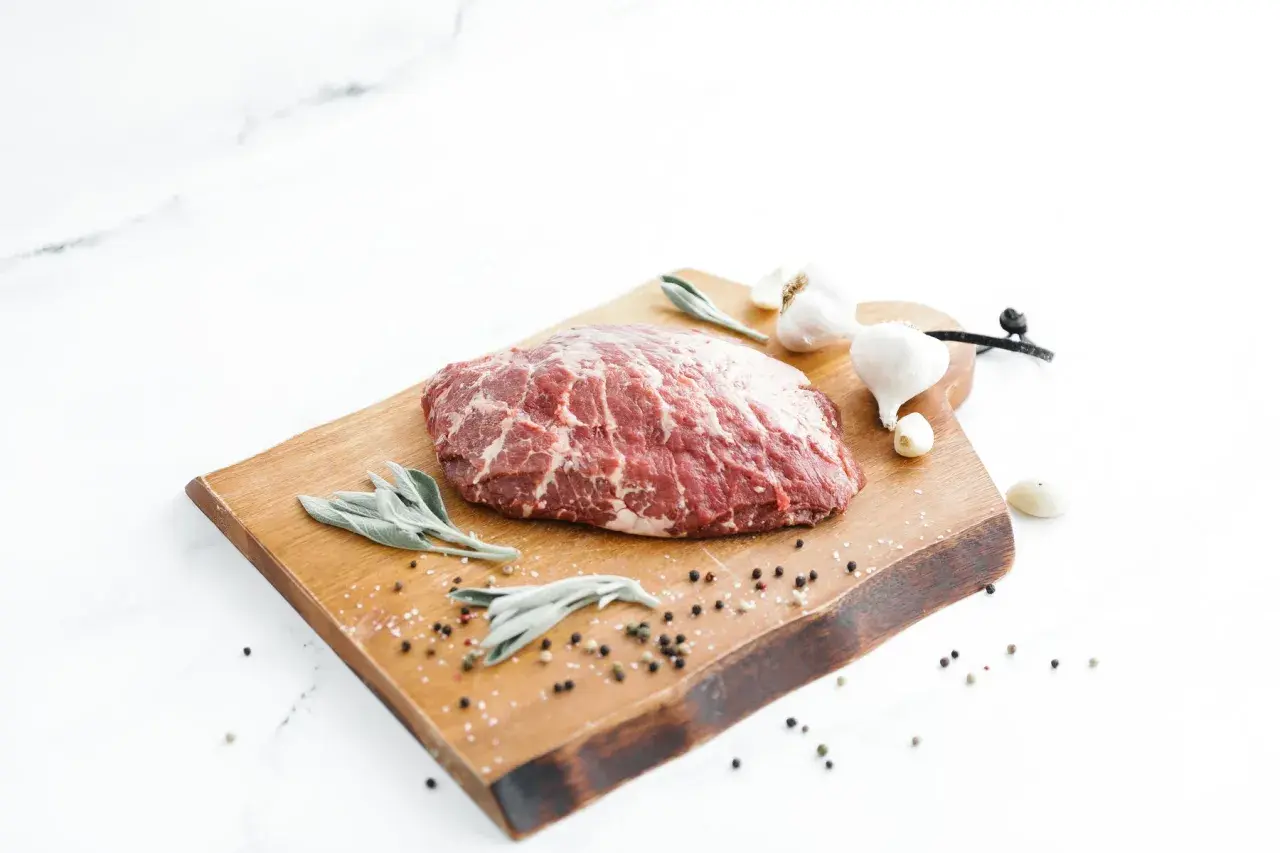
Among premium pork cuts, presa ibérica sits in a sweet spot: rich, fast-cooking, and forgiving if you respect the fat. In this guide I explain what makes the cut special, how I choose it in the UK, how I cook it so it stays juicy rather than greasy, and which Basque-style sides keep the whole plate in balance. I’ll also show where it sits beside pluma and secreto, because that comparison makes buying much easier.
The practical takeaways before you buy or cook
- It comes from the shoulder area and has more marbling than most pork cuts, so I treat it more like a steak than a roast.
- The best pieces are evenly marbled, thick enough to sear, and not trimmed so aggressively that the fat disappears.
- For a UK home kitchen, the Food Standards Agency recommends pork reaches 70°C for 2 minutes, or an equivalent safe time-temperature combination.
- Plan on 150-200g per person for a main course; a 1kg piece usually feeds 4-6 after trimming and resting.
- Simple sides work best: charred peppers, potatoes, green veg, or a clean herb sauce.
Why this shoulder cut earns its reputation
This is a compact muscle from the shoulder area, and what sets it apart is the amount of intramuscular fat running through it. That fat is not wasted weight. It is the reason the meat tastes nutty, rounded, and almost creamy when it is handled well.I would not braise it for hours. Long cooking makes sense for tougher pork shoulder pieces, but here the goal is different: keep the marbling intact, give the outside a proper crust, and let the centre stay tender. That is why this cut behaves more like a high-end steak than a traditional roasting joint, and that distinction matters the moment you start comparing it with the other prized Iberian cuts.
How it compares with other prized Iberian cuts
If I am helping someone choose between the premium cuts, I usually start with a simple comparison. It removes a lot of guesswork and makes the price easier to judge.
| Cut | What I notice first | Best use | My rule of thumb |
|---|---|---|---|
| Presa | Broad, richly marbled, steak-like | Centrepiece for 2-4 people, sliced thick | The best all-rounder if you want depth without delicacy |
| Pluma | Smaller, thinner, slightly leaner | Quick grill or fast pan cook | Choose it when you want tenderness with a lighter feel |
| Secreto | Loose, fatty, and intensely flavoured | BBQ, grill, or plancha | Great for sharing, especially with just salt and heat |
| Loin or fillet | Cleaner and leaner | Lighter pork plates | Better when you want restraint rather than richness |
If I am cooking for guests who have never tried the breed, I usually start with presa because it gives the biggest flavour payoff without the extra delicacy of pluma or the assertiveness of secreto. Once you know which cut you are actually buying, cooking it becomes much simpler.
How I cook it for a clean crust and a juicy centre
I keep this as straightforward as possible. The cut already brings flavour, so I do not try to build a complicated marinade around it. Heat, salt, rest, and careful slicing do most of the work.
- Take the meat out of the fridge 20-30 minutes before cooking so the temperature starts to even out.
- Pat it dry and season with sea salt. I usually add black pepper after the sear so it does not burn in the pan.
- Heat a heavy pan, griddle, or grill until it is properly hot, then sear for about 2-3 minutes per side. If the piece is thick, turn it onto the edges as well.
- For a 500g piece, I usually expect roughly 10-15 minutes total, depending on thickness and starting temperature.
- For a UK home kitchen, I follow the Food Standards Agency guidance and cook pork to 70°C for 2 minutes, or an equivalent safe time-temperature combination.
- Rest the meat for 5-10 minutes, then slice against the grain into thick pieces so the fat stays juicy.
I like a simple finish: the meat’s own juices, a small splash of cider vinegar or dry white wine, and maybe a knob of butter if the plate needs rounding out. The point is not to mask the pork. The point is to let the fat taste expensive.
What to check before buying it in the UK
In 2026, UK specialist prices usually sit around £35-£50 per kg, and bellota-grade or smaller retail packs can climb above that. If a price looks dramatically lower, I check the breed percentage, feeding, and whether the cut is actually the same thing dressed under a looser name.
| Label | What it usually means | Why it matters |
|---|---|---|
| Bellota | Acorn-finished during the montanera period | Deepest nutty flavour, richest fat, highest price |
| Cebo de campo | Outdoor-reared with mixed feed | Good middle ground for value and character |
| Cebo | Grain-fed | Still useful, but less complexity and often cheaper |
Beyond the label, I want visible marbling, a firm feel, and enough thickness to form a crust. A 400-700g piece is ideal for two or three people; larger pieces work well when you want generous slices at the table. If the cut looks very thin or oddly lean, I would rather buy a different piece than force this one to behave like something it is not.
Basque-style pairings that keep the pork in focus
The Basque table works best when it lets good ingredients speak plainly. That is exactly why this pork fits so naturally into the style: it has enough flavour to stand up on its own, but it still likes clean, bright company.
- Charred piquillo peppers or roasted red peppers for sweetness and a little smoke.
- Patatas panaderas or crushed new potatoes dressed with olive oil and salt.
- Green beans, tenderstem broccoli, or a bitter leaf salad to cut through the fat.
- A parsley-garlic oil, pan juices, or a light pimentón butter instead of a heavy sauce.
- Txakoli, dry cider, or a light red with good acidity rather than an oak-heavy wine.
I would keep the seasoning clear and the plate uncluttered. That restraint is what lets the marbling read as flavour rather than just richness, and it is also what makes the cut feel at home on a Basque-inspired menu.
The mistakes that flatten a great piece of pork
The fastest way to waste this cut is to treat it like an ordinary supermarket loin. That usually means too much heat for too long, too much sauce, and not enough attention to the grain of the meat when it is sliced.
- Cooking it until it is dry and dusty instead of searing it and resting it properly.
- Using a sugary marinade that burns before the crust has a chance to form.
- Skipping the rest period, which lets the juices run straight out onto the board.
- Slicing with the grain, which makes even tender meat feel chewier than it should.
- Buying only on price and expecting bellota-level depth from a leaner or grain-fed piece.
If you avoid those five errors, the cut is much easier than its reputation suggests. It does not need tricks; it needs confidence, and that is why I keep coming back to it when I want one strong centrepiece rather than a complicated menu.
A smart way to serve it when you want maximum flavour with minimum fuss
This is the pork I choose when I want the main course to feel special without becoming fussy. It works for a small dinner, a shared platter, or a Basque-style meal built around peppers, potatoes, bread, and one crisp green vegetable.
My own rule is simple: if the meal needs a bold but elegant centre, I reach for this cut first. If I want something quick and lighter, I look at pluma. If I want a full-on fatty showpiece for the grill, I go to secreto. For everything in between, the shoulder cut does the best job of balancing flavour, texture, and ease.
I think the best version is the one that stays disciplined: a hard sear, careful timing, a short rest, and side dishes that do not compete with the meat. That is when Iberian pork gives back the most, and that is exactly why this cut deserves its premium status.
