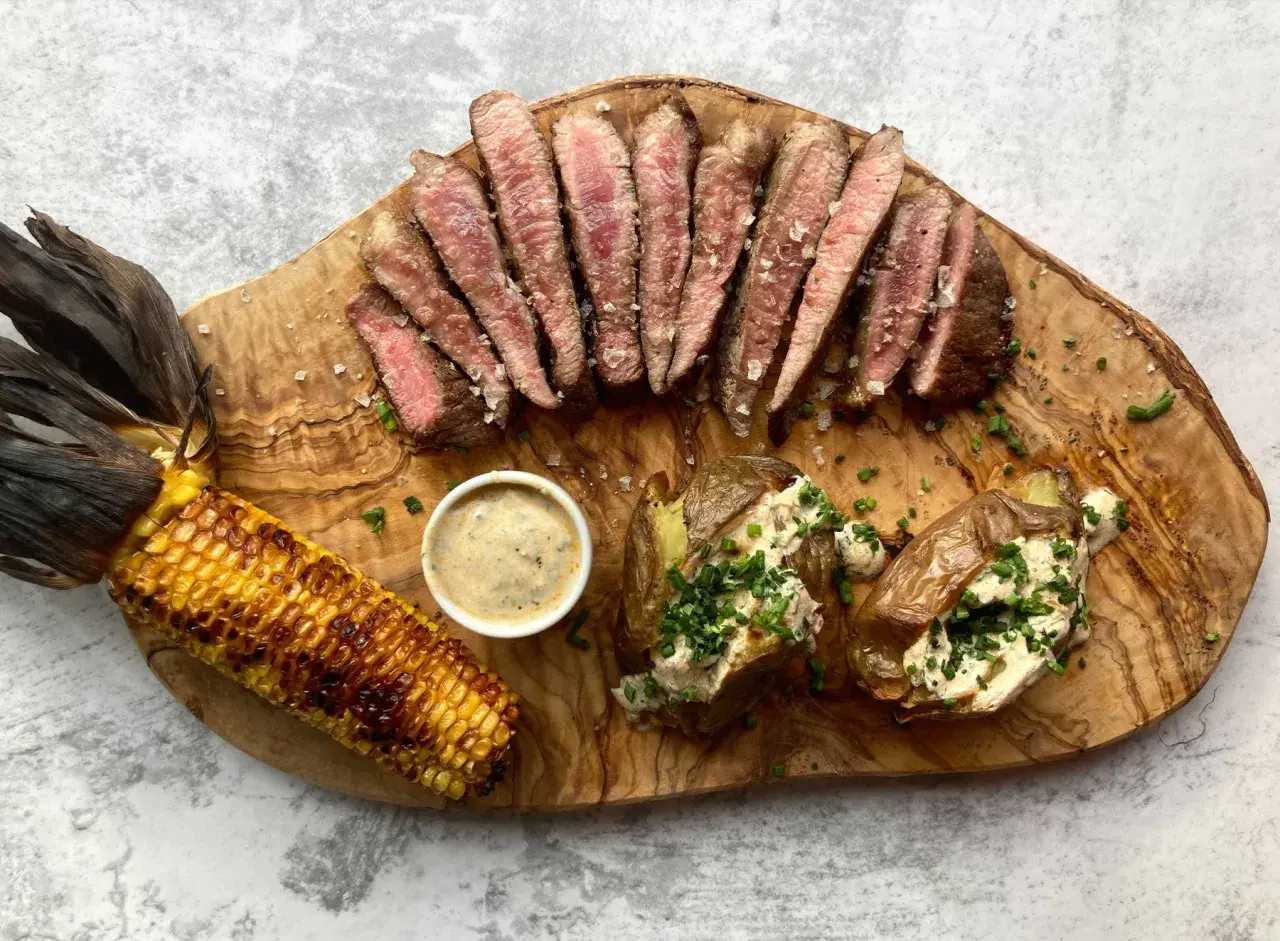
A good shoulder cut should taste generous before it tastes complicated. pork presa does exactly that: it is a marbled Spanish-style pork piece that cooks quickly, slices neatly, and delivers enough richness to stand on its own with little more than salt, heat, and a few sharp sides. In this article I explain what the cut actually is, how I cook it safely, how to buy a good one in the UK, and which Basque-leaning flavours make it shine.
The essentials before you cook it
- It comes from the shoulder or collar zone and is usually sold as a thick, well-marbled Iberico-style cut.
- It behaves more like a steak than a roasting joint, so high heat and a short cook matter.
- For home cooking in the UK, I follow the Food Standards Agency baseline of 70°C for 2 minutes in the centre.
- The best results come from simple seasoning, a good sear, and a proper rest before slicing.
- Specialist UK retailers are the most reliable source if you want the Spanish-style version.
What makes presa different from a regular shoulder cut
Presa lives in the shoulder area, but that description undersells it. In Spanish butchery it is treated as a distinct, compact muscle with fine marbling, a firm bite, and enough natural fat to stay succulent over high heat. The important term here is intramuscular fat, which simply means the fat is woven through the meat rather than sitting only on the outside.
That is why it tastes deeper and more steak-like than a standard shoulder joint. A classic roasting shoulder needs long cooking to break down collagen, while presa is designed to be eaten much sooner, when the centre is still juicy and the outside has a proper crust. Once you understand that, the cooking method becomes obvious.

How I cook it so the centre stays juicy
I start with a hot, dry surface. Pat the meat dry, season generously with salt, and let it sit for 20 to 40 minutes if you have time. In a heavy pan or over hot coals, sear it for 2 to 3 minutes per side until the outside is deeply coloured, then finish gently until the centre reaches a safe temperature.For home cooking in the UK, the Food Standards Agency recommends 70°C for 2 minutes in the centre. I use that as my default for this cut when cooking for family or guests. If the piece is thick, roughly 3 to 5 cm, I often sear first and then give it 5 to 10 minutes in a 180°C oven, checking with a thermometer rather than guessing.
- Use a thermometer probe in the thickest part.
- Rest the meat for 5 to 10 minutes before slicing.
- Slice across the grain so the fibres stay tender.
- Keep sauces light: garlic oil, herb oil, or pan juices work better than a heavy glaze.
What to look for when buying it in the UK
In the UK, this is usually a specialist buy rather than a supermarket default. Basco Fine Foods currently lists a 1.2kg piece at about £39.20, which is a useful price anchor for a premium imported cut. That is not everyday pork pricing, but it reflects the marbling and the eating quality you are paying for.
When I am choosing a piece, I look for a few things:
- Even marbling through the muscle, not just a thick outer fat cap.
- A compact, thick shape that will sear cleanly and cook evenly.
- Deep pink to red meat with a fresh smell and no watery packaging.
- Iberico on the label if I want the richer, nuttier Spanish-style flavour.
- Vacuum-packed frozen meat if fresh is not available, as long as it is thawed slowly in the fridge.
For portions, I usually plan on 180 to 220g per person as a main if there are sides on the table. A 500 to 700g piece is enough for two, while around 1kg works well for four. If a butcher only offers a generic shoulder steak, I ask which muscle it is before I buy it, because not every shoulder cut gives the same result. That distinction matters more than the label.
What to serve with it on a Basque-leaning plate
This is the part where the cut really starts to feel at home. Presa is rich, so I want contrast: acid, salt, a little smoke, and something with texture. I keep the plate tight and avoid heavy cream sauces, because they flatten the very flavour I am trying to show off.
| What I serve | Why it works |
|---|---|
| Charred padrón peppers | They add gentle bitterness and a little heat, which keeps the pork from feeling too rich. |
| Piperrada | This Basque pepper-and-tomato mix brings sweetness, acidity, and a soft stew-like contrast. |
| Roasted new potatoes | They catch the juices and give the plate enough substance to feel complete. |
| Txakoli or dry cider | The brightness cuts through the marbling and resets the palate between bites. |
| Parsley-garlic oil | It lifts the meat without covering it, which is exactly what I want here. |
If I am building a simple dinner around it, I usually think in threes: one rich protein, one sharp vegetable, and one plain starch. That balance keeps the meal grounded and prevents the cut from becoming too heavy. It also leads naturally into the question of how it stacks up against other Spanish pork cuts.
How it compares with secreto, pluma, and pork loin
People often lump these cuts together, but they behave differently in the pan. If you are choosing between them, the decision comes down to texture, fat, and how much control you want over the final result.
| Cut | Texture | Best way to cook | Why choose it |
|---|---|---|---|
| Presa | Firm, juicy, richly marbled | Hot sear, grill, or short oven finish | Best all-round choice when you want deep flavour and a neat slice |
| Secreto | Looser, fattier, very juicy | Fast grilling or high-heat pan cooking | Great when you want a more indulgent, rustic result |
| Pluma | Leaner and more delicate | Very quick sear | Good for tidy portions and a lighter bite |
| Pork loin | Lean and mild | Careful roasting or pan cooking | Useful if you want a milder flavour, but easier to dry out |
If I want the richest everyday option without the irregularity of secreto, I reach for presa first. It feels special, but it is still straightforward to cook, which is exactly why it works so well in home kitchens and on a Basque-style menu.
The mistakes that waste a good cut
The cut is forgiving, but it will not rescue sloppy heat management. The most common mistakes are usually simple, and once you see them, they are easy to avoid.- Cooking it like a braising joint. Long, low heat drains the meat of the texture that makes it special.
- Skipping the thermometer. Guessing is the fastest way to miss the sweet spot.
- Trimming away all visible fat. That fat is part of the flavour and the juiciness.
- Crowding the pan. If the meat steams, you lose the crust.
- Slicing with the grain. The fibres stay long and the meat feels tougher than it is.
- Using a heavy sauce as a cover-up. A strong glaze can bury the cut instead of complementing it.
If I had to reduce all of that to one rule, it would be this: cook it hot, finish it cleanly, and rest it properly. The rest of the meal can be simple once that part is right.
Why this cut earns its place on a Basque table
What I like most about presa is that it delivers a restaurant-quality plate without turning dinner into a project. It has enough marbling to feel luxurious, enough structure to slice well, and enough character to stand beside peppers, potatoes, cider, and a little acid. That combination is exactly why it fits so naturally into a Basque-inspired way of cooking.
If you cannot find the exact cut, ask a butcher for a thick, well-marbled Iberico shoulder steak rather than a standard roasting joint. The name matters less than the balance of marbling, thickness, and freshness. Cook it with confidence, keep the accompaniments sharp and simple, and you will get a result that feels rustic, refined, and genuinely worth repeating.
