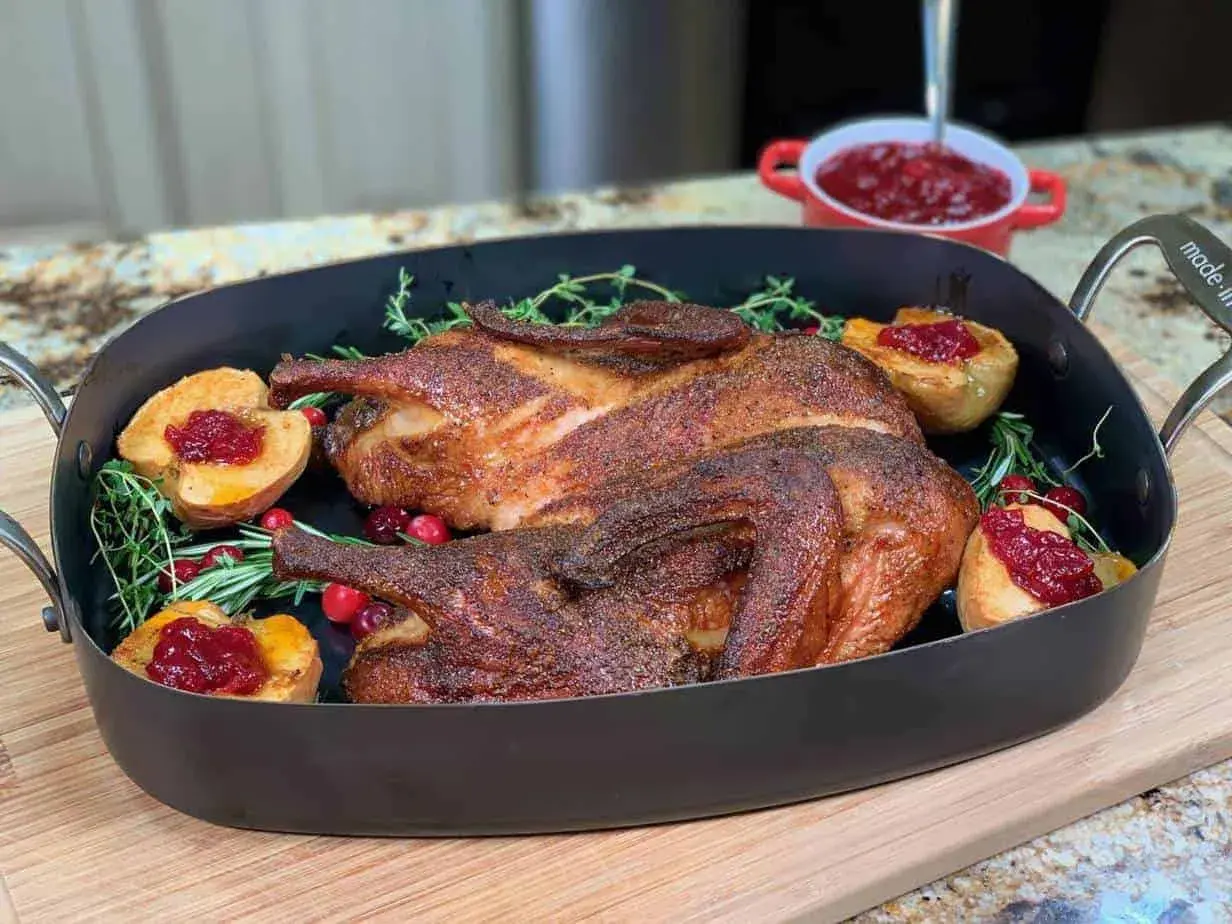
Smoked duck sits between charcuterie and a proper main-course ingredient: rich, savoury, and ready to bring depth to a plate without much work. In this guide I look at what smoke actually does to the meat, how to choose a good pack in the UK, how to serve it with Basque-leaning flavours, and how to store it safely once opened. I keep it practical, because the difference between something elegant and something merely salty usually comes down to handling.
The essentials at a glance
- Smoke adds flavour, firms the surface, and usually turns the duck into a ready-to-eat product rather than a raw one.
- In the UK, I look for an intact chilled pack, a clear use-by date, and storage instructions that keep the meat at 5°C or below.
- Bright, acidic partners work best: apple, citrus, pickles, peppers, bitter leaves, and dry cider all make sense.
- Heavy sauces and over-sweet glazes usually flatten the flavour instead of improving it.
- A Basque-style plate works well when the duck is treated as one strong note among seasonal vegetables, bread, and clean acidity.
What smoke actually does to duck
Smoke changes duck in two useful ways. First, it dries and firms the outer surface, which helps slow spoilage and gives the meat a denser bite. Second, it adds aromatic compounds that read as wood, salt, and savoury depth rather than simple “smokiness”.
The important distinction is between hot-smoked and cold-smoked styles. Hot-smoked duck is generally cooked through and sold ready to eat, while cold-smoked or heavily cured slices behave more like charcuterie and depend more on the label, the curing method, and the cold chain. I find that duck fat makes this format more forgiving than you might expect: the fat softens the smoke, so the final result tastes rounder than smoked chicken or turkey often does.
That is why the product works so well in small portions. It brings impact without needing long cooking, and once you understand that, the real question becomes how to judge quality before you buy.
How I choose a good pack in the UK
When I buy a chilled pack, I start with the label. For ready-to-eat poultry, the use-by date matters more than a best-before date, and I always check that the storage instructions are realistic for my fridge. The Food Standards Agency is clear that chilled food should be kept at 5°C or below, and that rule matters here more than any sniff test.I also look at the ingredient list. A short, clean list - duck, salt, smoke - usually tells me more than a long one padded with sugar, flavourings, and stabilisers. That does not automatically make a product bad, but it usually means the smoke profile will feel more industrial and less layered.
| Pack style | Texture | Best use | What I look for |
|---|---|---|---|
| Thin sliced breast | Silky, delicate | Pintxos, salads, cold starters | Even slicing, restrained salt, clean aroma |
| Whole breast for slicing | More structured | Table carving, bigger platters | Tight vacuum seal, firm flesh, balanced smoke |
| Thicker smoked pieces | Chewier, more assertive | Warm potato dishes, grain bowls, quick sautés | Short ingredient list and no broken packaging |
If I am buying for a dinner rather than a lunch, I lean towards a whole breast or larger slices. They hold texture better when they are plated with vegetables or bread, and they feel more intentional. Thin slices are excellent, but only when you want the duck to behave like a finishing ingredient rather than the centre of the dish.
Once the pack is chosen, the next decision is not how to cook it, but how to frame it on the plate.

How to serve it without flattening the flavour
The best accompaniments do one job: they keep the duck from tasting one-dimensional. I usually want acid, bitterness, and a soft carb somewhere on the plate, because those elements give the smoke somewhere to land.
| What to add | Why it works | Basque-leaning example |
|---|---|---|
| Acid | Sharpens the flavour and cuts the fat | Sherry vinegar, pickled shallots, cider vinegar dressing |
| Sweet fruit | Lifts the savoury side without making the dish heavy | Apple, pear, grilled peach, or a few cherries |
| Bitter leaves | Stops the smoke from feeling cloying | Watercress, endive, chicory, or lamb’s lettuce |
| Peppers and tomato | Brings sweetness, colour, and a Mediterranean feel | Piperade or slow-roasted piquillo peppers |
| Soft bread or potato | Rounds out the plate and carries the juices | Warm country bread, crushed potatoes, or a potato galette |
In a Basque setting, I like that combination of restraint and brightness. A slice of toasted bread, a spoon of piperade, a few leaves of watercress, and a little duck is enough for a pintxo-style bite that tastes deliberate rather than busy. If I want to push the regional angle further, I add a tiny amount of Idiazabal, but only as a background note - smoke on smoke works when one element stays subtle.
That same logic also explains why a dry white like txakoli or a sharp Basque cider feels so natural with the plate: both keep the flavours fresh instead of wrapping them in sweetness.
Storage and food safety that actually matter
With chilled poultry, I never improvise. The Food Standards Agency treats use-by dates as a safety rule, not a quality suggestion, and I follow that strictly for any ready-to-eat duck product. If the packaging says keep refrigerated after opening, I do exactly that and keep the fridge at 5°C or below.
I do not rely on smell to judge safety. Smoked meat can still be unsafe even when it seems fine, and poultry is not the place for guesswork. If I know I will not finish the pack in time, I freeze it before the use-by date, then thaw it in the fridge and use it promptly. The texture may soften a little, but the loss is usually minor if the product was well packed to begin with.
For service, I only let it sit long enough to lose the fridge chill. Ten to fifteen minutes is usually enough for slices to relax slightly and for the fat to taste less tight, but I would not leave it out much longer than that. Once you work with the cold chain properly, the meat is much easier to use well.
That is also where most mistakes begin: not in the smoking, but in the handling after the pack is opened.
Common mistakes that make it taste flat or harsh
- Using a heavy sweet sauce. Smoke and sugar can work together, but if the sauce dominates, the duck loses its savoury edge.
- Serving it ice-cold. Straight-from-the-fridge slices mute the aroma and make the fat feel harder than it should.
- Adding too many smoky ingredients. If the plate already has smoked cheese, smoked salt, and smoked meat, the flavours start competing instead of supporting each other.
- Cooking it too aggressively. Strong heat can tighten the texture and make the salt seem sharper than intended.
- Forgetting freshness. A little acid, a crisp leaf, or a sharp relish is often what turns a decent plate into a good one.
My rule is simple: if the meat is already confident, the rest of the plate should be precise. That means clean seasoning, brief cooking if any cooking is needed at all, and no garnish that feels decorative without purpose.
The Basque-style plate I would build first
When I want this ingredient to feel at home on a Basque table, I build a small plate rather than a heavy main. Basque cuisine, as San Sebastián Turismo notes, is defined by seasonal, high-quality products, and that gives the dish a useful direction: keep the components clear, local in spirit, and sharply balanced.
- Main element - thin slices of duck arranged over warm bread or a small potato base.
- Vegetable layer - piperade, roasted peppers, or a pepper-and-tomato relish.
- Freshness - watercress, chicory, or a few herbs with a bitter edge.
- Bright finish - pickled shallot, cider vinegar, or a squeeze of citrus.
- Drink pairing - txakoli, dry cider, or another crisp, high-acid drink.
That formula works because each part does a different job. The duck gives depth, the pepper brings sweetness, the acid cleans the palate, and the bread or potato keeps the bite grounded. In the right setting, smoked duck is less about smoke for its own sake and more about giving a plate depth, salt, and a clean savoury line.
