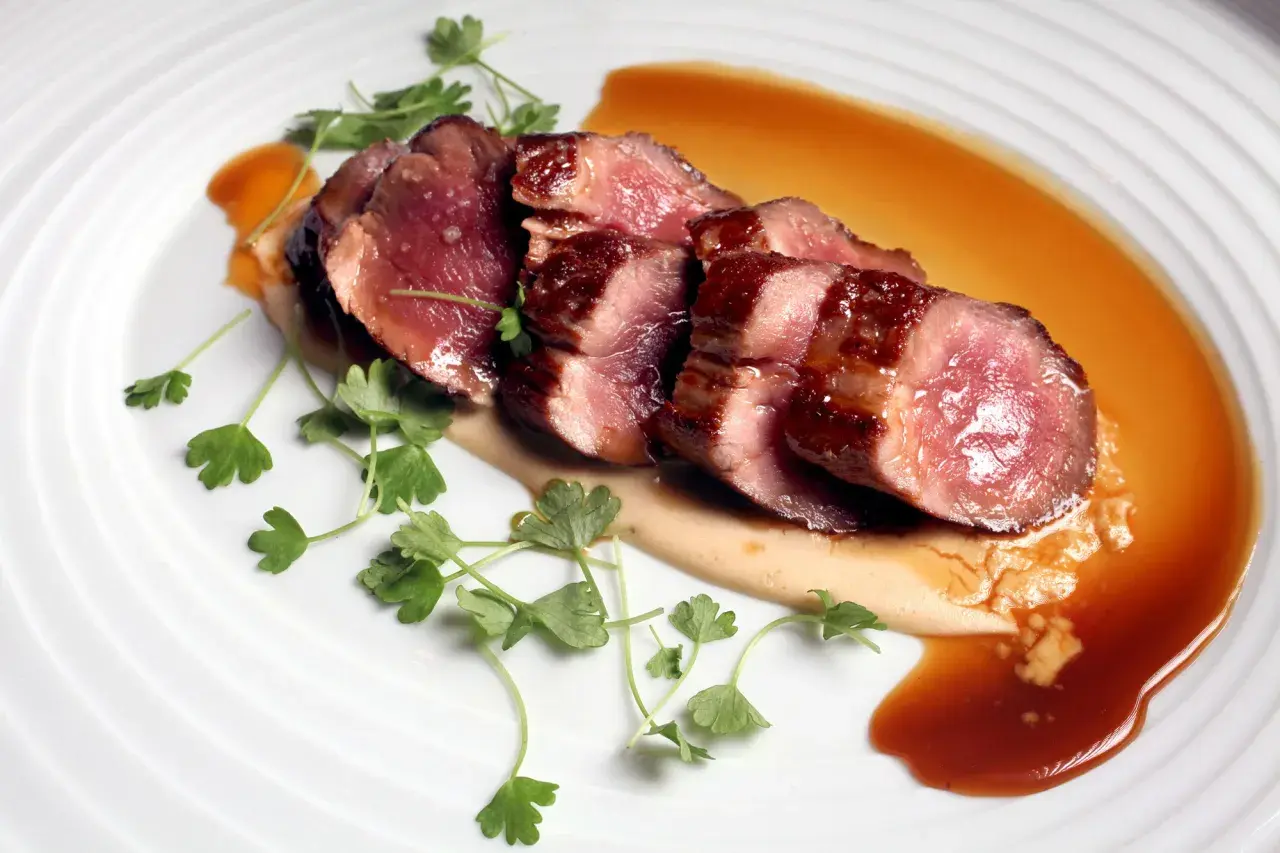
The practical rules that make it work
- Use the cut to decide the method: chops, presa, and secreto want fast heat; shoulder and belly need time.
- Dry the surface well so the meat browns instead of steaming.
- Keep seasoning light; sea salt, olive oil, and a little pepper are usually enough.
- Use a thermometer: in the UK, the Food Standards Agency advises pork should reach 70°C for 2 minutes, but many chefs cook marbled Ibérico cuts lower for a juicier result.
- Rest before slicing so the juices stay in the meat instead of running onto the board.
- Do not confuse fresh pork with jamón Ibérico, which is cured and served differently.
Why Iberico pork cooks differently
Iberico pork is not just another pork product with a nicer label. The best cuts are more heavily marbled, so the fat melts into the meat as it cooks and gives you a richer, softer result than a lean standard chop. That also means I treat it more like a well-marbled steak than like the overcooked pork many people grew up with.
That fat is the reason the meat tastes so good, but it is also the reason technique matters. If you cook it too gently, you miss the crust and end up with something soft but dull. If you cook it too hard for too long, the fat renders out and the meat loses its silkiness. The sweet spot is a hot surface, fast browning, and just enough time for the centre to stay juicy.
One thing I always clear up: fresh Ibérico pork and jamón Ibérico are not the same job in the kitchen. Jamón is cured and served as-is; the raw cuts are what you cook. Once that distinction is clear, the rest becomes much easier, and the next step is choosing the cut that fits the method you want.
Choose the cut before you choose the heat
The easiest way to avoid disappointment is to match the cut to the cooking method before anything touches the pan. I have seen good Iberico pork ruined by using one technique for every cut, which is exactly the wrong instinct with this meat.
| Cut | Best method | What I aim for | My note |
|---|---|---|---|
| Presa | Hard sear, then short oven finish or indirect grill | Juicy, pink centre | One of the most forgiving premium cuts |
| Secreto | Very hot pan or grill | Deep browning, just cooked through | Thin and rich, so it needs speed |
| Loin or chops | Fast sear, brief rest | Tender and lightly pink | Lean enough to dry out if you hesitate |
| Shoulder, collar, or belly | Slow roast or braise | Soft, spoon-tender texture | These cuts need time more than drama |
If you buy a mixed box or you are ordering from a butcher and the cut description is vague, I default to this rule: the firmer, thicker, and more steak-like the cut looks, the more it wants short, hot cooking. The fattier, tougher, and more irregular the piece looks, the more it benefits from a slower finish. That logic leads neatly into the method I use most often at home.

The high-heat method I use for chops and presa
For chops, presa, and thicker loin sections, I keep the process simple. A heavy pan, a dry surface, and careful timing do most of the work. If the cut is around 2 to 3 cm thick, this method gives you the best balance of crust and tenderness.
- Take the pork out of the fridge 20 to 30 minutes before cooking so it loses the ice-cold centre.
- Pat the meat dry with kitchen paper and trim only the hard exterior fat or silver skin, not the marbling inside the cut.
- Season with salt just before cooking, or 20 to 30 minutes ahead if you want the seasoning to penetrate a little deeper.
- Heat a cast-iron skillet or grill pan until it is very hot. I want oil shimmering, not pooling.
- Sear the fat edge first for 30 to 60 seconds, then cook the flat sides for about 1.5 to 3 minutes per side, depending on thickness.
- If the cut is thick, move it to a 180°C oven for a short finish, or onto the cooler side of a grill, until it reaches your target temperature.
- Rest the meat for 5 to 10 minutes, then slice against the grain and finish with flaky salt.
The main thing here is control. I do not drown Ibérico pork in marinade, and I do not hold it on the heat any longer than necessary. The fat should help the meat, not leak out onto the pan. When that quick method is not the right fit, the cut usually wants time instead of heat, which is where slow cooking earns its place.
When slow cooking makes more sense
Shoulder, collar, and belly are a different story. These cuts have more connective tissue, and in my kitchen they are not judged by how pink the centre looks. They are judged by whether the meat relaxes and turns supple. That is a very different target from a chop or presa.
For shoulder or collar, I like a covered roast or a gentle braise at 150-160°C. Plan on roughly 2.5 to 4 hours for a medium piece, depending on size, until a probe slides in with very little resistance. If I want pulled or shredded meat, I usually take it much higher, around 88-93°C internally, because that is when the collagen has broken down properly.
Belly benefits from the same patience, but it also rewards a crisp finish. I often cook it gently first, then uncover it or raise the heat for the last 20 to 30 minutes so the surface tightens and the fat renders cleanly. A splash of cider, white wine, or stock works well here, especially if you want a Basque feel rather than a generic roast. Once the cut is matched to the method, the next question is doneness, and that is where a thermometer earns its keep.
Get the temperature right without losing the juice
I would not cook Iberico pork by guesswork. The difference between excellent and merely fine is often just a few degrees. In the UK, the Food Standards Agency still advises pork should reach 70°C for 2 minutes if you want the conventional safety benchmark. That is the safest default, especially for roasts, family meals, or mixed diners.
For premium fresh cuts, many cooks prefer a lower finishing temperature because the texture is better. I am comfortable with that approach on marbled chops and presa, as long as I am deliberate about it and I use a thermometer instead of optimism.
| Goal | Pull temperature | Final result after resting | Best for |
|---|---|---|---|
| Conventional UK safety benchmark | Cook to 70°C for 2 minutes | Fully cooked through | Roasts, joints, mixed groups |
| Rosy and juicy | 58-60°C | 60-63°C | Thick chops, presa, loin |
| More medium | 63-65°C | 65-67°C | People who want less pink |
| Shredded or fork-tender | 88-93°C | Soft enough to pull apart | Shoulder, collar, belly |
I usually account for 2 to 3°C of carryover heat on thicker pieces, so I pull them off slightly before the final temperature I want to serve. That small habit prevents overcooking, which is the single biggest reason Iberico pork disappoints. Once temperature is under control, seasoning becomes the last place where you can either help the meat or get in its way.
Seasoning that respects the fat
My rule with Iberico pork is simple: season enough to sharpen the flavour, not so much that you bury it. Fine sea salt is the most important ingredient. Olive oil helps if the surface is lean or if I am grilling, but the meat already brings plenty of richness on its own.
Black pepper works well on chops and loin, but I often add it after searing so it does not scorch. Garlic, thyme, rosemary, and a little piment d’Espelette all make sense if you want a subtle Basque edge. I am much less enthusiastic about sugary glazes or strong marinades, because they can burn before the meat is ready and they flatten the meat’s own flavour.
For a quick sauce, I usually deglaze the pan with a splash of cider, white wine, or sherry vinegar, then finish with a small knob of butter or a little olive oil. That gives you acid to cut the fat without turning the plate into something heavy. From there, the main risk is not seasoning at all; it is the small, preventable mistakes that undo good technique.
The mistakes that cost the most flavour
I see the same errors again and again with Iberico pork, and they are all easy to avoid once you know what to watch for.
- Cooking it straight from the fridge makes the outside overcook before the centre is ready.
- Using moderate heat instead of a genuinely hot pan leaves the surface pale and the flavour muted.
- Overcrowding the pan drops the temperature and turns searing into steaming.
- Leaving thick fat unrendered creates a chewy edge instead of a silky one.
- Cutting too early sends the juices onto the board and leaves the meat drier than it should be.
- Seasoning too aggressively hides the nutty, savoury character that makes the pork special in the first place.
If I had to choose just one tool to prevent mistakes, it would be an instant-read thermometer. The second would be patience for the rest period. Those two habits solve more problems than any complicated recipe ever will, and they make the final plate easier to build in a way that feels at home with Basque cooking.
The Basque-style plate I would serve with it
When I want the finished dish to feel deliberate rather than just well cooked, I build around contrast. Rich pork needs something crisp, something acidic, and something earthy. That is why I like Ibérico pork with charred padrón peppers, warm waxy potatoes dressed with olive oil and flaky salt, or green beans finished with lemon and garlic.
For a more traditional Basque leaning, I would add a spoonful of quick pickled shallots, a little cider vinegar in the pan juices, or a side of piquillo peppers. A dry Basque cider or a bright Txakoli keeps the richness from sitting too heavily on the palate. If the cut is especially fatty, I go even lighter on the plate and let the meat stay the centre of attention.That is the version I keep coming back to: sear well, cook with restraint, rest properly, and finish with enough acidity to make the fat taste clearer rather than heavier.
