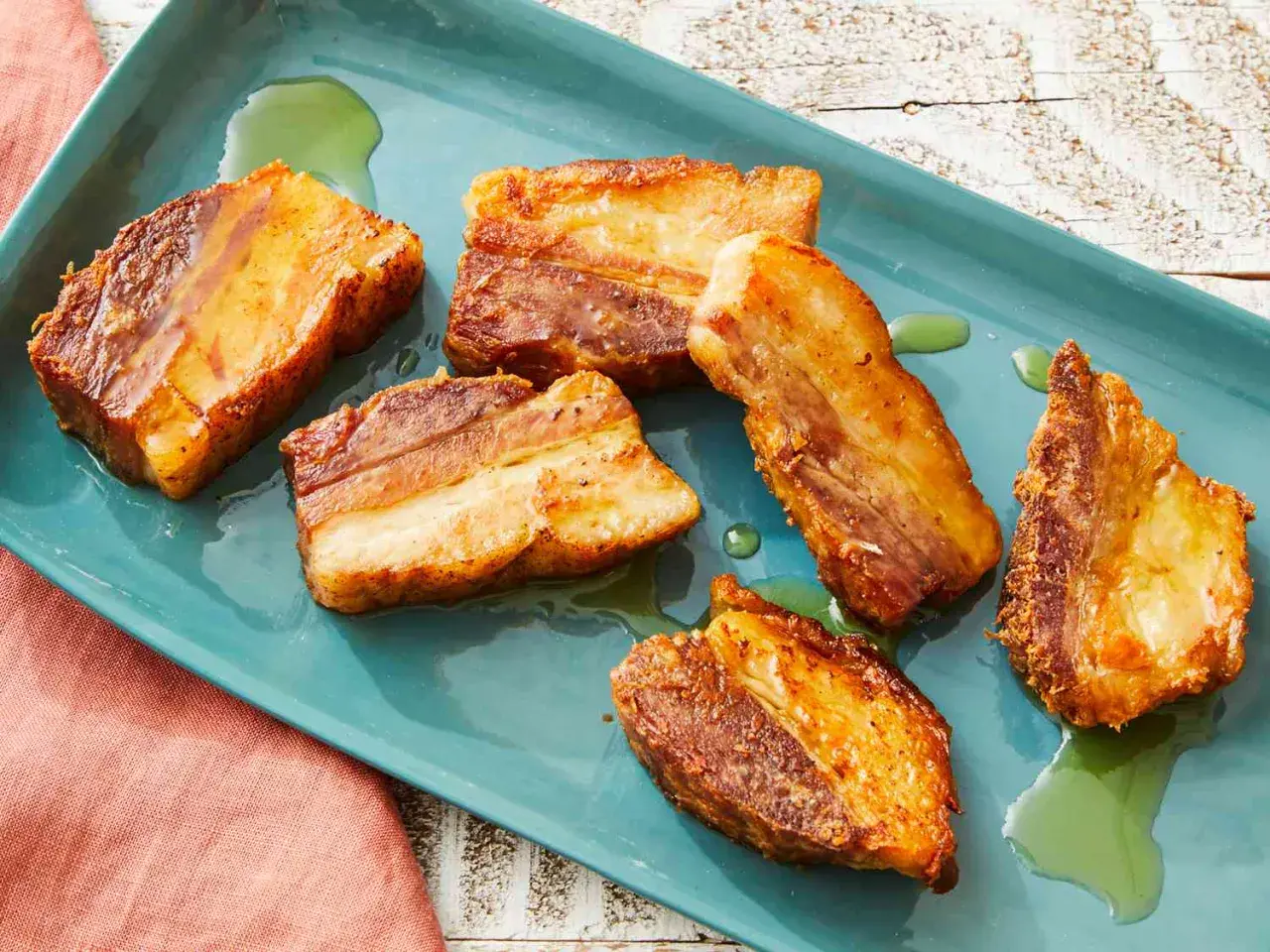
Spanish pork belly is one of those dishes that looks simple on the plate but depends on good judgment in the kitchen. The difference between a greasy slab and a memorable tapa usually comes down to the cut, the salt level, and whether you are chasing crisp skin or meltingly soft meat. In this guide I focus on the Spanish methods that actually matter, the flavour builders that give the dish its shape, and the easiest ways to serve it well at home.
The practical choices that make Spanish-style pork belly work
- Torreznos give the crispiest result, but they need dry skin and patient heat control.
- Fresh skin-on belly and cured belly behave differently, so the salt should match the cut.
- Smoked paprika, garlic, olive oil, and sherry vinegar do most of the flavour work.
- Low roasting followed by a hot finish is the safest home method if you want both tenderness and crunch.
- Acidic sides such as peppers, beans, or a sharp salad keep the dish from feeling too heavy.
What Spanish-style pork belly really tastes like
For me, the appeal of Spanish pork belly is balance. The cut is rich, fatty, and naturally forgiving, but it only becomes interesting when the cook adds contrast: salt against sweetness, smoke against fat, or vinegar against the long, slow richness of the meat. That is why the same ingredient can become a blistered tapa, a braised winter dish, or a small skewer served with pickles and peppers.
In Spanish cooking, belly is often used to support the rest of the plate rather than dominate it. Torreznos are the obvious example: crisp, bubbling skin with a juicy layer underneath. In Basque bars, belly also appears in pintxos, where something bright or acidic usually sits alongside it. And in simpler regional dishes such as potatoes with pork belly, paprika, and garlic, the meat is there to deepen the whole dish rather than act as a standalone roast. One useful term to know is adobo, which means a seasoned marinade or rub built around paprika, garlic, herbs, and vinegar. If your belly is already adobado, you need to season much more carefully. That distinction matters before you even turn on the oven, and it leads naturally to the different styles worth cooking first.

The styles worth cooking first
| Style | Texture | Typical time | Best for | My take |
|---|---|---|---|---|
| Torreznos-style | Blistered skin, juicy base, salty crunch | 12-24 hours drying plus 30-40 minutes cooking | Tapas, snacks, beer-friendly plates | Most dramatic, but the least forgiving if the heat is wrong |
| Slow-roasted belly | Tender meat with crisp edges and renderd fat | 2.5-3.5 hours for a 1.2-1.5 kg piece | Family dinner, leftovers, plated mains | The safest home option and the one I recommend first |
| Pintxo-style skewers | Caramelised outside with a bite-sized centre | 20-30 minutes after marinating or par-cooking | Parties, sharing boards, casual entertaining | Best when you want smaller portions and a lighter feel |
| Braised belly with beans or potatoes | Soft, glossy, spoonable richness | 2-3 hours | Cold weather, make-ahead meals | Deeply satisfying, but not the route if you want crackling |
If I had to choose one version for a first attempt, I would roast. It gives you the Spanish flavour profile without demanding perfect frying control, and it still leaves room for a crisp finish. Torreznos are more spectacular, but they punish impatience. Once you know which texture you want, the actual technique becomes much easier to plan.
How I cook it for the best texture
The two mistakes I see most often are rushing the fat and under-drying the skin. Pork belly needs time for the fat to render, which simply means melting slowly so the meat turns tender instead of rubbery. It also needs a dry surface if you want the skin to blister. I start with those basics every time, and only then do I decide whether the dish should lean toward crackling, roast, or a softer braise.
For torreznos-style crackling
- Use skin-on belly, ideally with a little thickness rather than a thin supermarket slice.
- Dry it uncovered in the fridge for 12-24 hours. That step is not optional if you want the skin to puff properly.
- Cut it into strips about 2.5 cm thick.
- Fry gently at first, around medium-low heat, so the fat renders before the skin burns. In a home pan, I usually allow 30-40 minutes.
- When bubbles appear across the skin, raise the heat briefly to finish the blistering.
- Drain well and leave it to sit for 3-5 minutes before serving.
Read Also: Homemade Chistorra - Authentic Basque Sausage Recipe & Cooking Tips
For a roast with crisp edges
- Score the skin in parallel lines, but do not cut into the meat.
- Season the meat side with sweet smoked paprika, crushed garlic, black pepper, and a little olive oil. Keep salt light if the belly is already cured or adobado.
- Roast at 160C fan or 180C conventional for about 2.5-3 hours for a 1.2-1.5 kg joint.
- If the top is not crisp enough, finish at 220C for 10-15 minutes.
- Rest for at least 15 minutes before slicing across the grain.
I like to add acidity at the end rather than during the roast. A spoon of sherry vinegar, a little cider vinegar, or a quick dressing over the sliced meat keeps the dish bright. That trick matters more than most people expect, especially if you plan to serve the pork with potatoes or bread. It also leads straight into the question of what else belongs on the plate.
What to serve with it on a Basque-leaning table
When I build a plate around rich belly, I think in terms of relief rather than luxury. You already have fat and salt, so the sides should add lift, texture, or freshness. In a Basque setting, that usually means peppers, beans, potatoes, or something crisp and sharply dressed. For a UK table, the same logic still applies, and the ingredients are easy to find without turning the meal into a special project.
| Side or drink | Why it works | How I would use it |
|---|---|---|
| Patatas revolconas | Crushed potatoes with paprika and garlic echo the belly without making the plate too heavy | Best as a small mound under sliced pork or as a tapa on its own |
| Roasted peppers | Sweetness and acidity cut through the fat cleanly | Dress them with olive oil and a little sherry vinegar |
| White beans or butter beans | They make the meal more substantial and absorb the cooking juices | Very good with a roast belly that has lots of rendered fat |
| Green salad with cider vinaigrette | The sharp dressing resets the palate between bites | Use when you want the dish to feel lighter and less rustic |
| Charred spring onions or tenderstem broccoli | Bitterness and smoke balance the richness well | Ideal for a UK spring or summer menu |
| Txakoli, dry cider, or a young Rioja | High acidity or gentle structure keeps the pork from feeling flat | I usually reach for txakoli first; it is a lightly sparkling Basque white wine with a sharp, refreshing finish |
For portions, I usually plan 60-90 g per person if the belly is one item in a tapas spread, or 180-250 g if it is the main protein on the plate. That range keeps you from over-serving a rich cut, which is the easiest way to make the meal feel overwhelming. Once the sides are right, the remaining problems are usually technical rather than culinary.
The mistakes that make it heavy instead of lively
Pork belly is very forgiving, but it will expose a few bad habits. If the skin is soft, the heat was too timid or the surface was too wet. If the meat tastes flat, the seasoning stayed on the outside instead of working into the flesh. And if the final plate feels greasy rather than rich, the cut was probably crowded in the pan or sliced too soon after cooking.
| Problem | Likely cause | Simple fix |
|---|---|---|
| Floppy skin | The skin was not dry enough, or the finish was too gentle | Chill it uncovered overnight and finish with stronger heat |
| Chewy fat | The fat never had time to render properly | Start lower and slower, then finish hotter only at the end |
| Over-salted meat | Cured belly was seasoned like fresh belly | Reduce salt sharply and taste before adding anything else |
| Greasy finish | The pan was crowded or the slices were cut too early | Give the meat space, drain it well, and rest before slicing |
| Bland result | No acid or aromatic lift | Add sherry vinegar, garlic, smoked paprika, or pickled accompaniments |
My own rule is simple: if the dish feels too heavy, I do not add more pork or more salt. I add contrast. A sharper vinegar, a better vegetable side, or a cleaner roast finish usually fixes the plate faster than any extra sauce would. That is the kind of adjustment that turns a rich cut into a proper tapa rather than just a fatty one.
The version I would put on a weekend tapas board
If I were cooking this for friends in the UK, I would keep it direct. I would buy a 1.2-1.5 kg skin-on belly, dry the skin overnight, and season the meat side with sweet smoked paprika, crushed garlic, black pepper, and a little olive oil. After a low roast until the meat is tender, I would finish it hot enough to sharpen the edges, then slice it into thick pieces and serve it with crushed potatoes and roasted peppers.For a more Basque feel, I would finish the plate with a small amount of sherry vinegar or cider vinegar rather than another rich sauce. That keeps Spanish pork belly lively, not cloying, and it is the same reason I keep coming back to this style of cooking: the fat is part of the appeal, but it never gets the last word.
