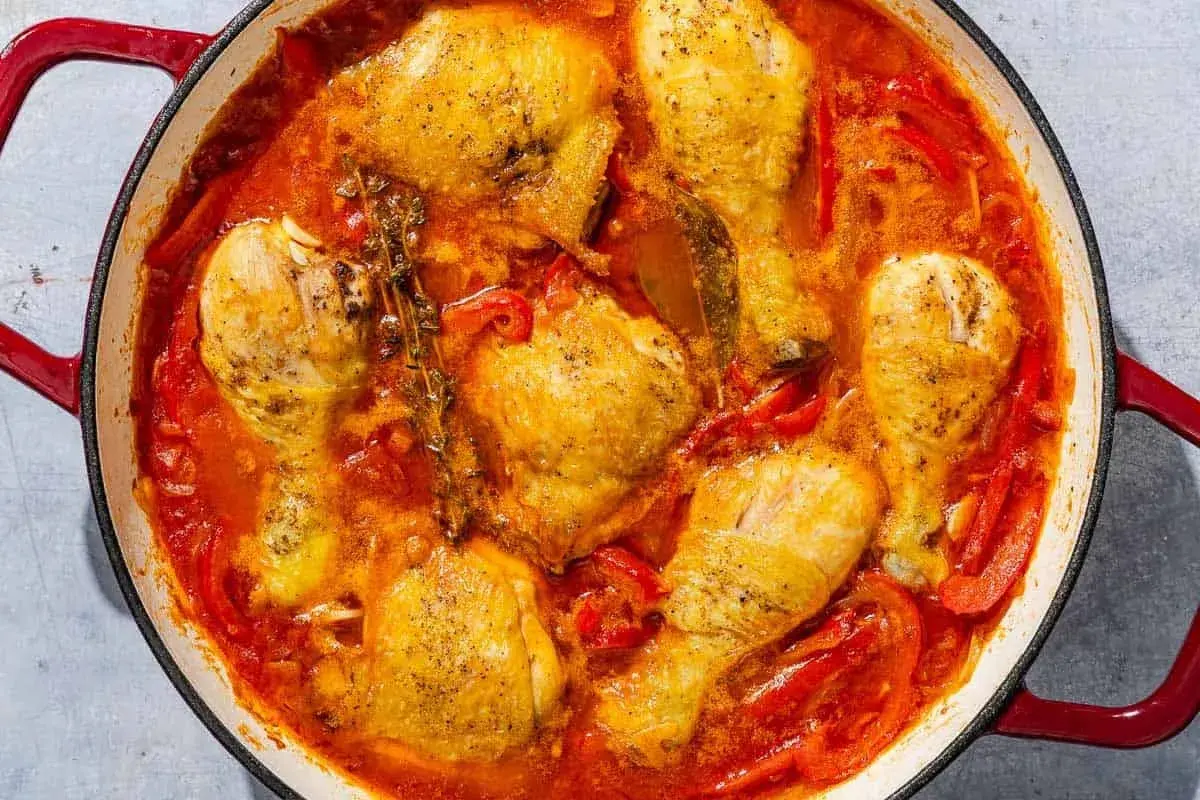
Rustic, savoury, and quietly complex, this Basque chicken stew works because it keeps the ingredient list short and lets the sauce do the heavy lifting. The dish often called chicken basquaise is built from tomatoes, peppers, onions, garlic, and the gentle heat of Espelette pepper, so it lands somewhere between a braise and a pepper-rich stew. In practice, that means one pan, a bit of patience, and a meal that feels more refined than the effort suggests.
What to know before you cook this Basque chicken
- Use chicken thighs and drumsticks if you want tenderness and flavour that survive a long simmer.
- The sauce should taste sweet, savoury, and lightly warm, not aggressively spicy.
- Peppers, tomatoes, onions, and Espelette pepper are the core; ham is optional, not mandatory.
- Plan on about 20 minutes of prep and 45 to 55 minutes of cooking.
- Rice, potatoes, or crusty bread are the most reliable sides because they catch the sauce.
What this Basque chicken really is
At its heart, this is a chicken braise, meaning it cooks slowly in a covered pot with a little liquid, built on piperade, the Basque pepper-and-tomato base that gives the dish its identity. I think that detail matters, because the meat is not meant to dominate the plate on its own; it is supposed to soak up a sauce that tastes like ripe peppers, slow-cooked onion, and a little chilli warmth.
The version most people make at home is comforting rather than fussy. You will see some cooks add cured ham, others leave it out. Some use a whole bird, others rely on thighs and drumsticks. What should stay constant is the slow, gentle cooking, because that is what turns the sauce from a mix of vegetables into something cohesive and deeply savoury. Once you understand that, the rest of the recipe becomes much easier to judge.
The ingredients that make the sauce work
The sauce does not need a long list of ingredients, but the ones you choose matter. I would rather have fewer components handled well than a crowded pot where nothing tastes distinct.
| Ingredient | Amount for 4 | Why it matters | Practical swap |
|---|---|---|---|
| Chicken thighs and drumsticks | 1.2 to 1.5 kg | Stay juicy during braising and add body to the sauce | Bone-in chicken pieces, or a small whole chicken cut up |
| Red and green peppers | 3 large | Give sweetness, colour, and the dish's signature flavour | Use all red peppers for a sweeter sauce |
| Onions | 2 medium | Build the base and stop the sauce tasting sharp | Shallots for a finer, sweeter finish |
| Tomatoes | 400 g chopped, or 5 ripe tomatoes | Add acidity and richness | Good tinned chopped tomatoes outside summer |
| Garlic | 4 cloves | Rounds out the sauce | Reduce to 2 cloves if you want a softer profile |
| Espelette pepper | 1 to 2 tsp | Brings gentle heat and a fruity, slightly smoky note | Mild paprika with a small pinch of cayenne |
| White wine | 150 ml | Lifts the sauce and helps deglaze the pan | Dry vermouth or extra stock with a little lemon juice |
| Bay leaf and thyme | 1 bay leaf, 2 sprigs thyme | Add background savoury flavour | Use one or the other if that is what you have |
| Bayonne ham or pancetta | 75 g, optional | Gives a saltier, more layered finish | Skip it for a lighter version |
If you are cooking in the UK, I would actively go out of my way for only one ingredient: the Espelette pepper. If you can find AOP on the label, that is the protected Basque version. Specialist grocers and online spice sellers usually stock it, and if you buy the genuine version, look for a fine red powder rather than a generic hot chilli blend. The point is not heat for its own sake. The point is a warm, rounded background note that lets the peppers and tomatoes taste more vivid.

How I cook it so the sauce tastes layered rather than flat
The method is simple, but the order matters. If you rush the early stages, the finished dish tastes like chicken in tomato sauce. If you take your time, it tastes like a proper braise.
- Season the chicken well with salt and a little Espelette pepper, then brown it in batches in olive oil. Give each side about 4 to 5 minutes so you get real colour, not just pale skin.
- Cook the onions and peppers slowly in the same pan for 10 to 12 minutes until they soften and start to sweeten. This is the part where the sauce develops its Basque character.
- Add the garlic, then the tomatoes, wine, thyme, bay leaf, and ham if you are using it. Scrape up the browned bits from the pan, because that caramelised residue adds depth.
- Return the chicken, cover the pan, and simmer gently for 35 to 45 minutes. If you are using breast meat, add it later so it does not dry out.
- Uncover for the last 5 to 10 minutes if the sauce needs tightening. You want it glossy and spoonable, not thin and watery.
When I test doneness, I look for chicken that is tender enough to pull easily from the bone. If you use a thermometer, aim for about 74 C in the thickest part. Let the dish rest for 10 minutes before serving, because the sauce thickens slightly as it sits and the flavour settles into itself.
What to serve with it in the UK
This is the kind of dish that rewards sensible, unfussy sides. Rice is the most reliable option because it catches the sauce without competing with it. New potatoes or mash are just as good if you want something more comforting, and a thick slice of crusty bread is almost mandatory if the sauce is particularly good.
For a lighter plate, I would add buttered green beans or a sharp green salad with mustard vinaigrette. That contrast matters, especially if the stew is rich enough to include ham. If you are serving it to guests, a dry white wine works well, but what people usually remember is how complete the dish feels once the sauce meets something absorbent.
It also keeps well. In my experience, this style of stew is better on day two, once the peppers, tomatoes, and chicken have had time to settle together. Store it in the fridge for up to 3 days, or freeze it for about 3 months, then reheat it gently with a splash of stock or water so the sauce loosens instead of clumping.
The mistakes that make it feel generic instead of Basque
There are a few recurring mistakes, and they are easy to avoid once you know what to look for.
- Using chicken breast only. It can work, but it gives you less margin for error and usually less flavour.
- Skipping the browning step. Without colour on the chicken, the sauce loses a layer of savoury depth.
- Overloading the pot with spice. Espelette should taste warm and fragrant, not like a challenge.
- Cooking the peppers too fast. They need time to soften into the sauce, not stay crisp and separate.
- Stopping too early. The sauce should reduce enough to coat a spoon, because a watery finish blunts everything else.
The wider point is that this is a braise, not a fast saute. It benefits from restraint, not drama. Once you accept that, the dish becomes far more forgiving and much easier to repeat with confidence.
The version I would cook again this week
If I were making this for a relaxed dinner in a UK kitchen, I would keep the structure very simple: bone-in thighs, plenty of peppers, ripe tomatoes or a good tin, a modest splash of white wine, and enough Espelette pepper to register as flavour rather than fire. I would also cook it a little ahead of time, because the dish is at its best when the sauce has had a chance to relax.
That is the real appeal of this Basque classic. It is honest food, but not plain food. The chicken stays succulent, the vegetables collapse into a proper sauce, and the final plate feels satisfying without needing a lot of garnish or ceremony. If you want a dinner that tastes rooted in place and still works in a British kitchen, this is one of the easiest ones to trust.
