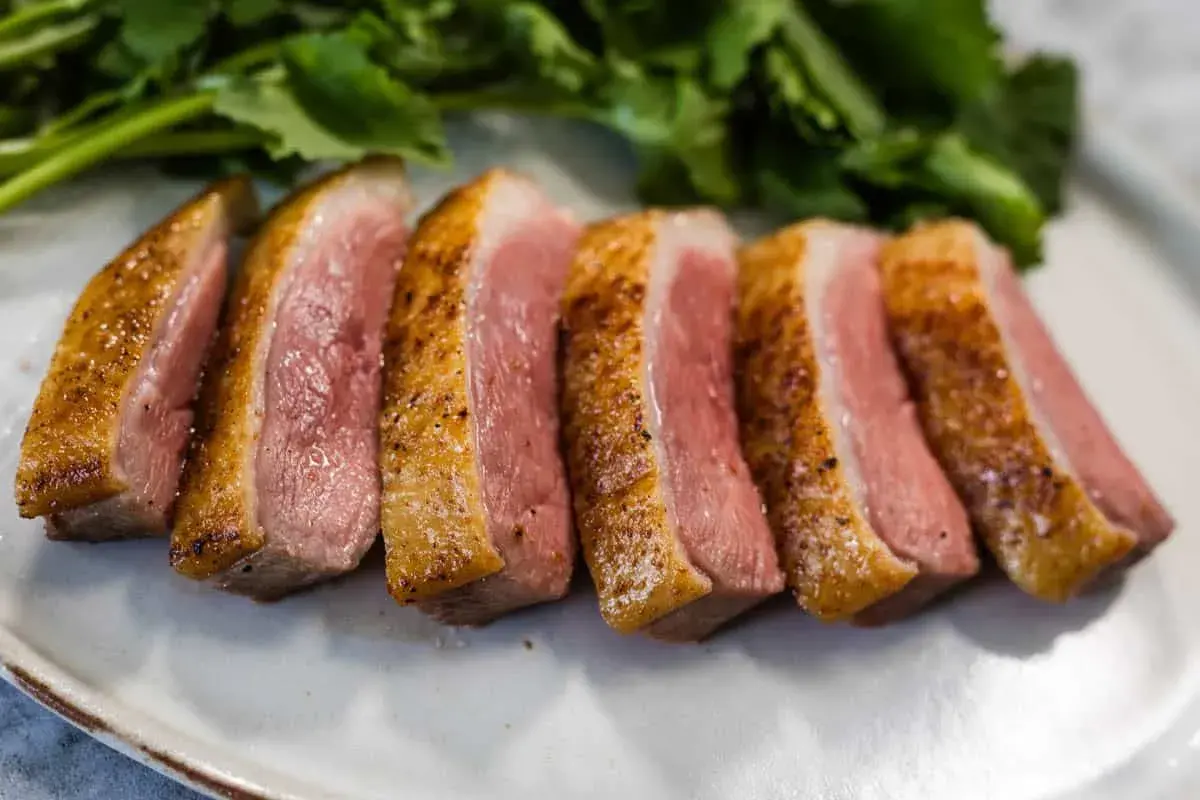
A good duck breast recipe should give you two things at once: crisp, rendered skin and a centre that stays pink and juicy. That sounds straightforward, but the result depends on a few details that are easy to miss, especially how you score the fat, how gently you render it, and when you stop cooking. I want to make those choices clear here, then finish with a Basque-leaning sauce and serving ideas that keep the dish balanced rather than heavy.
The essentials at a glance
- Score the skin lightly, but do not cut into the meat.
- Start in a cold pan so the fat renders gradually.
- Cook skin-side down for most of the time, then finish briefly on the flesh side.
- Use a thermometer if you want consistency: 52-54°C for medium-rare, 57-60°C for medium, or 70°C for 2 minutes if you want it fully cooked.
- Rest the meat for 5-8 minutes before slicing.
- A sharp cherry and piment d'Espelette sauce keeps the dish bright and very Basque in spirit.
What makes duck breast worth cooking carefully
Duck breast rewards patience more than force. The skin carries a thick fat layer, and that fat has to be rendered slowly so the skin turns crisp instead of greasy. The meat itself cooks fast once the fat has done its work, which is why I treat it more like a steak than like a typical piece of poultry. That shift in thinking is the difference between a dull, dry result and something that feels restaurant-level.
Start with the fat, not the meat. If you rush the first stage, you trap fat under the skin and lose the texture that makes the dish worth cooking in the first place. Once that logic makes sense, the ingredient list becomes refreshingly simple.
What I keep on the counter before I start
Serves 2. The quantities below make a proper dinner for two, with a little sauce left over.
| Ingredient | Amount | Why it matters |
|---|---|---|
| Duck breasts | 2, about 250-350 g each | Choose skin-on breasts of similar thickness so they cook evenly. |
| Fine sea salt | 1 tsp | Seasons the meat and helps dry the skin a little. |
| Black pepper | 1/2 tsp | Adds warmth without overpowering the duck. |
| Neutral oil | 1 tsp, optional | Only use it if your pan is very dry or not well seasoned. |
| Shallot | 1 small | Builds the sauce base. |
| Dry cider or dry red wine | 100 ml | Deglazes the pan and gives the sauce brightness. |
| Chicken stock | 120 ml | Adds body without making the sauce heavy. |
| Cherries | 100 g fresh or frozen, or 1 tbsp cherry jam | Brings the sweet-tart note that suits duck so well. |
| Sherry vinegar or cider vinegar | 1 tsp | Keeps the sauce sharp enough to cut the fat. |
| Cold butter | 15 g | Finishes the sauce with gloss and roundness. |
| Piment d'Espelette | 1/2 tsp, optional | Gives a gentle Basque-style warmth without much heat. |
I use a heavy frying pan or cast-iron skillet, a sharp knife, tongs, and a thermometer. That is enough. The technique matters far more than the equipment, as long as the pan holds heat evenly and the blade is sharp enough to slice cleanly later.
With the ingredients set out, the cooking itself stays calm and predictable.

How I cook it step by step
- Pat the duck breasts dry with kitchen paper. Score the skin in a crosshatch pattern, making shallow cuts about 5 mm apart, and stop just before the flesh. Crosshatch means the little diamond pattern you see on good restaurant duck; it helps the fat escape evenly.
- Season both sides with salt and black pepper. If I have an extra 30-60 minutes, I leave the breasts uncovered in the fridge so the skin dries a little more.
- Place the duck breasts skin-side down in a cold, dry pan. Then set the pan over low to medium-low heat. This is the part people skip, and it is the part that matters most.
- Let the fat render slowly for 8-12 minutes. You want a steady sizzle, not a violent fry. If the pan starts to flood with fat, spoon off some of it into a heatproof bowl so the skin can keep crisping instead of shallow-frying in its own fat.
- When the skin is deep golden and most of the fat has rendered, turn the heat up for 30-60 seconds to finish the skin. Flip the breasts and cook the flesh side for 1-2 minutes.
- If the breasts are thick, transfer the pan to a 180°C oven for 3-4 minutes to finish gently. I prefer this to overworking the hob, because it keeps the skin intact and the centre even.
- Rest the duck on a warm plate for 5-8 minutes, then slice on a slight diagonal. Serve it while the skin is still crisp and the juices are settled.
Render, don't rush. If the heat is too high from the start, the skin browns before enough fat leaves the breast, and the result is flatter and greasier. I would rather cook it a minute longer at a gentle pace than chase colour too early and lose the texture.
Once the method is clear, the remaining question is doneness, and that is where a thermometer earns its place.
How I judge doneness without guessing
Colour alone is not a safety test, and I do not use it as one. I use a thermometer, then I let the meat rest and settle. For duck breast, the sweet spot for texture is usually below the fully cooked poultry range, which is why people often serve it pink.
| Internal temperature | What you get | How I would use it |
|---|---|---|
| 52-54°C | Rosy medium-rare, very juicy | My default for a tender, restaurant-style result. |
| 57-60°C | Medium, firmer but still juicy | Good if you want a little less pink without drying the breast out. |
| 70°C for 2 minutes | Fully cooked, firmer and less pink | The Food Standards Agency's general rule for fully cooked food; I use this only when I want that result specifically. |
The important thing is to choose the finish on purpose. If you want the classic texture, pull the duck a touch early and rest it. If you want it fully cooked, follow the higher-temperature route and accept a firmer bite. Either way, the next layer of flavour should sharpen the plate rather than weigh it down.

A Basque-leaning cherry sauce that cuts the richness
I like duck with fruit that has enough sharpness to challenge the fat, and cherries do that beautifully. The Basque reference comes from piment d'Espelette, the mild chilli from the French Basque country that adds warmth without flattening the flavour. This sauce is not meant to be jammy or sugary; it should stay glossy, lightly tart, and clean on the finish.
- After removing the duck, pour off most of the rendered fat and leave about 1 tablespoon in the pan.
- Add the finely chopped shallot and cook for about 1 minute until soft.
- Pour in the cider or red wine and let it reduce by half, scraping up the browned bits from the pan.
- Add the cherries, stock, and piment d'Espelette, then simmer for 4-5 minutes until the sauce starts to thicken.
- Stir in the vinegar and then whisk in the cold butter off the heat.
- Taste and adjust salt. If the fruit is especially tart, add a small teaspoon of honey, but only enough to round the edges.
I like this with duck-fat potatoes, buttered green beans, or a spoonful of piperade, the Basque pepper-and-tomato mixture that brings the whole plate back into balance. If you want a more obvious dinner-party feel, a fennel and apple salad on the side works surprisingly well too.
That sauce matters because most mistakes with duck are not about flavour at all. They are about heat control and timing, and the next section is where those errors usually show up.
The mistakes I see most often
- Scoring too deeply. If the cuts reach the meat, the juices escape and the breast dries out faster.
- Starting with a hot pan. The skin seals too early, the fat stays trapped, and the result is greasy instead of crisp.
- Using too much heat. Duck breast needs a steady render, not a hard sear from the first second.
- Crowding the pan. If the pieces are too close together, they steam instead of colouring properly.
- Slicing too soon. The juices run out, the slices go dull, and the texture suffers.
- Making the sauce too sweet. Rich meat needs acidity as much as sweetness, otherwise the plate feels heavy after two bites.
When I avoid those mistakes, the result is usually very close to what I wanted in the first place. The final step is really about the small adjustments that make the dish easier to repeat.
The small adjustments I make when I want a cleaner finish
- I salt the skin 30-60 minutes ahead when I have time, because a slightly drier surface crisps more reliably.
- I save a spoonful of rendered duck fat for roast potatoes, cabbage, or mushrooms later in the week.
- I keep one sharp element on the plate, such as a mustardy salad, pickled shallots, or a few bitter leaves.
- If the breasts are unusually thick, I use the oven finish rather than forcing them through on the hob.
- I slice only just before serving, so the skin stays as crisp as possible.
That is the version I come back to most often: simple technique, steady heat, and a sauce with enough brightness to cut the richness. Used this way, this duck breast recipe feels generous without being fussy, and it fits the Basque-leaning style of the table very naturally.
