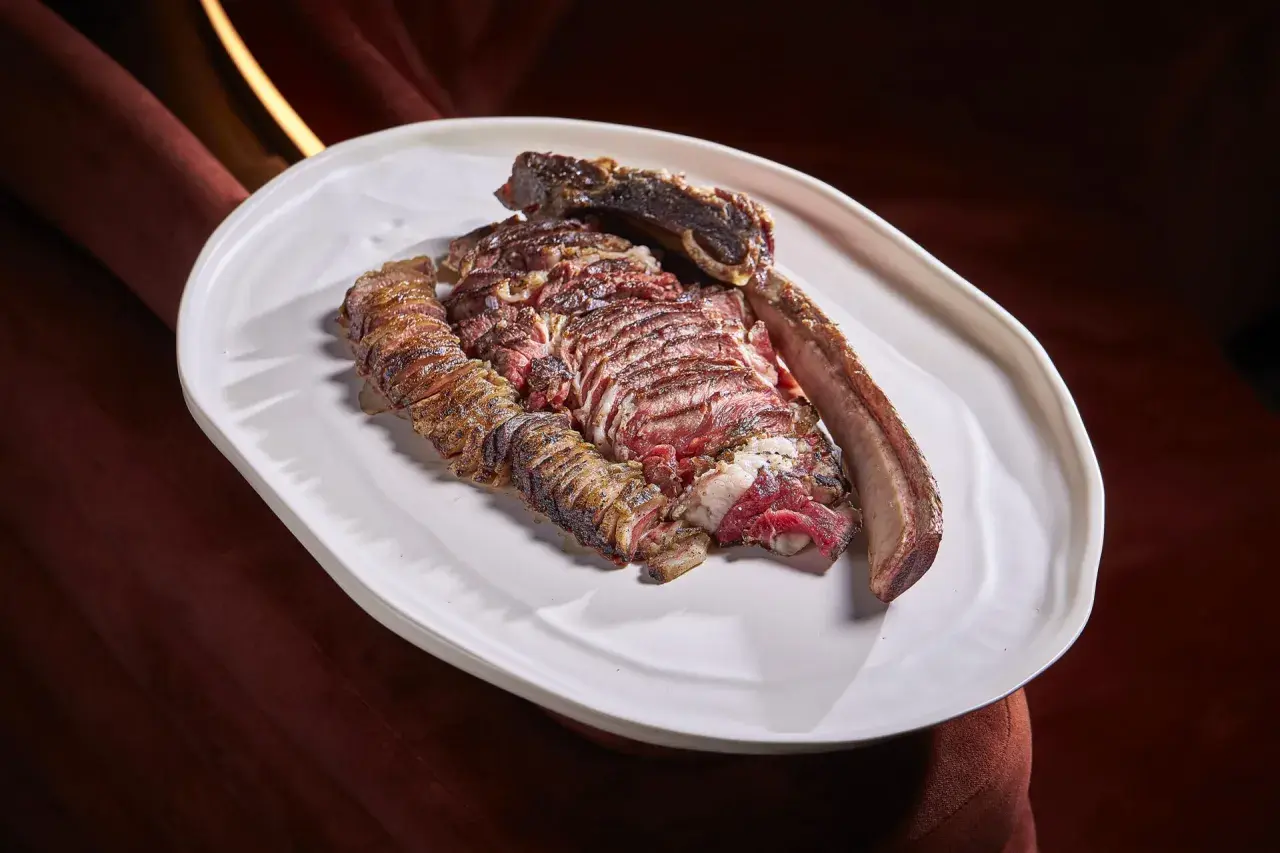
Chuleton is one of those dishes that sounds simple until it lands on the table: a large, bone-in beef steak built around deep flavour rather than delicate trimming. In Basque cooking, it sits alongside charcoal, coarse salt, cider-house dining and shared plates, which is why it feels more like an experience than a single cut of meat. For anyone trying to pin down what is chuleton, the simplest answer is that it is a substantial beef steak, usually served rare and often cut to share.
The essential facts before you order one
- Chuleton is a large, bone-in beef steak closely linked to Basque and wider Spanish grilling traditions.
- You may see it written as chuleton, txuleta or txuleton, depending on the menu and language.
- It is usually served as a sharing steak, often around 1 kg or more in restaurant settings.
- The best-known versions are grilled over very hot charcoal and finished with little more than salt.
- In UK terms, the nearest reference point is often a thick bone-in rib steak, though the exact cut can vary.
What a chuleton is and where the name comes from
In plain food terms, chuleton is a big steak from the rib area, usually left on the bone and served as a showpiece rather than an individual portion. In Spanish, the name is often used for a very large steak; in Basque menus, you will also see txuleta or txuleton, which point to the same family of cut and the same cooking style. I would not treat the name as a rigid butcher's label. It is more useful than that: it tells you that the steak is meant to be thick, beefy and cooked with restraint.
That is why the label matters. It gives you a clue about both the cut and the cooking style, which leads straight into the part most people compare it with first: the familiar steaks already on British menus.
How it differs from ribeye, T-bone and entrecote
This is where the terminology gets messy, because restaurants and butchers do not always use the same map. A chuleton can be translated as a T-bone steak on one menu and as a bone-in rib steak on another. In practice, the cut usually sits somewhere around the rib section, with enough overlap that the name is best understood by shape, size and cooking style rather than by a single neat UK category.
| Term | What it usually means | Practical takeaway |
|---|---|---|
| Chuleton | A very large, thick, bone-in steak, usually from the rib area | Expect a sharing steak with a strong beef flavour and simple seasoning |
| Ribeye | A steak from the rib section, often boneless in UK service | Close in flavour, but usually smaller and less dramatic on the plate |
| T-bone | A steak with a T-shaped bone, usually combining strip and tenderloin | Similar in size, but the anatomy can be different from a classic Basque-style chuleton |
| Entrecote | A rib steak, often boneless and trimmed more neatly | More compact and more restaurant-friendly, but less theatrical |
The safest way to think about it is this: ribeye, T-bone and entrecote are useful reference points, but none of them fully captures the Basque idea of a massive steak built around fire, fat and sharing. Once you see that overlap, the cultural question matters more: why did Basque cooks turn this particular steak into a signature dish?
Why Basque cooks prize the cut
Chuleton makes sense inside Basque food culture because it is about flavour first. Many classic versions come from mature cattle, sometimes older cows or carefully finished animals, which gives the meat a deeper, more savoury profile than the lean, quick-cooked steaks people often buy in supermarkets. That age and fat are not a gimmick. They are the point. The beef tastes more like beef, with a richer, almost nutty intensity that stands up to charcoal and salt.
I think this is where some people misunderstand the dish. If you want a filet-style bite that is soft and mild above all else, chuleton may feel too bold. If you want a steak with presence, chew, fat and a proper crust, it is exactly the right kind of excess. In Basque cider houses, that attitude fits naturally: the meal is built around shared dishes, cider poured from the barrel, and a straightforward respect for what the ingredient already has to offer.
That flavour-first logic explains the cooking method, and the next section is where the practical side really shows.
How it is usually cooked and served
A proper chuleton is not meant to be treated like an ordinary pub steak. Restaurant versions are often huge, commonly around 1 to 1.2 kg and sometimes 6 to 10 cm thick, so the cook has to build a crust without drying out the centre. The usual answer is hot charcoal, little seasoning and a short, confident cooking window. In many Basque houses, the steak arrives rare or very rare, because overcooking flattens the fat and mutes the flavour.
- Heat comes first. The grill needs to be fierce enough to brown the outside quickly.
- Salt is usually enough. Heavy marinades or sauces tend to distract from the meat.
- Thickness changes the method. A large steak needs time to colour without losing its juicy centre.
- It is usually shared. The steak is often sliced before serving so everyone gets a piece from the bone and the centre.
- Simple sides work best. Chips, green salad and roasted peppers are classic because they do not compete with the beef.
In Basque cider-house menus, the steak also sits in a broader meal built around salt cod, cider and a finish of cheese, quince and walnuts. That wider context matters because it shows how the dish is meant to be eaten: not as a lone luxury item, but as the centre of a generous table. Because the British market uses its own butchery language, the safest move is to ask a few precise questions before you order.
What to ask for in a UK restaurant or butcher
If I were ordering this in the UK, I would not stop at the name on the menu. I would ask what cut is actually being served, whether it is bone-in, how thick it is and whether it is meant for one person or for sharing. A menu can borrow the word chuleton without giving you the full Basque experience, so the detail matters.
- Ask whether it is a bone-in rib steak, a T-bone or a bone-in ribeye.
- Ask the weight, because a true sharing steak is usually much larger than a standard restaurant portion.
- Ask whether it has been dry-aged and, if so, for how long.
- Ask how the kitchen normally cooks it and whether rare is the default.
- Ask what cut the butcher would suggest if you want the closest home-cooking version.
The home version is usually a thick bone-in rib steak rather than a thin supermarket steak. I would also look for good marbling and avoid a cut that feels too lean, because the character of chuleton depends on fat as much as on thickness. Once those details are clear, the last step is simply knowing how to read the dish at the table.
The easiest way to think about it at the table
If I had to reduce chuleton to one practical idea, I would call it a sharing steak with a Basque accent: big bone, serious beef flavour and very little unnecessary dressing. Order it when you want the steak itself to be the event, not the sauce or garnish. That is why it works so well in Basque cooking and why it has spread far beyond northern Spain.
It rewards patience, confidence and restraint. The closer the dish stays to hot fire, good beef and sensible resting, the more sense it makes. Remember that, and chuleton stops being a vague menu word and becomes what it really is: a substantial, characterful steak that asks to be treated simply and eaten with attention.
