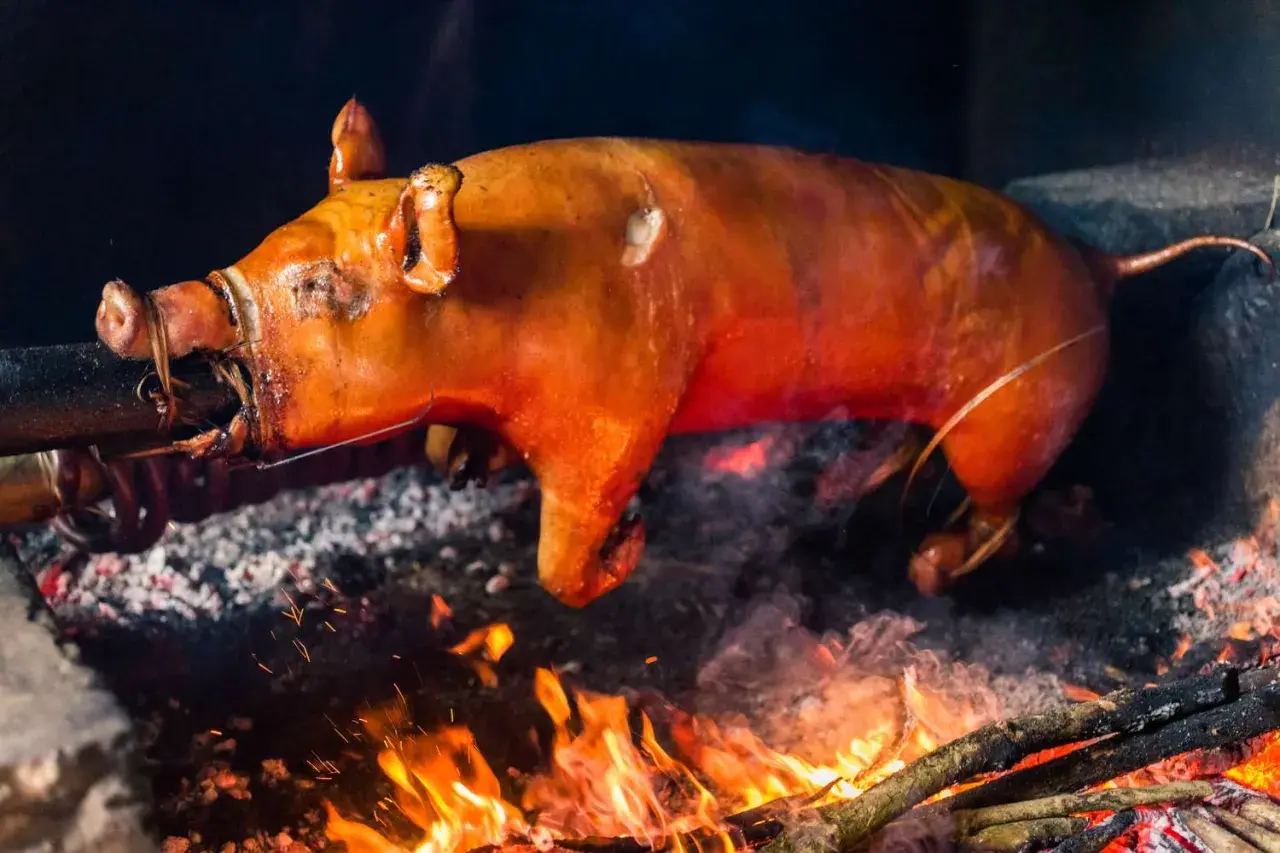
What follows is the practical version I would use in a UK kitchen: what is essential, what is optional, and where the traditional Castilian approach stays stricter than many home recipes. If you want the dish to feel authentic, restraint matters more than generosity.
The dish works because the ingredient list stays short
- The core is simple: suckling pig, salt, water, and usually a little lard or olive oil.
- Garlic, bay leaf, white wine, onion, and potatoes are common, but not all are mandatory.
- For the most classic result, keep seasoning restrained and let the skin dry properly.
- A pig around 2.5 to 4.5 kg is the most practical size for many home ovens.
- Too much liquid, too many herbs, or a wet skin usually hurts the crackling.
- In a UK kitchen, the butcher conversation matters almost as much as the recipe itself.
What actually belongs in the pan and why it matters
At its core, this is a roast built around one premium ingredient: a young pig with delicate flesh and thin skin. Everything else is there to support that meat, not to cover it up. I think that is the main mistake people make when they look at a traditional roast like this for the first time: they assume more seasoning must mean more flavour, when in practice it often means less clarity.
The ingredient list splits neatly into two groups. The first group is non-negotiable: the pig itself, salt, and a little water in the roasting dish. The second group is flexible: lard or olive oil, garlic, bay leaf, white wine, onion, potatoes, and a little pepper. Once you separate those two layers, the shopping list becomes much easier to judge.
- Suckling pig gives you the tender, sweet meat and the thin skin that crisps properly.
- Salt does more than season. It also helps draw moisture out of the skin.
- Water keeps the pan from burning dry and gives you usable juices at the end.
- Lard or olive oil is a light coating, not a heavy marinade.
- Garlic, bay leaf, and white wine add background aroma without taking over.
- Onion and potatoes are usually there to round out the tray and catch the juices.
Once you understand that structure, the traditional ingredient list starts to make more sense, especially if you are comparing a restaurant-style roast with a home kitchen version.

The traditional ingredient list
If I were writing this out as a practical shopping list for six people, I would start with the bare essentials and then add the supporting ingredients one by one. Spain.info’s version leans toward a fuller tray roast with potatoes, onion, white wine, bay leaf, salt, pepper, and olive oil, while other classic adaptations, including the Botín-style version shared by PBS, keep the same logic but add lard, herbs, garlic, and more liquid. That spread tells you something useful: there is no single rigid formula, but there is a clear family resemblance across the recipes.
| Ingredient | Typical amount | Why it matters | My take |
|---|---|---|---|
| Suckling pig | 1 pig, about 2.5-4.5 kg | The centrepiece and the only ingredient that truly defines the dish | Buy the best skin you can find. Size matters, but skin quality matters more. |
| Fine sea salt | 2-3 tbsp | Seasons the meat and helps dry the skin | Use enough to season properly, but do not bury the pig in salt. |
| Water | 500-600 ml | Protects the roasting tray and supports the pan juices | Keep it in the tray, not over the skin. |
| Lard or olive oil | 2-4 tbsp | Helps the skin brown and gives a richer roast finish | Lard is the more traditional flavour; olive oil is the easier UK fallback. |
| Garlic | 1 head or 2-6 cloves | Adds aroma without turning the roast into a garlic dish | Crush or slice it lightly. Do not make a paste unless you want a stronger result. |
| Bay leaf | 1-2 leaves | Brings a rounded, slightly herbal note | Keep it in the background. This is not the place for aggressive herbs. |
| Dry white wine | 120-250 ml | Brightens the tray juices and adds a little lift | Useful, but too much wine can soften the skin if you are careless. |
| Onion | 1 large | Sweetens the roasting juices | Optional, but very practical if you want a fuller tray sauce. |
| Potatoes | 500 g-1 kg | Soaks up fat and turns the roast into a complete meal | A good choice for a family table, less essential for the purest version. |
| Black pepper | A small amount | Gives background warmth | Use it lightly. The pig should still taste clean and sweet. |
If you want the most traditional feel, the shortest ingredient list usually wins. That means pig, salt, water, and a thin layer of fat. Everything else should feel like a considered addition, not a rescue mission. From here, the real question is not what you can add, but how much you should add before the balance starts to slip.
How regional versions change the balance
This is where the dish becomes more interesting than a plain checklist of ingredients. A Segovian restaurant roast tends to be spare and disciplined, while a home version often carries a little more garlic, wine, potato, and onion. Neither approach is wrong. They are simply solving different problems. One is trying to preserve a very old style of roasting; the other is trying to make the dish workable in a domestic kitchen.
| Style | Ingredient profile | What changes in practice |
|---|---|---|
| Strict traditional roast | Pig, salt, water, and a little lard | The flavour stays clean and the skin usually crisps best because nothing interferes with it. |
| Spanish home-kitchen version | Pig, salt, water, garlic, bay leaf, white wine, onion, potatoes, oil | You get a fuller tray and more aromatic juices, which makes the roast feel more complete for family dining. |
| Herb-forward adaptation | Pig, salt, fat, garlic, thyme, rosemary, parsley, wine | The roast becomes more fragrant, but the pork character is less pure. I would only do this if I wanted a deliberate twist. |
My own view is straightforward: if this is your first attempt, stay close to the restrained version. Herbs and extra seasonings are easy to overdo, and once the pig is in the oven, you cannot pull flavour back out. That is why buying the right animal in the UK matters so much.
Buying the right suckling pig in the UK
In a UK kitchen, the ingredient list starts long before the first grain of salt hits the skin. You need a butcher or specialist supplier who understands that this is not the same thing as a standard pork roast. I would ask for a suckling pig that is cleaned properly, with intact skin, and ideally split or butterflied so it can lie flat in the roasting dish.
- Choose size carefully. Around 4-5 kg is the sweet spot for a domestic oven and a table of 6-8.
- Check the skin. It should be dry, clean, and unbroken where possible.
- Ask how it is prepared. Split, butterflied, or whole affects both cooking time and fit.
- Do not overcomplicate the order. A heavily seasoned pig is usually a bad idea for this dish.
- Think about the tray. You need space for a little water, fat, and the optional potatoes or onions.
If the pig is too large, the oven becomes the weak point. If it is too small, the meat can dry out before the skin turns properly crisp. That is why I keep coming back to size: it is not a minor detail, it is part of the ingredient decision. Once you have the right pig, the last step is deciding how spare or generous you want the supporting ingredients to be.
The shopping list I would use for a British oven
For a first roast, I would keep the shopping list disciplined and realistic. This is the version that gives you the classic flavour, still feels workable in a home kitchen, and does not bury the pig under too many extras.
- 1 suckling pig, about 4-5 kg
- 2-3 tbsp fine sea salt
- 500 ml water
- 2-4 tbsp lard or olive oil
- 1 head of garlic, lightly crushed
- 1-2 bay leaves
- 1 large onion, sliced
- 500 g-1 kg potatoes, peeled and sliced
- 150-250 ml dry white wine
- Small amount of black pepper
If you want a more austere roast, drop the potatoes and onion and keep the aromatics to garlic, bay leaf, salt, water, and fat. If you want a fuller family meal, keep the tray vegetables and wine. I would not go much further than that. With a dish like this, the best ingredient list is the one that protects the pig’s own flavour instead of competing with it.
