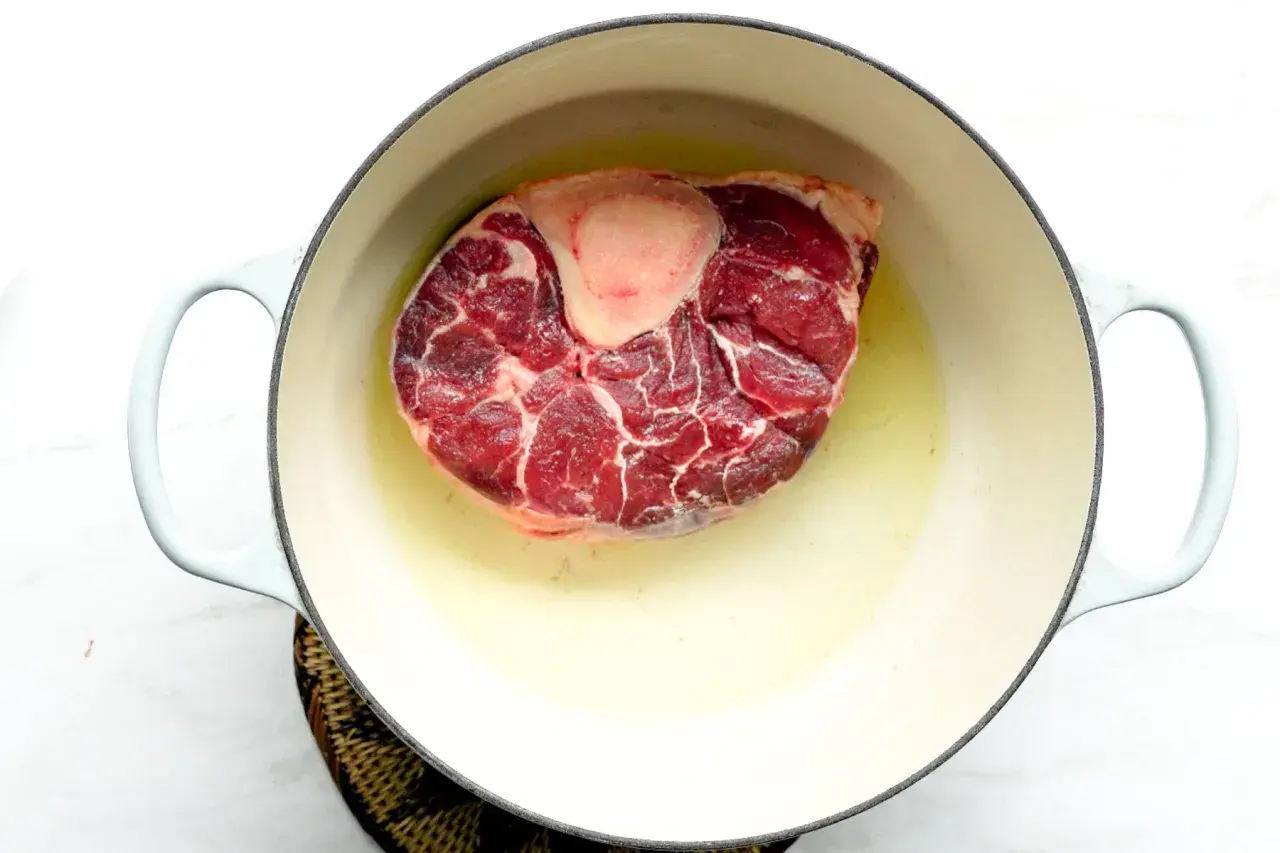
The answer to beef shank in Spanish is usually morcillo or jarrete, but the exact word depends on how the cut is sold. That matters more than it sounds, because the right name helps you order the right piece, cook it properly, and avoid ending up with a cut that needs a completely different method.
The names, uses and cooking times that matter most
- In Spain, morcillo and jarrete are the most useful names for beef shank.
- Osobuco usually points to cross-cut, bone-in slices rather than the generic shank itself.
- In the UK, the closest everyday butcher term is usually shin of beef or shin on the bone.
- This cut is built for braising, stewing, slow cooking, and pressure cooking, not quick frying.
- A sensible buy for four people is often 1.2 to 1.5 kg bone-in, or a little less if boneless.
- For a reliable result, think 150 to 160C for 3 to 4 hours, or 6 to 8 hours on low in a slow cooker.
The names that matter in Spanish kitchens
When I translate cuts for the kitchen, I do not trust a single word on its own. In practice, the Spanish names for shank are used a little differently depending on whether the meat is sold whole, boneless, or sliced across the bone. Morcillo and jarrete are the names you will see most often on menus and in recipes, while osobuco is the version that usually signals cross-cut pieces with bone and marrow.
| Spanish term | What it usually means | How I would use it in practice |
|---|---|---|
| morcillo | The shank meat used for braises, stews, and broth | Best when you want a rich, spoonable result |
| jarrete | A very common culinary name for the shank | Useful on recipes and butcher counters |
| osobuco | Cross-cut shank with bone and marrow | Best when you want the bone-in presentation and extra depth |
The RAE defines osobuco as beef cut from the shank with the bone included, which matches how most cooks use the term. That distinction is the one I would keep in my head, because it stops you from buying the wrong shape of meat for the dish you want. Once you know the names, the next question is how to ask for them clearly in Britain.
How I would ask for it in a UK butcher's shop
In the UK, the most practical translation is usually shin of beef. If you want the bone left in, say shin on the bone; if you want it sliced crosswise for a more dramatic braise, ask for cross-cut shin or osso buco-style shanks. If the butcher looks puzzled, the phrase "the cut used for long braises and stews" is often enough to steer the conversation in the right direction.
I would also buy by weight rather than by guesswork. For a meal for four, 1.2 to 1.5 kg bone-in is a sensible starting point because shank loses a lot of bulk as it cooks. Boneless pieces can be slightly lighter, but they still need enough mass to stay juicy through a long braise.
- Choose meat that looks deep red rather than dry at the edges.
- Look for some creamy white connective tissue; that is what turns silky in the pot.
- If the cut is bone-in, the marrow should look clean and intact.
- If you want tidy slices on the plate, ask for cross-cut pieces.
- If you want the richest sauce, a whole piece is often better than pre-diced meat.
That buying decision leads straight into the real reason this cut is loved in so many kitchens: it is not meant to be rushed, it is meant to be transformed.
Why this cut turns best in slow heat
Beef shank is hard work for the animal, which is exactly why it rewards patience. The muscle is heavily used, so it contains plenty of collagen, the connective tissue that slowly melts into gelatin during gentle cooking. That is why a shank can go from stringy to luxuriously tender, and why the sauce tastes fuller than it would with a leaner cut.
| Method | Typical time | What it gives you |
|---|---|---|
| Oven braise at 150 to 160C | 3 to 4 hours | Even heat and a glossy, concentrated sauce |
| Slow cooker on low | 6 to 8 hours | Easy, forgiving cooking with very little attention |
| Pressure cooker | 45 to 60 minutes, then natural release | Fastest route when time matters |
My rule is simple: brown the meat first, add aromatics, then cook gently with enough liquid to keep everything moist but not drowned. A hard boil makes the fibres tighten, which is exactly what you do not want. When the meat is ready, it should give way to a fork without resistance, and the sauce should cling instead of running off the plate. That style of cooking fits Basque food beautifully, which is why this cut feels so at home there.
Basque-style dishes that suit it naturally
Basque cooking has a practical, confident way with meat: not many tricks, just good ingredients and careful heat. For shank, I would lean into the flavours that already feel native to the region, such as onion, green pepper, tomato, garlic, parsley, bay leaf, cider, or a dry red wine. A little piment d'Espelette can work well too, because it adds warmth without hiding the beef.
These are the combinations I reach for most often:
- Shank with onions and peppers for a simple braise that tastes clean and deep at the same time.
- Tomato, garlic, and bay leaf when I want the sauce to feel more traditional and stew-like.
- Dry cider or red wine when I want a sharper, more restaurant-style finish.
- Potatoes, carrots, and parsley when I want the dish to be a full meal without extra effort.
The mistakes that make it seem tougher than it is
Most disappointing shank dishes fail for a few predictable reasons. The meat is not the problem; the method is. If you treat it like steak, rush the cooking, or under-season the liquid, you will get a chewy result and assume the cut is weak. It is not weak. It just asks for the right kind of attention.
- Cooking it too fast is the most common mistake. Shank needs time for the connective tissue to soften.
- Skipping the browning step leaves the sauce flat and one-dimensional.
- Using too little seasoning makes the braise taste watery, especially after long cooking.
- Boiling instead of simmering tightens the fibres and dries the meat out.
- Stopping too early is another classic error; the cut often needs longer than people expect.
If the sauce tastes thin at the end, I would reduce it uncovered for 10 to 15 minutes rather than adding flour or extra stock. If the meat is close but not quite tender, I would give it another 20 to 30 minutes and check again. Those small adjustments usually solve the problem without turning the dish heavy. After that, the only thing left is to keep the translation and the technique straight in your head.
What I would keep in mind before buying or braising it again
My practical shorthand is this: morcillo or jarrete in Spanish, shin of beef in the UK, and osobuco when the cut is cross-sliced with bone. That is the safest way to move between recipes, butcher counters, and restaurant menus without confusion.
- Use the Spanish name that matches the shape of the cut, not just the literal translation.
- Choose bone-in when you want more body in the sauce and a more dramatic plate.
- Choose boneless when you want easier slicing or a cleaner stew.
- Cook low and slow, then let the dish rest before serving.
If you remember only one thing, make it this: the right word gets you the right cut, and the right heat turns it into something worth waiting for.
