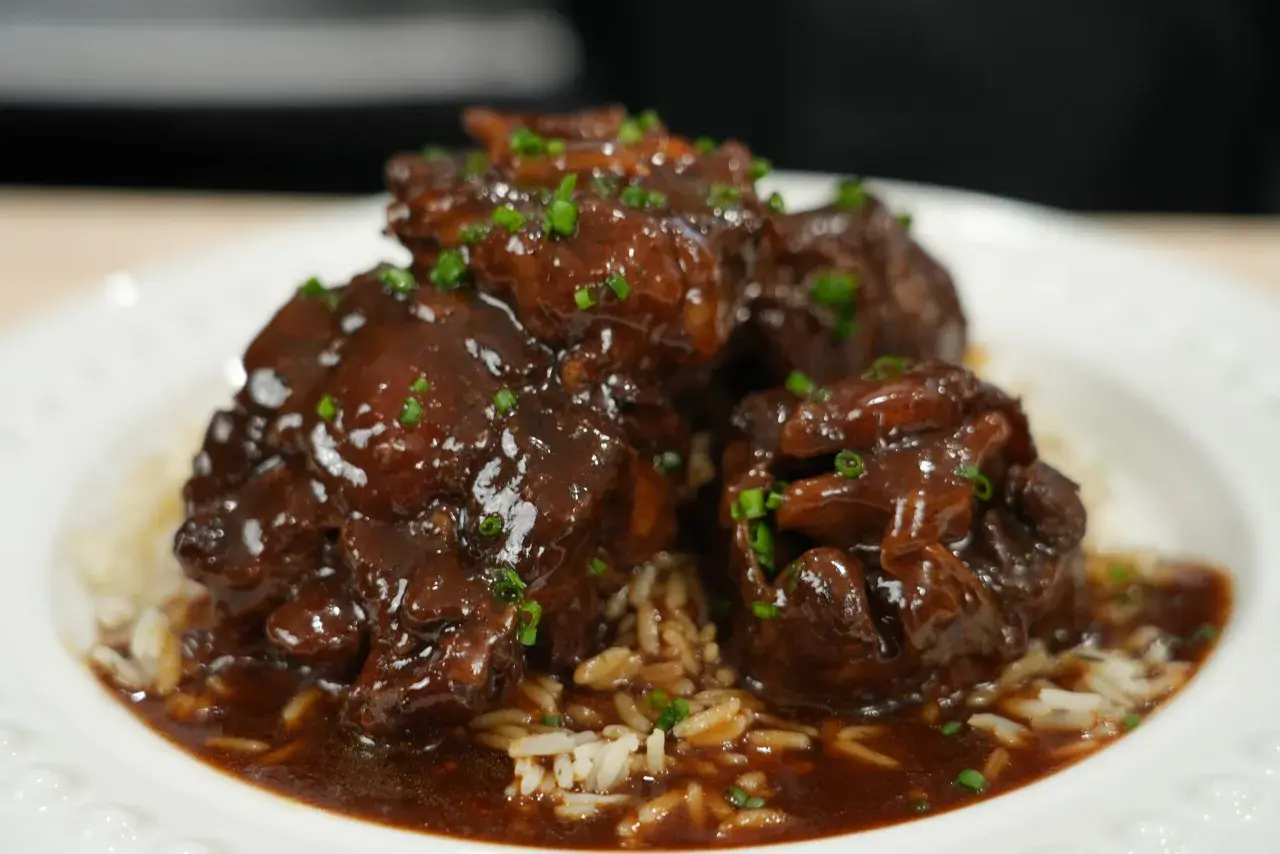
A good braise turns a tough cut into something plush, rich, and deeply savoury. This oxtail recipe is built around the parts that matter most: how to brown the meat properly, how long to cook it, and how to finish the sauce so it tastes concentrated rather than heavy. I keep it practical for a UK kitchen, with a few Basque-leaning touches where they make sense, not where they feel forced.
Key details for a rich, tender result
- Serves: 4 to 6, depending on sides
- Prep time: 20 to 25 minutes
- Cook time: about 3 to 3.5 hours in the oven
- Main rule: brown the oxtail well, then braise it gently rather than boiling it hard
- Best flavour base: onions, carrots, celery, garlic, tomato paste, red wine, and beef stock
- Best finish: rest the dish, skim the fat, and sharpen the sauce with a small splash of vinegar if needed
Why oxtail is worth the wait
Oxtail is a collagen-rich cut, and that is exactly why it works so well in a braise. The meat starts off firm, but during a slow cook the connective tissue melts into the sauce and gives it body, while the marrow and bone bring a deep, almost sticky richness.
That transformation only happens with patience. I want a gentle simmer, not a rolling boil, because hard heat tightens the meat and makes the fat look blunt rather than silky. If the pieces still feel stubborn after a few hours, I do not force the issue; I keep cooking in short blocks until the meat loosens cleanly from the bone.
Once you accept that the cut needs time, the rest of the process becomes straightforward. The shopping list is just about building flavour in layers.
What to gather before you start
I buy cross-cut oxtail pieces with some surface fat still on them. They may look modest in the tray, but they cook down into a much smaller yield than the raw weight suggests, so 1.5 kg is a sensible amount for a proper family meal.
| Ingredient | Amount | Why I use it |
|---|---|---|
| Oxtail, cross-cut | 1.5 kg | The main cut; the bones and collagen create the signature texture. |
| Salt and black pepper | 2 tsp salt, 1 tsp pepper | Basic seasoning before browning. |
| Plain flour | 1 tbsp, optional | Helps the sauce thicken slightly if you want a fuller finish. |
| Neutral oil | 2 tbsp | For browning without burning the pan. |
| Onions | 2 large, chopped | Builds sweetness and depth in the base. |
| Carrots | 2, diced | Adds gentle sweetness and helps the sauce feel rounded. |
| Celery | 2 sticks, diced | Gives the braise a savoury backbone. |
| Garlic | 4 cloves, chopped | Sharpens the flavour without overpowering it. |
| Tomato paste | 2 tbsp | Deepens colour and adds a slow-cooked, almost caramel note. |
| Dry red wine | 250 ml | For deglazing and giving the sauce acidity and structure. |
| Beef stock | 600 to 750 ml | Forms the braising liquid; I prefer low-salt stock. |
| Bay leaves and thyme | 2 bay leaves, 3 thyme sprigs | Classic aromatics that suit both British and Basque-style braises. |
| Smoked paprika or piment d'Espelette | 1 tsp | Optional, but it gives the dish a warmer, slightly Basque accent. |
| Worcestershire sauce | 1 tbsp | Adds savoury depth without making the sauce taste “British” in an obvious way. |
| Sherry vinegar or cider vinegar | 1 tsp, optional finish | Brightens the final sauce if it tastes too heavy. |
| Fresh parsley | Small handful | Freshens the plate at the end. |
A heavy casserole dish or Dutch oven matters more than any special technique. I also like to keep a ladle and a spoon nearby, because the best braises get better when you taste and adjust as you go. With the pot ready, the method itself is simple.

How I cook it step by step
I prefer the oven for this dish because the heat stays steady and the sauce reduces evenly. A slow cooker can work too, but I still like to finish the liquid on the hob so the final texture feels more controlled.
- Season the oxtail well. Pat the pieces dry, then season them generously with salt and pepper. If you want a slightly thicker sauce, dust them very lightly with flour.
- Brown the meat in batches. Heat the oil in a heavy casserole over medium-high heat. Brown the oxtail on all sides for about 3 to 4 minutes per side. Do not crowd the pan; if the pieces steam, you lose flavour.
- Cook the vegetables slowly. Lower the heat and add the onions, carrots, and celery. Cook for 8 to 10 minutes until softened. Stir in the garlic and tomato paste for another minute so the paste darkens slightly.
- Deglaze with wine. Pour in the red wine and scrape up every brown bit from the base. Let it bubble for 3 to 5 minutes, until reduced by roughly half.
- Add the braising liquid. Return the oxtail to the pot, then add the stock, bay leaves, thyme, paprika or piment d'Espelette, and Worcestershire sauce. The liquid should come partway up the meat, not drown it.
- Braise gently. Bring the pot just to a simmer, cover it, and transfer it to a preheated oven at 150C conventional or 130C fan. Cook for 3 to 3.5 hours, turning the pieces once or twice if you remember. The meat is ready when it pulls away from the bone easily.
- Finish the sauce. Lift out the oxtail, skim any surface fat, and reduce the sauce uncovered on the hob for 10 to 15 minutes. If you like a cleaner finish, strain it first. Return the meat to the sauce before serving.
- Brighten and rest. Add the vinegar if the sauce tastes flat, then scatter over parsley. Let the dish rest for 10 to 15 minutes so the flavours settle.
If I want a slightly more rustic version, I stir in butter beans for the last 20 to 30 minutes. They make the dish feel broader and more filling without changing the core character. That said, the real difference between a good result and a great one usually comes down to a few simple fixes.
The texture and flavour fixes that matter most
Oxtail is forgiving, but it still has a few weak points. If you know what usually goes wrong, it is much easier to correct the dish before it becomes heavy or stringy.
| Problem | What it usually means | What I do |
|---|---|---|
| The meat is still chewy after long cooking | The braise has not gone long enough, or the heat has been too low and uneven. | Keep cooking gently in 20 to 30 minute blocks until the meat loosens. |
| The sauce looks greasy | Too much fat has rendered out and not enough has been removed. | Skim the fat while hot, then chill and lift the solidified layer if you are making it ahead. |
| The flavour feels flat | There is not enough salt, acidity, or reduction. | Add a little salt, then finish with a teaspoon of vinegar and a short boil uncovered. |
| The sauce is too thin | It has not reduced enough, or the base vegetables were too watery. | Simmer uncovered until it coats a spoon; if needed, mash a few vegetables into the sauce. |
| The sauce tastes slightly bitter | The tomato paste or wine has been reduced too aggressively. | Loosen it with a little stock and balance it with a small knob of butter. |
The rule I trust most is simple: the sauce should look glossy, not oily, and the meat should feel soft enough to separate without effort. If either of those is off, I would rather keep adjusting for another ten minutes than serve a dish that feels unfinished. Once the texture is right, the side dishes become much easier to choose.
Good sides for a British table with a Basque edge
I like sides that can hold a sauce without stealing the spotlight. For this kind of dish, a plate needs starch, something fresh or bitter, and one small bright note to stop the richness from dominating the whole meal.
| Side | Why it works | When I choose it |
|---|---|---|
| Creamy mash | The sauce sinks into it and gives every bite a soft, comforting finish. | When I want the most classic, winter-friendly plate. |
| Buttered new potatoes | They stay intact and keep the dish feeling a little lighter. | When I want a straightforward Sunday dinner. |
| Polenta | Soft, smooth, and ideal for catching every drop of sauce. | When I want a dinner-party feel without extra fuss. |
| Celeriac or parsnip mash | The sweetness and earthiness work well against the deep meat flavour. | When I want something a bit more interesting than potato. |
| Crusty bread | It is the simplest way to deal with a rich braise and a glossy sauce. | When I want the meal to feel relaxed and rustic. |
| Braised white beans | They echo the softness of the oxtail and give the dish a more Basque-leaning feel. | When I want to stretch the dish or make it more substantial. |
| Charred peppers or garlicky greens | They cut through the richness and add colour and freshness. | When I want the plate to feel balanced rather than heavy. |
If I am serving guests, I finish the meat with parsley and a tiny splash of sherry vinegar, then set roasted peppers or greens beside it. That gives the dish a more Mediterranean edge without losing its British comfort-food core. A medium-bodied Rioja or a dry cider sits very happily alongside it, but the food still matters more than the drink.
Make-ahead, storage, and leftovers
This is one of those dishes that often tastes better the next day. Once it cools, the fat rises and firms up, which makes it easier to remove, and the sauce settles into a deeper, rounder flavour. If I am cooking for company, I usually braise it a day ahead and reheat it slowly before serving.
For storage, I keep it in the fridge for up to 3 days or freeze it for up to 3 months, provided it has cooled quickly and been packed properly. Reheat it gently over a low flame with a splash of stock or water if the sauce has tightened too much.
Leftovers also travel well into other meals. I use shredded oxtail over pasta, spoon it onto toast, tuck it into a pie, or stir it through beans for a second dinner that feels deliberate rather than recycled. That is one of the quiet strengths of a good braise: it keeps paying you back after the first serving.
The small decisions that make this dish feel special
The version I trust most is not the fanciest one; it is the one with a properly browned base, a patient braise, and a clean finish at the end. If the meat yields easily, the sauce has been reduced enough, and the final seasoning has a touch of brightness, the dish feels rich without turning blunt.
That is why I would rather spend an extra ten minutes on the sauce than add another ingredient for the sake of it. The best plates of oxtail are usually the calmest ones: deep flavour, steady heat, and a side that soaks up every last spoonful. Serve it that way, and it becomes the sort of meal people remember long after the table has been cleared.
