What you need to know before you turn on the oven
- Keep the seasoning simple. The pig should taste like excellent pork, not a spice paste.
- Dry skin is non-negotiable. Overnight air-drying gives you much better crackling than a rushed prep.
- Use two heat stages. Gentle roasting cooks the meat through, then higher heat crisps the skin.
- Buy the right size for the oven. A smaller piglet is far easier to handle in a domestic kitchen.
- Balance the plate. Sharp salad, roast potatoes, or bitter greens cut through the richness.
- Leave time to rest. Cutting too early wastes juices and softens the skin.
What Spanish-style suckling pig really is
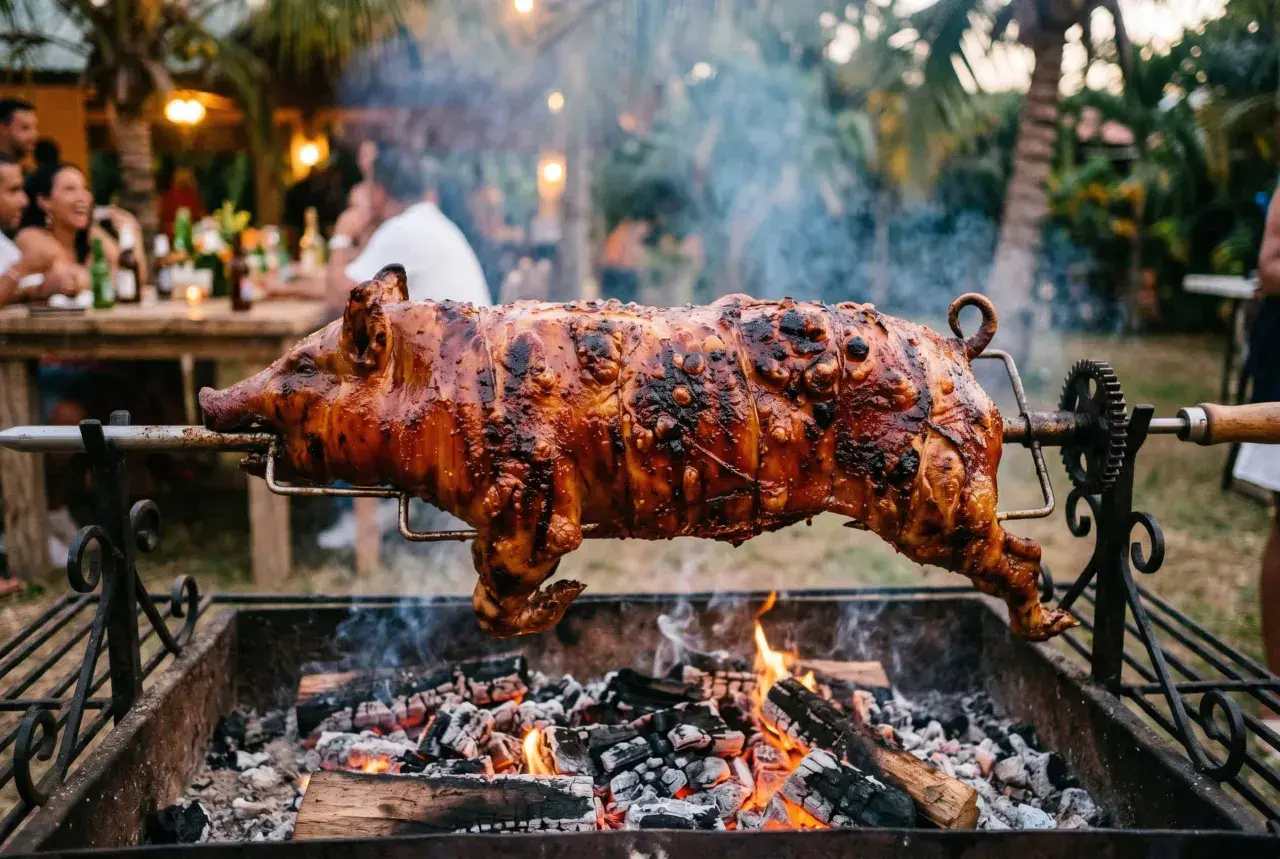
This is a celebration dish built around a very young pig, usually milk-fed, with meat that stays tender and skin that can turn properly crisp when the cook gets the basics right. Spain.info still treats cochinillo as one of Segovia’s signature dishes, and that fits the way the dish is usually understood: minimal seasoning, long roasting, and a finish that gives the skin its crackle.
What I like about it is the discipline behind it. You do not need a heavy marinade, a complicated glaze, or a long list of aromatics. The best versions rely on the natural flavour of the animal, a little salt, and the controlled rendering of fat and connective tissue. That connective tissue is what makes the meat supple rather than dry, so the roasting process has to respect both the flesh and the skin.
If you are used to pork shoulder or belly, the logic is slightly different here. You are not trying to shred the meat or drown it in sauce. You are aiming for a roast that eats cleanly, with shattering skin and tender slices that still hold their shape. That is why technique matters more than ingredient count, and it is also why the next step is all about the skin.

Why the skin is the whole game
The skin decides whether the dish feels luxurious or flat. I would start the day before if possible: pat the pig dry, salt it well, and leave it uncovered in the fridge so surface moisture can evaporate. That overnight drying is the easiest way to improve crackling without changing the flavour profile at all.
In a domestic oven, I want the main roast to be gentle enough to cook the meat through without scorching the outside. Then I want a hot finish that tightens and blisters the skin. A little steam in the oven cavity is fine; a wet skin is not. That is the difference between crisp crackling and a leathery top.
| Step | What to do | Why it matters |
|---|---|---|
| Drying | Pat the skin dry and chill the pig uncovered overnight | Moisture is the enemy of crackling |
| Salting | Season the pig generously inside and out | Salt seasons the meat and helps draw out surface moisture |
| Main roast | Cook at about 160°C conventional or 140°C fan | Lets the fat render without burning the skin |
| Finish | Raise the heat to about 220-240°C conventional or 200-220°C fan | Creates the blistered, crackly finish people expect |
| Resting | Rest for 20-30 minutes before carving | Keeps the juices in the meat and steadies the cut |
I also keep the pan setup simple: a rack if I have one, a little water underneath to stop the drippings burning, and foil only on the ears or tail if they start to darken too fast. The goal is not to steam the pig. It is to protect the edges while the surface dries and crisps. That balance is what makes the dish feel traditional rather than merely roasted.
Once you understand that, the buying decision becomes much easier, because size and preparation matter almost as much as heat.
Buying one in the UK without guesswork
For a UK kitchen, the practical route is usually a specialist butcher, a farm shop with strong meat sourcing, or an online supplier that can handle a special order. I would ask three questions before I place an order: the dressed weight, whether the piglet arrives whole or split, and whether the skin has been scored. For this style of roast, I generally prefer the skin left intact unless the butcher has a clear reason to do otherwise.
If you are hosting at home, order earlier than you think you need to. A small piglet may only need a few days’ notice, but a whole animal or a very specific weight is better left with at least a week or two. That gives the butcher time to source properly and gives you time to plan oven space, side dishes, and carving.
| Approximate dressed weight | Best for | Kitchen reality |
|---|---|---|
| 2.5-3 kg | 4-6 people | Easier to fit into a standard oven and ideal for a first attempt |
| 4-5 kg | 6-8 people | A better dinner-party size if you want leftovers |
| 6-8 kg | 8-12 people | More of a centrepiece; check oven dimensions before ordering |
The numbers above are a practical home-cooking guide rather than a rigid rule. If you are serving a lot of sides, a slightly smaller piglet goes further than you might expect. If the roast is the main event with only a salad and potatoes on the table, I would size up a little. That is the sort of decision that makes the whole meal feel relaxed instead of tight.
Once the size is right, the oven method is far less intimidating than it looks on paper.
My roasting method for a reliable result
The cleanest method is a two-stage roast. First, cook gently until the meat is nearly done; then raise the heat to crack the skin. For a piglet around 2.5-3 kg, I would expect roughly 2.5-3.5 hours for the main roast, followed by 20-30 minutes at high heat, though the exact time depends on whether the pig is split, how your oven behaves, and how cold the meat was when it went in.
- Bring the pig to cool room temperature for 30-45 minutes before roasting.
- Dry it again if needed, then season the cavity and skin generously with salt.
- Set it in a roasting tray with a rack if possible, or on a bed of onion and a little water if that is what your tray allows.
- Roast at about 160°C conventional or 140°C fan until the thickest part reaches roughly 70°C.
- Increase the heat to about 220-240°C conventional or 200-220°C fan for the last 20-30 minutes.
- Watch the ears, tail, and thin edges closely, and shield them with foil if they darken too quickly.
- Rest for 20-30 minutes before carving and serving.
A probe thermometer is worth using here. I do not trust colour alone on a roast like this, because the skin can look nearly done while the meat still needs time. The thermometer removes the guesswork, and it keeps you from overcooking the leaner parts in pursuit of crisp skin.
If the pig is larger or your oven runs hot, I would lean slightly lower on the main roast and slightly shorter on the finish rather than forcing the issue. That is the kind of judgement call that makes a home version feel considered rather than overcooked.
What to serve with it on a British table
This roast is rich enough that the sides should feel sharp, earthy, or clean rather than creamy and heavy. On a British table, I would start with roast potatoes, a bitter leaf salad, and something bright with acidity. If I were building the meal for a Basque-leaning table, I would keep the flavours even leaner and let the meat stay centre stage.| Side or drink | Why it works | Best use |
|---|---|---|
| Roast potatoes | They catch the juices and give the meal a proper roast feel | Best if you want a classic Sunday-lunch structure |
| Fennel and apple salad | Sharp, fresh, and slightly sweet against rich pork | Ideal for cutting through the fat |
| Charred peppers | Bring sweetness and a little smoke without heaviness | Useful if you want a more Spanish profile |
| Green beans or bitter leaves | Keep the plate light and give texture | Best for a simpler, cleaner finish |
| Dry cider, txakoli, or young Rioja | Acidity and freshness balance the richness | Choose one drink style and stay consistent |
Once the sides are right, the real challenge is avoiding the small mistakes that can undo a good roast.
Common mistakes that flatten the dish
Most failures are not dramatic. They are small process errors that quietly spoil the result. If you avoid the few mistakes below, the dish becomes much more forgiving.
- Salting at the last minute leaves the skin damp and the seasoning uneven.
- Using too much liquid in the pan creates steam and softens the crackling.
- Roasting hot from the start can burn the outside before the meat is properly tender.
- Adding sweet glazes or heavy rubs distracts from the clean pork flavour and can scorch.
- Carving too early lets the juices run out and can soften the skin before serving.
- Ignoring oven hot spots leads to one burnt ear and one pale patch of skin.
If you are unsure about your oven, I would test it with a simple roast first or use an oven thermometer. Home ovens can run unevenly, and a dish like this exposes those quirks fast. That is not a reason to avoid the recipe; it is a reason to be deliberate.
Handled well, the roast becomes less about risk and more about planning, which is exactly what makes it worth making again.
Why this roast rewards planning
I would treat this as a meal to schedule, not improvise. The pig should be ordered in advance, the skin should dry properly, and the side dishes should stay simple enough that they do not fight the roast. If you do that, the result feels special without becoming fussy.
For a first attempt, smaller is smarter. A modest piglet is easier to fit in the oven, easier to carve, and easier to finish evenly. If you are cooking for a crowd, the same logic still applies: keep the flavours clean, keep the heat under control, and let the crackling do the talking. That is the version of Spanish lechon I would happily put in front of guests again and again.
Leftovers are a bonus, not an afterthought: cold slices make excellent sandwiches, chopped meat works well with fried potatoes or rice, and any crisp skin that survives can be re-crisped briefly under a hot grill. Handled this way, the dish feels ceremonial without being fussy, which is exactly why I would keep it for a slow lunch, a small celebration, or any table where the roast itself is the main event.
