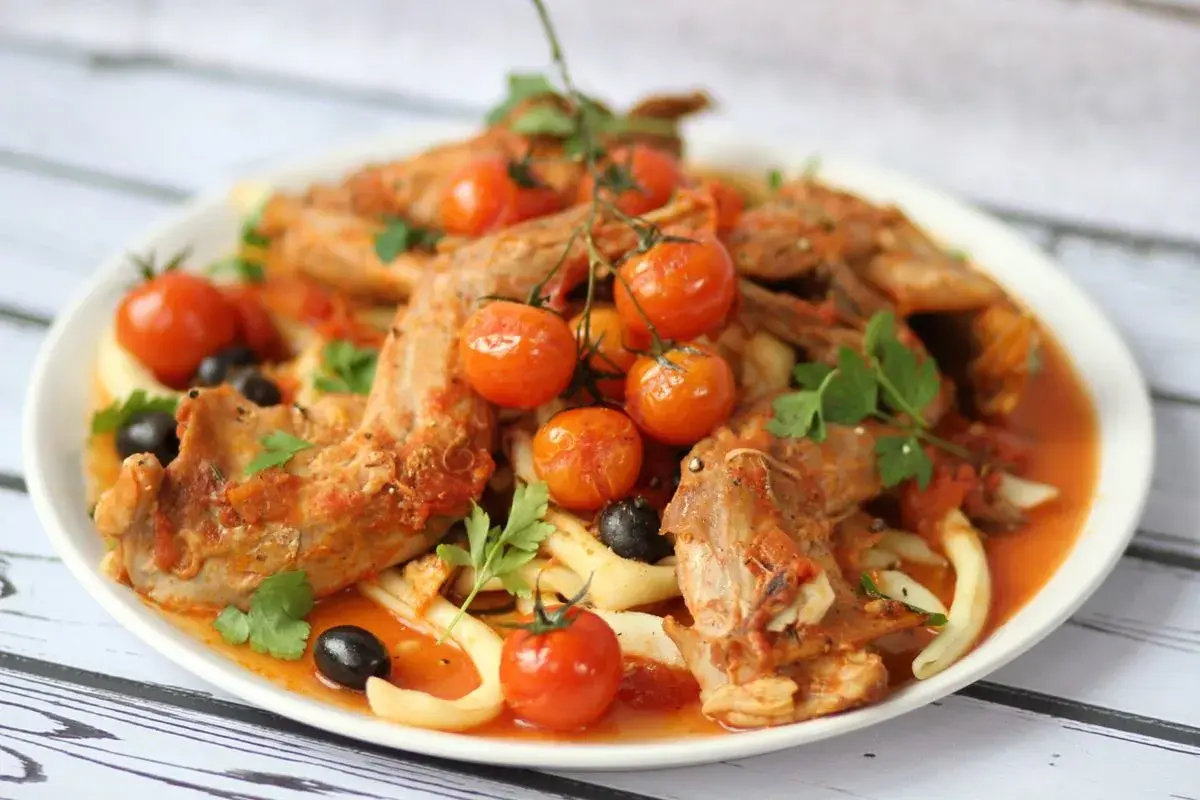
A good rabbit stew should be tender, lightly gamey, and built around a sauce that tastes rounded rather than heavy. I prefer a Basque-leaning version: olive oil, onions, garlic, peppers, tomato, white wine, herbs, and a little piment d'Espelette or smoked paprika to keep the flavour alive. The notes below focus on what the dish should taste like, which ingredients work well in the UK, how to cook it gently, and how to serve it in a way that feels complete.
The practical points that matter most
- Rabbit is lean, so it needs low, steady heat rather than an aggressive boil.
- A 1.2-1.5 kg rabbit usually feeds 4 people comfortably.
- White wine, peppers, tomato, and herbs give the most natural Basque-style balance.
- Most braises finish in about 75-90 minutes, though older or wild rabbit can take longer.
- Bread, potatoes, or simple green vegetables are the easiest and best side choices.
- The dish often tastes even better after it rests overnight.
What a good pot should taste like
When I cook rabbit, I judge the result by three things: tenderness, balance, and clarity of flavour. The meat should stay moist and separate cleanly from the bone, the sauce should carry enough acidity to stay lively, and the vegetables should taste like they belong in the dish rather than just filling space. That is why I think of rabbit as a braise first and a stew second: the technique matters more than the label.
Compared with chicken thighs, rabbit has a slightly deeper, more mineral flavour, but it is much leaner than lamb shoulder. That means it can be forgiving in one sense and unforgiving in another: if you cook it gently, it becomes elegant; if you rush it, it turns dry or stringy. Tourism Euskadi even highlights stewed rabbit as a prized dish in Laudio-Llodio, which says a lot about how naturally it sits inside Basque cooking. That balance is the standard I aim for before I even start cutting vegetables.
| Meat | What it brings | Best approach | Typical braise time |
|---|---|---|---|
| Rabbit | Lean, delicate, slightly gamey | Brown well, then braise gently | 75-90 minutes |
| Chicken thighs | Familiar, soft, mild | Quick braise or casserole | 35-45 minutes |
| Lamb shoulder | Rich, fatty, robust | Long, slow cooking with bold seasoning | 2.5-3 hours |
That comparison is useful because it stops people from treating rabbit like chicken on autopilot. The next step is choosing ingredients that respect how lean the meat really is.

The ingredients I choose in the UK
For four people, I keep the base simple and let the rabbit do the talking. A jointed rabbit is easier to handle than a whole one, and if it arrives uncut I ask the butcher to divide it rather than do it awkwardly at home. I want clean pieces, good browning surfaces, and enough bone to enrich the sauce.
| Ingredient | Amount for 4 | Why I use it |
|---|---|---|
| Rabbit, jointed | 1 whole rabbit, about 1.2-1.5 kg | Main protein and flavour |
| Olive oil | 2 tbsp | For browning and a Mediterranean base |
| Onions | 2 large, sliced | Builds sweetness into the sauce |
| Garlic | 4 cloves, crushed | Adds depth without weighing the dish down |
| Red and green peppers | 1 of each, sliced | Gives a Basque-style vegetable backbone |
| Tomatoes | 400 g chopped, or 300 g passata | Softens the flavour and adds acidity |
| Dry white wine | 250 ml | Helps deglaze the pan and keeps the sauce bright |
| Stock | 500 ml | Forms the braising liquid |
| Herbs | 1 bay leaf, 3-4 thyme sprigs, chopped parsley | Gives a clean, savoury finish |
| Spice | 1 tsp piment d'Espelette or smoked paprika | Brings warmth without overpowering the meat |
| Optional extras | 4-6 prunes or a handful of green olives | Adds either gentle sweetness or a salty edge |
If I am using wild rabbit, I keep the preparation extra clean and follow the Food Standards Agency's guidance on wild game: separate raw boards from ready-to-eat foods, chill the meat promptly, and avoid casual cross-contamination. That matters more than any fancy seasoning. Once the pot is built correctly, the real work is in the heat control.
How I braise it without drying the meat out
- Season the rabbit pieces well with salt and black pepper, then dust them lightly with flour.
- Brown the joints in batches over medium-high heat for 3-4 minutes per side. Do not crowd the pan.
- Lower the heat and soften the onions, garlic, and peppers for 8-10 minutes until they lose their raw edge.
- Stir in the tomato and spice, cook for 1 minute, then pour in the wine and reduce it by about half.
- Add stock until the meat is only partly covered, tuck in the herbs, cover, and cook very gently for 75-90 minutes.
- Check after 60 minutes if the rabbit is young; older or wild rabbit may need another 15-20 minutes.
- Finish with chopped parsley and a small splash of vinegar or lemon juice if the sauce tastes flat.
The point is control: a slow burble, not a hard boil. If the liquid is shaking violently, the meat tightens and the sauce turns muddy instead of glossy. Once that part is under control, the only real choice is which flavour direction you want to lean into.
The flavour directions that work best
I think about this dish in three lanes, and the Basque one is the most natural fit for the restaurant's world. A regional recipe is not only about ingredients; it is about the kind of table you imagine around the pot. That is why I keep the variations close to the same core structure instead of turning them into unrelated dishes.
| Style | What I add | When I choose it | My take |
|---|---|---|---|
| Basque-leaning | Peppers, tomato, white wine, thyme, bay, piment d'Espelette, olives | When I want a bright, savoury pot with clean edges | The best fit for this site and the most balanced overall |
| Autumnal British | Carrots, mushrooms, prunes, a splash of brandy, rosemary | When I want something richer and slightly sweeter | Comforting, but heavier than the Basque version |
| French countryside | Lardons, shallots, mushrooms, dry white or red wine, parsley | When I want a deeper, more rustic sauce | Reliable and satisfying, though less restrained |
If I were serving this in a Basque setting, I would choose the first lane every time. It feels honest, regional, and spacious enough to let the rabbit stay central. Once the flavour is settled, serving becomes much easier to think about.
What to serve alongside it
The right side dish turns the stew into dinner instead of a technical exercise. I like plates that soak up sauce without competing with it.
- Rustic bread, so nothing in the pan goes to waste.
- New potatoes or buttery mash if you want the most forgiving pairing.
- Green beans, cabbage, or sautéed spinach to keep the plate light enough.
- Txakoli, a dry white, or a light red if you want a drink pairing that respects the acidity.
- A spoonful of alioli or a few pickled peppers for a more clearly Basque feel.
I also like to finish with chopped parsley at the last minute, because that small green note makes the whole pot taste fresher. Once the plate is set, the remaining problems are usually self-inflicted, which brings me to the mistakes I see most often.
The mistakes that ruin a slow-cooked pot
- Using too much heat. A hard boil tightens the meat and strips the sauce of finesse.
- Skipping the browning. Pale rabbit tastes flat, and the sauce loses depth.
- Adding too much liquid. You want a braise, not soup; the meat should sit partly above the surface.
- Forgetting acidity. Wine, tomato, or a small splash of vinegar keeps the flavour alive.
- Leaving the herbs in too long. Delicate parsley belongs at the end, not at the start.
- Assuming the first hour tells the whole story. Rabbit can look stubborn before it suddenly turns tender.
Most of those problems are easy to avoid once you understand how quickly the meat responds to gentle heat. The final detail worth knowing is that this kind of dish usually improves after it rests overnight.
The next-day bowl is often the best one
I make this dish a day ahead whenever I can, because the sauce settles and the flavours knit together in a way that feels almost unfair. Reheat it slowly with a splash of stock if needed, and stop as soon as the meat is hot through; a hard re-boil only works against you.
If you want the most reliable result, keep the recipe simple, choose fresh rabbit, and build flavour with patience instead of extra ingredients. That is usually enough to make the meal taste deliberate, rooted, and worth repeating.
