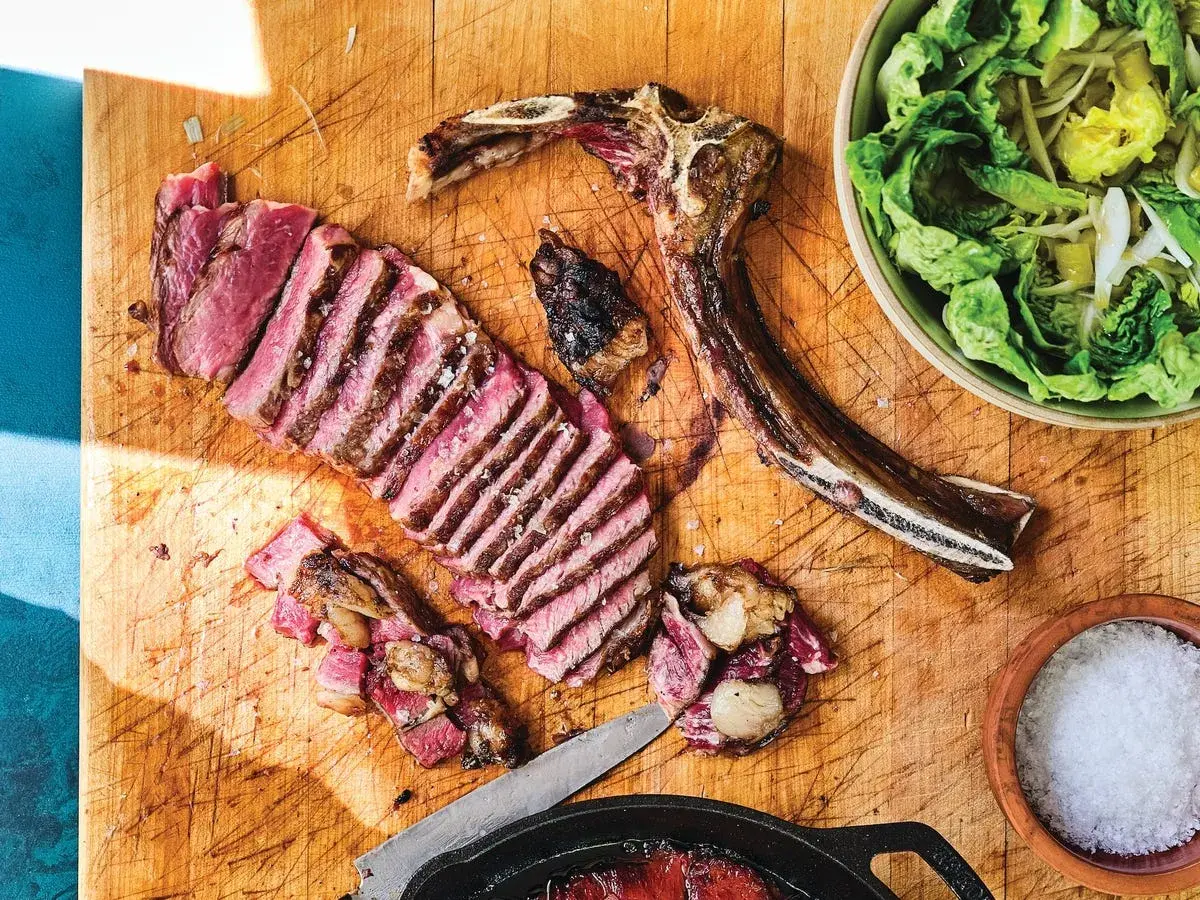
A Spanish steak is really about controlled simplicity: thick beef, hard heat, salt, and enough resting time to keep the juices where they belong. In Basque cooking, the meat matters more than the sauce, which is why the best versions taste bold rather than busy. This article breaks down what makes the dish distinctive, which cut to buy in the UK, how I would cook it, and what to serve alongside it.
What matters most when you cook Basque-style beef at home
- The classic version is a thick rib steak or txuleta, cooked over charcoal or another very hot, dry heat.
- Simple seasoning is the rule: salt, heat, rest, then a final pinch of salt if needed.
- For home cooking, a ribeye on the bone or a thick boneless ribeye gives the most reliable result.
- Medium-rare is usually the sweet spot, but the steak still needs a deep brown crust outside.
- Serve it with peppers, chips, salad, and a dry cider or Rioja if you want the full Basque feel.
What makes a Spanish steak different
What I think separates this dish from a standard grill-night ribeye is the attitude. A Basque-style steak is built around a thick cut, a fierce crust, and a clean, beef-first flavour. Marinades, sugary glazes, and heavy sauces usually get in the way, which is why the traditional version feels so direct on the plate.
The Basque model is easy to recognise: salt the meat, cook it hard, let it rest, then slice it so the fat stays juicy instead of turning greasy. That is also why the dish works best with well-marbled beef. The fat is not decoration here; it is part of the flavour.
If you want the rough equivalent in UK terms, think of it as the best parts of a steakhouse ribeye and an asador grill culture brought together in one cut. Once you understand that, the rest of the decisions become much easier.
Which cut to buy when you want the right texture
I would rather buy one properly thick steak than two thin ones. A Basco recipe for txuleton uses 1 to 1.2 kg of rib steak on the bone, and that size is not just theatrical. It protects the centre from overcooking while the outside builds the crust that makes this style work.
| Cut | Why it works | What to watch for | Best for |
|---|---|---|---|
| Bone-in ribeye | Rich, deeply beefy, closest to the Basque ideal | Needs thickness and heat control, or the fat can tighten up | Charcoal grill, barbecue, heavy cast-iron pan |
| Boneless ribeye | Easy to find in UK supermarkets and butchers | Less dramatic than bone-in, so timing matters more | Home kitchen cooking with a reliable thermometer |
| T-bone or porterhouse | Gives you two textures in one steak | The fillet side can overcook before the strip is ready | When you want a steakhouse-style plate |
| Sirloin or striploin | Cleaner, leaner flavour with a good sear | Less forgiving than ribeye if you like your steak juicy | A lighter version of the style |
If you are buying from a butcher, ask for a cut that is at least 4 cm thick. That one detail makes a bigger difference than most people expect, because thin steaks cook too fast to develop the same balance of crust and centre. Once the cut is sorted, the next decision is heat control.

How to cook it without losing the Basque character
At home, I use the same idea as a grill house, just adapted to a UK kitchen. Pat the steak dry, salt it 30 to 45 minutes ahead, and cook it on a ripping-hot cast-iron pan, grill, or barbecue. If the steak is much thinner than 4 cm, the whole style starts to collapse because the crust forms before the centre has a chance to stay juicy.
- Let the steak sit out for 30 to 45 minutes so it is not ice-cold in the middle.
- Season both sides with sea salt. For a thick steak, be generous.
- Heat your pan or grill until it is seriously hot. You want instant sizzling, not a gentle hiss.
- Sear without moving the meat too often. For a 4 to 5 cm steak, 2 to 4 minutes per side is usually enough.
- For a true txuleta-style cut that is closer to 6 to 10 cm thick, cook longer and more gently, roughly 6 to 8 minutes per side, then finish the edges.
- Rest the steak for 6 to 10 minutes on a warm plate, then finish with flaky salt.
| Doneness | Pull from heat | Finished temperature | What it feels like |
|---|---|---|---|
| Rare | 46 to 48°C | 48 to 50°C | Very soft, deeply red centre |
| Medium-rare | 52 to 54°C | 54 to 57°C | Warm red centre with a juicy, tender bite |
| Medium | 57 to 60°C | 58 to 63°C | Less red, firmer texture, still worth eating if the cut is very fatty |
The NHS notes that whole cuts of beef can be pink inside if the outside is properly cooked, which is why this style works so well with ribeye and rib steak. I still think medium-rare is the safest target for flavour, because the fat stays supple and the crust can do its job. Once the steak is cooked properly, seasoning and sauce choices become much more important than most home cooks realise.
Seasoning and sauces that stay true to the style
The safest route is the simplest one. Salt should do most of the work, and the supporting flavours should come from charred red peppers, roasted garlic, or a spoon of pepper relish. I would avoid marinades with vinegar, soy, or too much smoked paprika if you want the plate to feel Basque rather than just vaguely Mediterranean.- Flaky sea salt sharpens the crust and highlights the beef.
- Olive oil works well as a finishing touch on peppers or vegetables, not as a soak for the meat.
- Piquillo or roasted red peppers add sweetness and colour without masking the steak.
- Garlic is useful in a light sauce or in the pan, but it should stay in the background.
- Butter-heavy sauces usually feel too rich for this style and flatten the flavour.
If I want one accent that feels particularly right, I go for charred peppers and a little olive oil with salt. It is enough to make the plate feel complete without turning the beef into a side act. That balance matters even more when you decide what to serve with it.
What to serve with it in a UK kitchen
In a proper Basque meal, steak often arrives with chips and salad. That pairing is not boring, it is strategic. Crisp potatoes and a sharp green salad reset the palate after the fat, while a good pepper side keeps the meal in the right flavour family.
| Side or drink | Why it works | What I would choose in the UK |
|---|---|---|
| Chips or roast potatoes | Soaks up juices and gives the meal a familiar, satisfying base | Triple-cooked chips or simple oven chips with a crisp finish |
| Green salad | Brings acidity and freshness to a rich steak | Leaves, shallot, olive oil, and a cider vinegar dressing |
| Roasted peppers | Classic Basque-style sweetness and colour | Piquillo peppers, charred red peppers, or a quick pepper salad |
| Dry cider | Freshens the palate and matches the grilled flavour | A dry British cider if txakoli is not available |
| Rioja crianza | Has enough structure for beef without drowning it | A mid-weight red with moderate oak |
If you want a more authentic feel, keep the plate sparse and let the beef stay central. That is where many home versions go wrong: they pile on too many extras and lose the clarity that makes the dish memorable. The last step is the one I care about most, because it is what makes the whole meal feel deliberate rather than improvised.
The version I would serve on a normal evening
If I were cooking this at home, I would warm the plates, slice the steak thickly against the grain, and spoon the resting juices back over the meat before serving. I would put roasted peppers on one side, chips on the other, and keep any sauce light enough that the beef still leads the meal.
The real trick is restraint: buy a better cut than you think you need, cook it a little less than you think you should, and let the smoke, salt, and beef do the talking. That is the whole point of the Basque approach, and it is why the style still works so well in a British kitchen.
