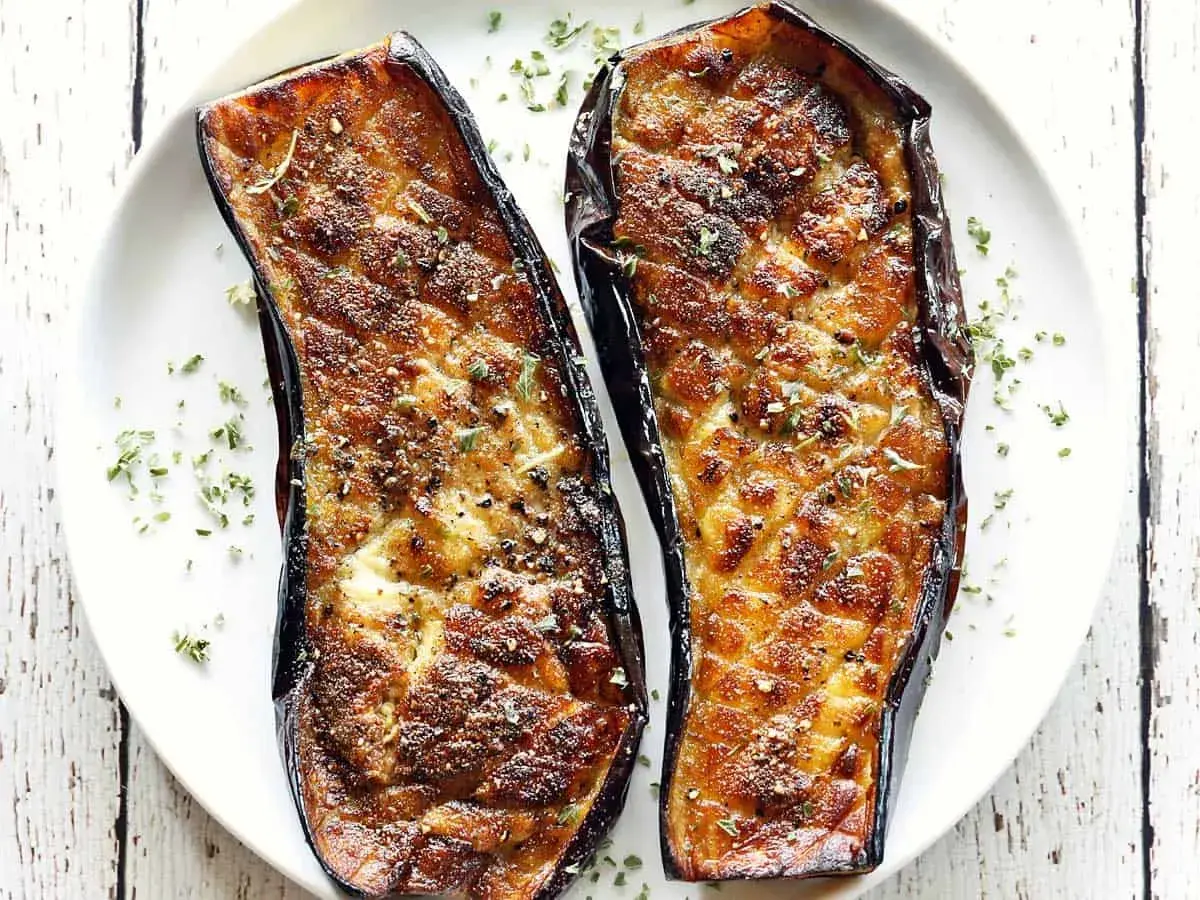
The best eggplant recipes rely on a simple idea: aubergine should be cooked until it turns silky inside, lightly browned outside, and fully seasoned. That opens the door to smoky dips, slow stews, crisp tapas, stuffed halves, and quick weeknight dishes that taste far more deliberate than they are. I like working with aubergine because it absorbs olive oil, garlic, tomatoes, peppers, herbs, and cheese without losing its own character.
What matters most when cooking aubergine well
- Choose firm, glossy aubergines that feel heavy for their size.
- Use high heat for roasting or grilling, and keep the pieces in a single layer.
- Salt larger or older pieces when you need to control moisture, but do not treat salting as a magic fix.
- Tomatoes, peppers, garlic, olive oil, parsley, and sherry vinegar are reliable pairings.
- Think in terms of texture first: creamy, crisp-edged, or fully soft.
- A good aubergine dish usually improves after a short rest, once the flavours settle.
Why aubergine earns a place in more than one dish
Aubergine is one of those ingredients that changes personality with the cut. Thick slices can be grilled and served as a side, cubes melt into stews, and whole halves can be turned into a meal with almost no fuss. That is why I think of it as produce with range rather than a single-purpose vegetable.
In practical terms, the flesh is mild enough to take on whatever you put with it, but it is not bland if you season it properly. It gives you body, a little sweetness, and a texture that can feel luxurious when it is cooked well. That is exactly why it works so naturally in Mediterranean cooking and why it fits comfortably on a Basque-inspired table, where vegetables, olive oil, peppers, and tomatoes often do the heavy lifting. Once you see that flexibility, the next question becomes much easier: which dish should you make first?

The aubergine dishes I would make first
If you want useful ideas rather than just a list of names, start with the formats below. Each one gives aubergine a different job to do, and that changes how you should season it and what you should serve it with.
| Dish style | What it gives you | Typical time | Best use |
|---|---|---|---|
| Roasted aubergine with tomatoes and garlic | Soft, sweet, lightly caramelised | 25-35 minutes | Side dish, pasta topping, grain bowl |
| Grilled slices with herb oil | Smoky, firm, clean flavour | 8-12 minutes | Mezze, sandwiches, fish |
| Pisto-style vegetable stew | Spoonable, rich, summer vegetable flavour | 40-60 minutes | Bread, eggs, rice |
| Stuffed aubergine halves | Hearty and meal-sized | 35-45 minutes | Lunch or supper |
| Crispy fried tapas | Crisp outside, soft middle | 15-20 minutes | Starter or sharing plate |
If I had to choose one first dish for a home cook, I would start with roasted aubergine, tomatoes, garlic, and thyme. It is forgiving, it shows off how much flavour the vegetable can carry, and it works equally well as a warm side or a light main. Once the format is set, the prep decides whether the result feels silky or heavy.
How I prep aubergine so it cooks properly
Most aubergine disappointments come from three things: the wrong cut, too little heat, and too much moisture left in the pan. I treat prep as a series of small decisions rather than a single trick. Get those decisions right, and the vegetable becomes much easier to work with.
When I salt and when I skip it
I salt larger globe aubergines when I want a cleaner flavour or I am frying slices. Twenty to 30 minutes is usually enough, then I pat them dry before cooking. With smaller or younger aubergines, I often skip the step because the texture is already tender and the bitterness is usually mild. I use salting as a moisture-control tool, not as a ritual I perform by default. Once the excess water is under control, heat management matters more than any single kitchen trick.
How I roast or grill without turning it greasy
High heat matters more than extra oil. For cubes, I roast at 220C for about 25-30 minutes in a single layer; for slices, I grill or griddle them for roughly 4-6 minutes per side until the flesh softens and the edges pick up colour. I brush oil on the vegetable rather than flooding the tray, and I avoid overcrowding the pan because trapped steam makes aubergine dull. If you want a better texture, the rule is simple: let it brown before you move it. With that in place, the flavour pairings become much easier to judge.Read Also: New Potatoes - Cook Them Perfectly Every Time
What size and variety to buy
Firm, glossy aubergines feel heavy for their size and have tight skins with no soft patches. Globe types are better when I want substance for stews or bakes, while slimmer aubergines are better for fast grilling or frying. If I am shopping ahead, I keep them in the fridge and use them within 3-4 days. They dislike warm kitchens, long storage, and anything that leaves them soft before they even hit the pan.
Flavours that make aubergine feel at home on a Basque table
I think of aubergine as a supporting player that can still carry a plate. On a Basque-inspired table, I keep the seasoning tight: olive oil, garlic, peppers, tomatoes, parsley, sherry vinegar, anchovies, cod, and firm sheep’s cheese are all safe places to start. The vegetable has enough depth to handle rich ingredients, but it usually tastes better when the supporting flavours stay focused.
- Tomatoes add sweetness and acidity, which keeps aubergine from tasting flat.
- Peppers, especially red peppers or piquillo peppers, add body and a gentle sweetness.
- Garlic and onion give the base its savoury backbone.
- Parsley and chives bring freshness right at the end.
- Sherry vinegar or lemon sharpens the dish and stops it feeling heavy.
- Chickpeas or white beans turn it into a fuller meal without making it clumsy.
- Anchovies, cod, or tuna push it towards a coastal direction that suits pintxos and small plates.
- Sheep’s cheese or a Manchego-style cheese gives the dish more richness, especially in bakes.
The mistakes that make aubergine feel heavy or bland
Aubergine is generous, but it is also easy to mistreat. The good news is that most mistakes are obvious once you know what to look for.
- Starting with low heat means the vegetable steams before it browns, which leaves it soft in the wrong way.
- Using too much oil can make the dish feel slick instead of supple.
- Crowding the tray or pan traps moisture and prevents proper colour.
- Underseasoning the finished dish is a common problem because aubergine needs salt, acid, or both to taste complete.
- Choosing oversized aubergines for delicate dishes can leave you with more seeds and a less graceful texture.
- Serving it too early can hide the flavour, because many aubergine dishes taste better after a few minutes of rest.
That is why I prefer a short rotation of reliable formats rather than chasing novelty every time. Once you know which versions work, you can build meals much faster and with fewer disappointments.
The rotation I keep coming back to when aubergine is good
When aubergine is in season and looks genuinely good, I keep three meal ideas in rotation rather than trying to invent something new every time. They cover most situations, from a quick lunch to a more generous dinner.
- Roasted aubergine with cherry tomatoes, garlic, chickpeas, and a spoonful of yoghurt for a simple bowl.
- Grilled slices with peppers, anchovies, and crusty bread for a pintxo-style lunch.
- Stuffed halves with onion, tomato, herbs, and cheese when I want something that feels more complete.
Leftovers keep well in the fridge for 2-3 days, and stewed or roasted aubergine reheats better than fried slices. If I know I want convenience, I choose a saucy dish; if I want texture, I cook and serve it on the same day. These are the eggplant recipes I return to most often when I want produce-driven cooking that is generous without being fussy.
