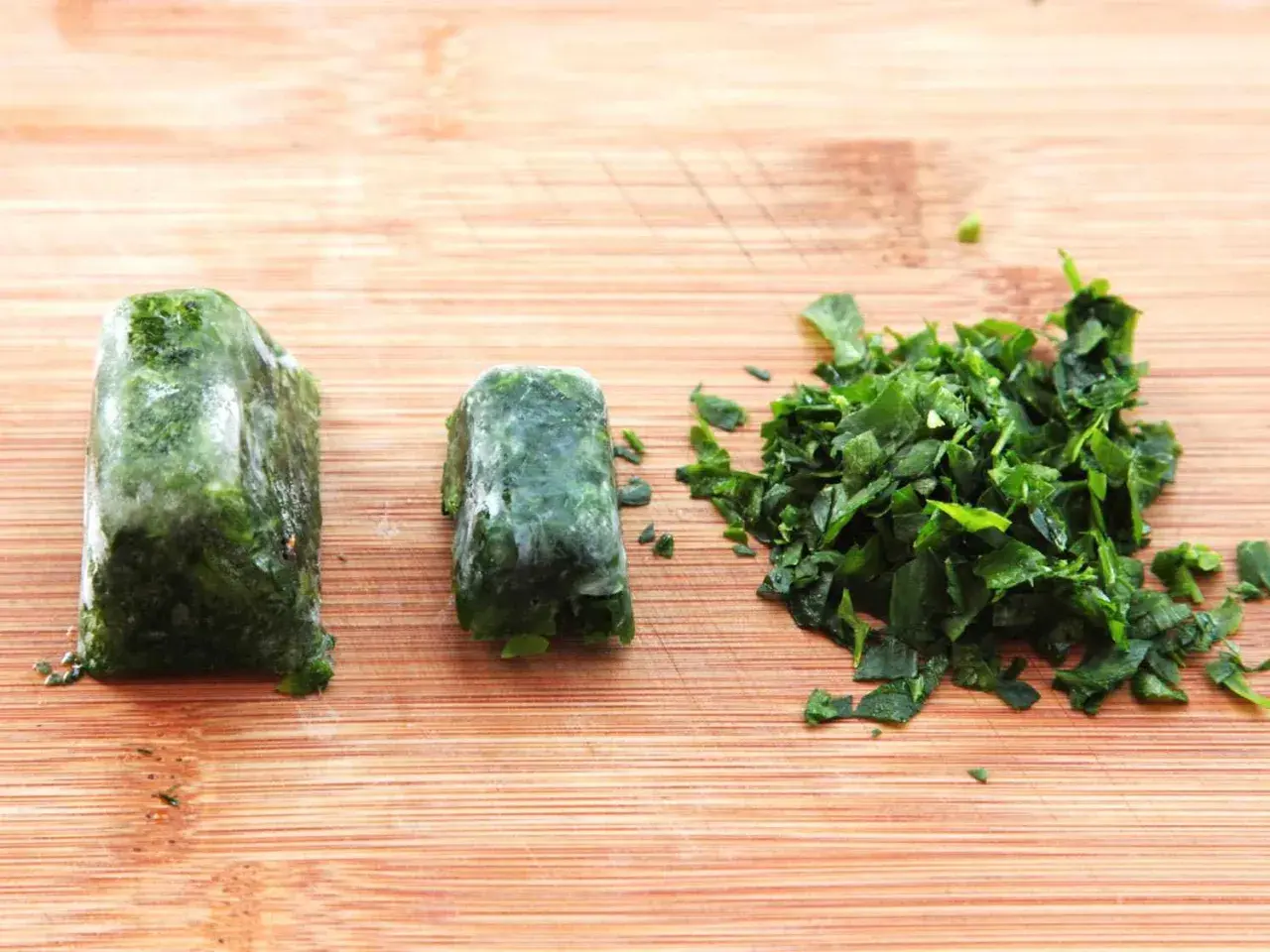
Fresh herbs lose their edge quickly, which is why freezing is one of the most useful habits in a well-run kitchen. The practical answer to how to freeze fresh herbs is to match the method to the herb and the dish you plan to cook, rather than treating every bunch the same. I prefer freezer-friendly herbs to behave like a quiet pantry shortcut: ready when you need them, not a decorative afterthought.
The quickest way to keep herbs useful is to choose the right freezer method for the way you cook
- Dry the herbs thoroughly before freezing; leftover water is what turns them icy and tired.
- Use whole sprigs, ice cube trays with water or stock, or cubes with oil or butter depending on the herb.
- Frozen herbs are best for cooked dishes, sauces, soups, stews, and herb butter, not for garnish.
- Soft herbs such as basil, parsley, coriander, chives, dill, and mint usually benefit most from freezing.
- Woody herbs such as rosemary, thyme, and sage can often be frozen whole or in small sprigs.
- Label the bags and trays before the freezer turns them into anonymous green cubes.
Why freezing works better than drying for some herbs
Freezing is the method I reach for when I want to keep the fresh, green character of herbs that would otherwise fade in the fridge after only a few days. Drying still has its place, but it changes the flavour profile: the result is more concentrated, more brittle, and less like the herb you started with. Freezing keeps the aroma closer to fresh, which matters most in dishes where the herb is cooked into the food rather than sprinkled on top.
That is especially true for tender herbs such as basil, parsley, coriander, chives, dill, mint, and tarragon. They do not keep their crisp texture after thawing, but they do keep enough flavour to work very well in soups, sauces, bean dishes, omelettes, and herb butter. In practice, frozen herbs are for cooking, not for show. That distinction saves a lot of disappointment later and leads naturally to the preparation step, which is where most of the quality is won or lost.

The preparation that makes the biggest difference
I do not freeze herbs that are still damp. Surface water is the fastest route to freezer burn, patchy cubes, and a dull flavour, so the first job is washing and drying them properly. A quick rinse under cool water is enough for most shop-bought herbs, while home-grown herbs may only need a shake and a careful inspection for damaged leaves. After that, I use a salad spinner or paper towels and let the herbs dry fully before they touch the tray or bag.
From there, I trim away bruised stems, yellow leaves, and any woody bits that would be annoying to find later in a sauce. If I am freezing small sprigs, I keep them intact; if I am making cubes, I chop the leaves first so the portions are easy to use. The point is not perfection. It is consistency. When the herbs are clean, dry, and portioned in a sensible way, the freezer does the rest. Once that is sorted, the next question is which freezing method gives the best result for your cooking style.
The three methods that actually work
I tend to use one of three approaches, and each one solves a different problem. If I want speed and flexibility, I freeze herbs flat on a tray. If I want ready-made portions for soups and stews, I use water or stock in an ice cube tray. If I want built-in flavour for sautéing or finishing a dish, I freeze the herbs in oil or butter.
| Method | Best for | Why it works | Limitations |
|---|---|---|---|
| Freeze whole sprigs or leaves flat | Rosemary, thyme, sage, chives, small parsley sprigs | Keeps the herbs separate, so you can grab what you need later | Less convenient for very delicate leaves |
| Freeze chopped herbs in water or stock | Parsley, coriander, dill, mint, mixed soft herbs | Makes tidy portions for soups, stews, and sauces | The herbs will not look fresh after thawing, so use them in cooked dishes |
| Freeze chopped herbs in oil or butter | Basil, tarragon, parsley, thyme, mixed herb blends | Helps the flavour move straight into the pan | Not suitable for garnish, and the flavour is better when used from frozen |
For cube trays, I usually work with about 1 tablespoon of chopped herbs per compartment, though trays vary. With the water method, I often freeze the tray once, then top up the cavities so the herbs are fully submerged before freezing again. With oil, I just cover the herbs and press them down if they float. That small bit of attention pays off later, because neat cubes are easier to use and easier to store.
Which herbs freeze well and which need a lighter touch
Not every herb behaves the same in the freezer, and that is where a lot of home cooks lose quality for no good reason. Soft herbs often need to be chopped or mixed into a liquid, while woody herbs can survive as sprigs. I treat the following split as a practical guide rather than a strict rule, because the dish you are making matters just as much as the herb itself.
| Herb | Best freezing format | What to expect |
|---|---|---|
| Basil | Chopped with a little oil or water | Flavour stays useful, but the leaves darken; best for tomato sauces, pesto-style dishes, and soups |
| Parsley | Chopped in water, stock, or oil | Very versatile; good for sauces, fish dishes, and finishing cooked food |
| Coriander | Chopped in water or oil | Loses its garnish appeal quickly, but still works well in curries, salsas, and soups |
| Chives | Snipped flat or frozen in cubes | Freezes neatly and stays handy for eggs, potatoes, and soft cheeses |
| Dill | Chopped in water, oil, or butter | Excellent for fish, potatoes, and yogurt-based sauces |
| Mint | Chopped in water or a light syrup for drinks and tea | Best in small portions; useful for lamb, peas, teas, and sauces |
| Rosemary | Whole sprigs or chopped with oil | Freezes well and keeps its structure better than softer herbs |
| Thyme | Whole sprigs or chopped with oil | Reliable in stews, beans, roast vegetables, and pan sauces |
| Sage | Whole leaves or chopped with butter | Strong flavour, so small portions are usually enough |
If an herb is mostly used raw as a finishing touch, I usually leave it fresh if I can. But for everyday cooking, especially in a kitchen that moves through sauces, beans, fish, potatoes, and eggs, frozen herbs are far more useful than a tired bunch in the fridge. That becomes obvious once you start using them directly in cooking, which is where the payoff really shows.
How I use frozen herbs in real cooking
I rarely thaw herbs first. Thawing usually turns them limp and watery, which is exactly what you are trying to avoid. Instead, I treat frozen herbs as a cooking ingredient and add them straight into the dish so their flavour melts into the food. Water-based cubes go into soups, stews, and braises; oil-based cubes work beautifully in a pan with onions, garlic, or soft vegetables; butter cubes are ideal for finishing fish, mushrooms, or roast potatoes.
That approach fits Basque-style cooking especially well, because so many dishes rely on clean, layered flavour rather than heavy sauces. A parsley cube can sharpen a bean stew, a thyme cube can support a hake dish, and a small rosemary-butter piece can lift roast vegetables or a simple omelette. I also like using mixed herb cubes in quick tomato sauces, piperade-style dishes, and weeknight soups, because they let me build depth without stopping to chop fresh herbs at the last minute. Once you use herbs this way, the main challenge is not flavour; it is avoiding the small mistakes that quietly spoil the batch.
The mistakes that ruin the batch before you need it
The most common mistake is freezing herbs while they are still wet. Even a little extra moisture creates icy crystals and weak flavour later on. The second is using too much air in the storage bag or container, which leads to freezer burn and a stale smell. The third is forgetting to label the batch, which sounds minor until you have three mystery bags of green fragments and no idea which one is parsley and which one is dill.
I also avoid making portions that are too large. Small cubes are easier to use, and they let you take out exactly what the recipe needs. As a rule, I try to use frozen herbs within about six months for the best flavour, although well-packed herbs can last longer in good freezer conditions. If you want one simple habit that improves everything, it is this: freeze the herbs on a tray first, then move them into a labelled bag once they are solid. That gives you cleaner portions and less clumping, which makes the freezer much more useful on busy days.
The herb freezer habit that pays off on the next busy cook
When I clear a bunch of herbs, I do not make one mixed pile and hope for the best. I split them by how I cook: parsley and coriander for soups, sauces, and fish; chives for eggs and potatoes; thyme and rosemary for stews, beans, and roast dishes; basil for tomato-heavy cooking. That small bit of planning turns a leftover bunch into something genuinely useful rather than just another bag taking up space.
If you only freeze one tray this week, make it the herb you reach for most often, not the one that happens to be at the top of the bag. That is the practical difference between storage and strategy, and it is the part that keeps your cooking moving when the fresh herbs are gone.
