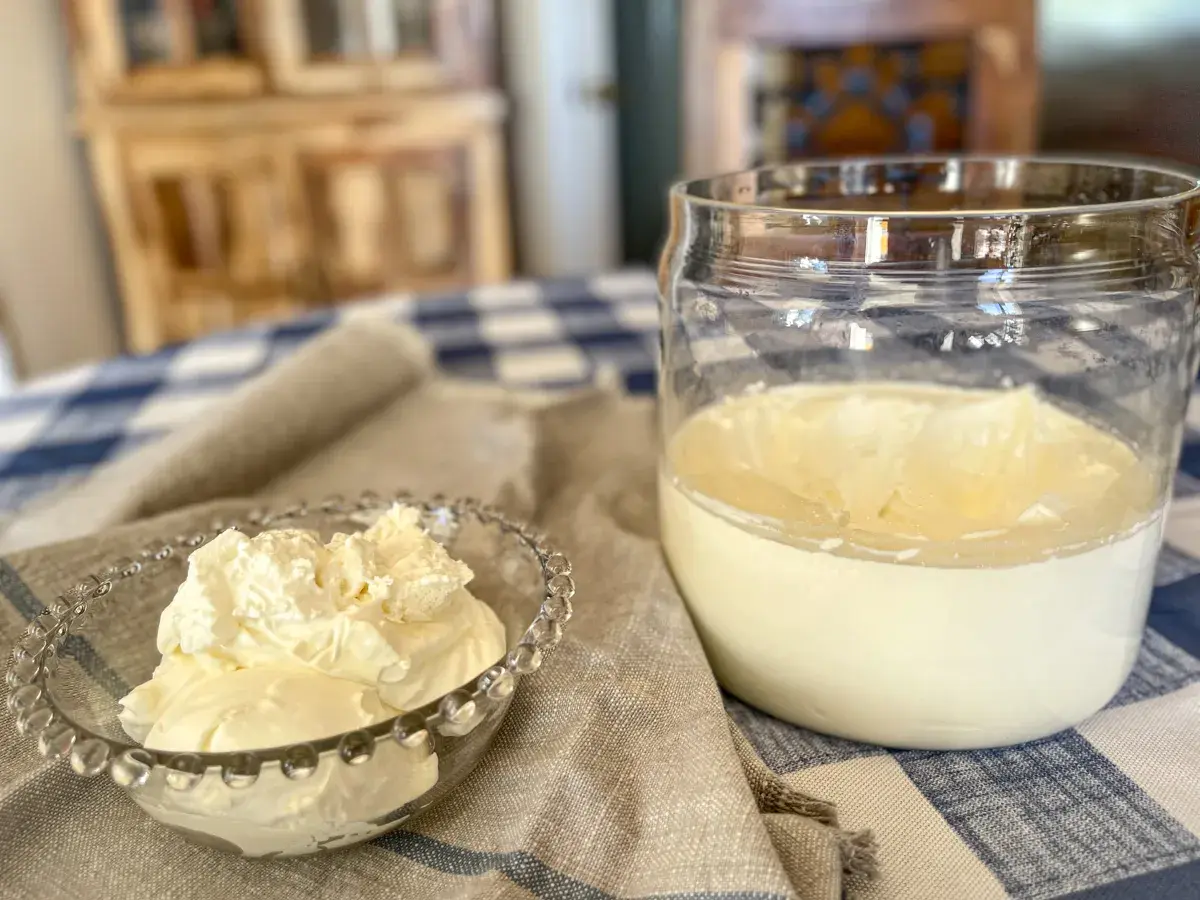
High-quality cultured cream adds tang, body, and a clean finish to dishes without making them heavy. I use crème fraîche when I want something richer than sour cream but calmer than lemon or vinegar, especially in sauces, eggs, fish dishes, and quick vegetable plates. In this article, I break down what it is, how it behaves in cooking, how it differs from similar dairy products, and where it earns its place in a UK kitchen with a Basque lean.
The essentials before you buy a tub
- It is a cultured dairy product: tangy, thick, and richer than standard sour cream.
- Full-fat versions are the most reliable choice for warm sauces and finishing pans.
- In the UK, keep it refrigerated below 5°C and use it within 3 days of opening.
- It pairs especially well with fish, potatoes, eggs, mushrooms, peppers, and leeks.
- Freezing usually damages the texture, so I treat it as a fresh ingredient, not a freezer staple.
- If you cannot buy it, sour cream or full-fat Greek yoghurt can work, but each changes the result.
What this cultured cream actually is
This is cream that has been cultured with lactic bacteria, which gives it a mild sour edge and a thicker, spoonable texture. The flavour is not aggressively sharp; it is more rounded and buttery, with just enough acidity to keep rich food from tasting flat. In practical terms, that balance is the reason I keep it on hand: it behaves like cream, but with more character.
Most full-fat versions sit at roughly 30% fat or higher, and that matters. Fat softens acidity, helps the texture stay smooth, and gives the ingredient more stability when it meets heat. In the kitchen, that means I can finish a sauce with confidence instead of worrying that it will turn grainy at the first sign of simmering.
It also explains why this dairy product feels at home in both savoury and slightly sweet dishes. A spoonful can brighten eggs, mellow roasted vegetables, and add a quiet richness to fruit or pastry fillings without turning everything into a dessert. That flexibility is what separates it from more one-note dairy staples, and it leads straight into the comparison most cooks really need.
How it differs from sour cream and other dairy staples
The closest cousin is sour cream, but the two are not interchangeable in every situation. Sour cream is usually leaner and sharper, while this cultured cream is softer, richer, and more forgiving when heated. That difference is small on a spoon and very noticeable in a pan.
| Ingredient | Flavour | Heat behaviour | Best use |
|---|---|---|---|
| Full-fat cultured cream | Mild, tangy, rich | More stable in gentle heat | Sauces, soups, fish, potatoes, finishing dishes |
| Sour cream | Sharper and a little leaner | More likely to split if overheated | Cold toppings, dips, spooned finishes |
| Greek yoghurt | Brighter and drier | Can curdle if treated too aggressively | Dressings, breakfast dishes, cold sauces |
| Double cream | Very rich but neutral | Highly stable, but lacks acidity | Rich sauces, desserts, whipping |
The difference is not just about taste. In a sauce, acidity and fat change the texture, the way the liquid coats food, and how far you can push the heat. I often choose cultured cream over sour cream when I want a softer tang and less risk of breakage, but I choose double cream when I want richness without any sour note at all. That distinction becomes especially useful in a Basque-leaning kitchen, where clean seafood, peppers, and potatoes are common partners.
Where it works best in Basque-inspired cooking

In Basque-inspired cooking, I treat this ingredient as a bridge between seafood, vegetables, and dairy richness. It is not a traditional answer to every dish, and I would not force it into a classic sauce that already has its own identity. But used with restraint, it works beautifully with the kind of food this cuisine does well: fish, peppers, leeks, mushrooms, potatoes, and eggs.
- With hake or cod - a spoonful stirred into a pan sauce at the end gives the fish a gentle, creamy finish without hiding its flavour.
- With roasted peppers - it cools the sweetness and gives the plate more depth, which is useful when the peppers are smoky or lightly charred.
- With potatoes - it makes a sharper, more elegant topping than butter alone, especially if you add chives, parsley, or a little garlic.
- With mushrooms and leeks - the tang keeps a cream sauce from feeling too flat, which matters in simple vegetable dishes.
- With eggs - a small amount folded into scrambled eggs or an omelette makes the texture softer and more luxurious.
My rule here is simple: add it late, keep the heat gentle, and let it round off the dish rather than dominate it. If you are cooking something acidic, such as a wine-heavy pan sauce or a tomato-tinged vegetable stew, temper it first with a little warm liquid and never let the pan boil after it goes in. That one habit does more to protect the texture than any fancy technique.
How to buy and store it in UK kitchens
In UK supermarkets, I look first at the fat level. If the pot is destined for a sauce or a warm dish, I choose the fuller version; lighter tubs are fine for spooning, but they are less forgiving. I also pay attention to the label rather than the marketing on the front of the pack, because the practical details matter more than the branding here.
- Choose full-fat if you plan to cook with it - it gives you a better margin of error.
- Keep it below 5°C - that is the safest fridge target for a chilled dairy product.
- Use it within 3 days after opening - that is the window I personally treat as non-negotiable for best quality.
- Do not freeze it - the texture usually suffers, even if the product is technically still edible.
- Buy a smaller tub if you only need a little - once opened, this is something I want to use promptly, not babysit for a week.
There is also a sensory check worth keeping in mind. If the smell turns harshly yeasty, the surface looks oddly separated, or the texture becomes lumpy before the use-by date, I would discard it. A fresh pot should smell clean, slightly tangy, and dairy-rich, not aggressively sour. That brings us to the question many cooks ask next: what can stand in for it when the fridge is empty?
Where substitutes work and where they fall short
Substitutes can work, but they do not behave identically. I am careful about this because the wrong swap can quietly change a dish from silky to split, or from balanced to overly sharp. The best replacement depends on whether the dish is cold, gently warmed, or actively cooked.
| Swap | Best use | What changes | My view |
|---|---|---|---|
| Sour cream | Cold toppings, baked potatoes, dips | Sharper flavour, slightly less stability | Good in a pinch, but I avoid pushing it hard in heat |
| Full-fat Greek yoghurt | Dressings, chilled sauces, breakfast dishes | Brighter, drier, less rich | Useful, but it brings its own personality |
| Double cream with a little lemon | Rich sauces and desserts | Richer, but less cultured and less tangy | Not the same ingredient, just a useful approximation |
The mistakes I see most often are simple but expensive. First, people boil it because they assume any cream can take it. Second, they add it too early to an acidic sauce and then wonder why the texture gets rough. Third, they buy a lighter version for a dish that needs stability, then blame the recipe when it misbehaves. Finally, they use too much, which flattens the food instead of sharpening it. I prefer to start with a spoonful, taste, and build from there.
- Reduce the sauce first so the flavour is concentrated.
- Take the pan off the heat before stirring it in.
- Add a small amount, then taste before adding more.
- Rewarm gently if needed, but do not let it come back to a hard simmer.
Why I keep it around for quick sauces and fish dishes
For me, this is one of the most useful dairy items in a working kitchen because it solves a narrow but common problem: how to make food feel richer without making it heavier. That matters in fish dishes, vegetable plates, and fast pan sauces where you still want clarity of flavour. A spoonful can smooth sharp edges, bring the sauce together, and make a simple dish feel finished.
If your cooking leans toward seafood, peppers, potatoes, eggs, and quick stovetop dishes, it earns its shelf space. I think of it as a finishing tool rather than a base ingredient: add it late, keep the heat modest, and let it do the last bit of balancing. That is the point where it pays off most reliably, and it is also where it feels most at home in a Basque-inspired kitchen.
Used that way, it is not just another dairy tub in the fridge; it is a small, practical ingredient that quietly improves the final plate.
