Chestnuts reward a little technique: once you choose the right nuts, score the shells properly, and use enough heat to loosen the skins, they become easy to work with instead of awkward. The practical answer to how do you prepare chestnuts is simple enough, but the details matter if you want clean peeling, a good texture, and flavour that actually feels worth the effort. I’m going to walk through the steps I rely on, the cooking methods that make the most sense, and the ways I’d use them in a Basque-inspired kitchen.
The simplest route is to score, cook, and peel them while warm
- Choose sweet chestnuts that feel heavy, look glossy, and have no cracks, mould, or worm holes.
- Make a clean slit or cross in each shell before cooking so steam can escape safely.
- Roast at 200°C/180°C fan for about 20 to 30 minutes for the best flavour, or air-fry small batches for speed.
- Boil briefly if you mainly want easier peeling, or simmer longer if you need soft chestnuts for purée or soup.
- Peel them while they are still warm, then refrigerate or freeze any leftovers before they dry out.
The simplest way to start with good chestnuts
I always begin with the raw chestnuts themselves, because a poor batch is hard to rescue later. Good sweet chestnuts should feel firm and heavy for their size, with a tight, shiny brown shell and no soft spots, cracks, mould, or tiny holes. In the UK, I would buy them in season from late autumn through winter, when they are usually at their best and easiest to find.
One important safety point: sweet chestnuts are edible, but horse chestnuts are not. Sweet chestnuts are usually slightly flatter on one side and more pointed, while horse chestnuts tend to be rounder and smoother. If you are unsure, buy them from a reliable greengrocer or supermarket rather than trying to guess from memory. I also pay more attention to the shell and weight than to a float test, because a floating nut is not always the full story.
| What I look for | Why it matters |
|---|---|
| Heavy for size | Usually means the nut has not dried out |
| Shiny, intact shell | Fresh nuts tend to peel more cleanly |
| No mould or holes | Reduces waste and avoids bad nuts in the batch |
| Stored cool and dry | Chestnuts spoil faster than most other nuts |
Once you have the right chestnuts, the next step is making a clean cut that lets the heat do its work.

Score the shells before they meet the heat
This is the step people skip once, then never skip again. Chestnuts need a slit or cross through the shell before cooking, because the steam inside has to escape somehow. If you do not cut them, they can burst, and even when they do not, they peel badly. I place each nut flat-side down on the board, then cut through the shell on the rounded side with a sharp knife, making sure I do not cut deeply into the flesh.
A small paring knife is enough if you work carefully, though a chestnut knife makes the job easier if you prepare them often. I do not obsess over whether the cut is a long slit or an X; what matters is that the shell is opened cleanly and the cut is big enough to help the skins curl back later. If the nuts are especially dry, I sometimes soak them for 20 to 30 minutes before drying them thoroughly, but that is a helper, not a replacement for a proper score. That thin brown inner skin is called the pellicle, and getting it loose is what separates a useful batch from a frustrating one.How you cook them next depends on the texture you want.
Choose the cooking method that matches the final dish
I think of chestnut cooking in three practical lanes: roast them for flavour, boil them for softness, or use a quick method when speed matters more than ceremony. The right choice depends on whether you want to serve them as a snack, fold them into stuffing, blend them into soup, or turn them into a purée.
| Method | Best for | Typical time | What it gives you |
|---|---|---|---|
| Oven roasting | Snacking, stuffing, serving whole | 20 to 30 minutes at 200°C/180°C fan | Sweet, toasty flavour and a fluffy interior |
| Air fryer | Small batches | 8 to 12 minutes at 200°C | Fast results, but you must watch them closely |
| Brief boil | Easier peeling | 3 to 5 minutes | Loosens the skins without fully cooking the nut |
| Long simmer | Purée, soup, mash | 20 to 30 minutes | Soft flesh that blends smoothly |
For roasting, I preheat the oven to 200°C or 180°C fan, arrange the scored nuts cut-side up, and roast them until the shells open and the flesh feels tender. Smaller nuts can finish sooner, while larger ones need the full time or a little longer. The important thing is not to chase colour alone; you want the shell to curl back and the interior to soften.
Air frying is useful when I only need a handful of chestnuts for a topping or a quick snack. It is efficient, but it is less forgiving than the oven, so I keep an eye on them and stop once the shells start peeling back. For boiling, I treat it in two ways: a brief boil if I only need the skins to relax, or a longer simmer if I want chestnuts soft enough to mash into soup, stuffing, or a purée. Open-fire roasting is traditional and lovely when you have the setup, but in a home kitchen the oven is more predictable and easier to repeat well.
Once they are cooked, the peel gets easier if you work while the nuts are still warm.
Peel, store, and keep the flavour alive
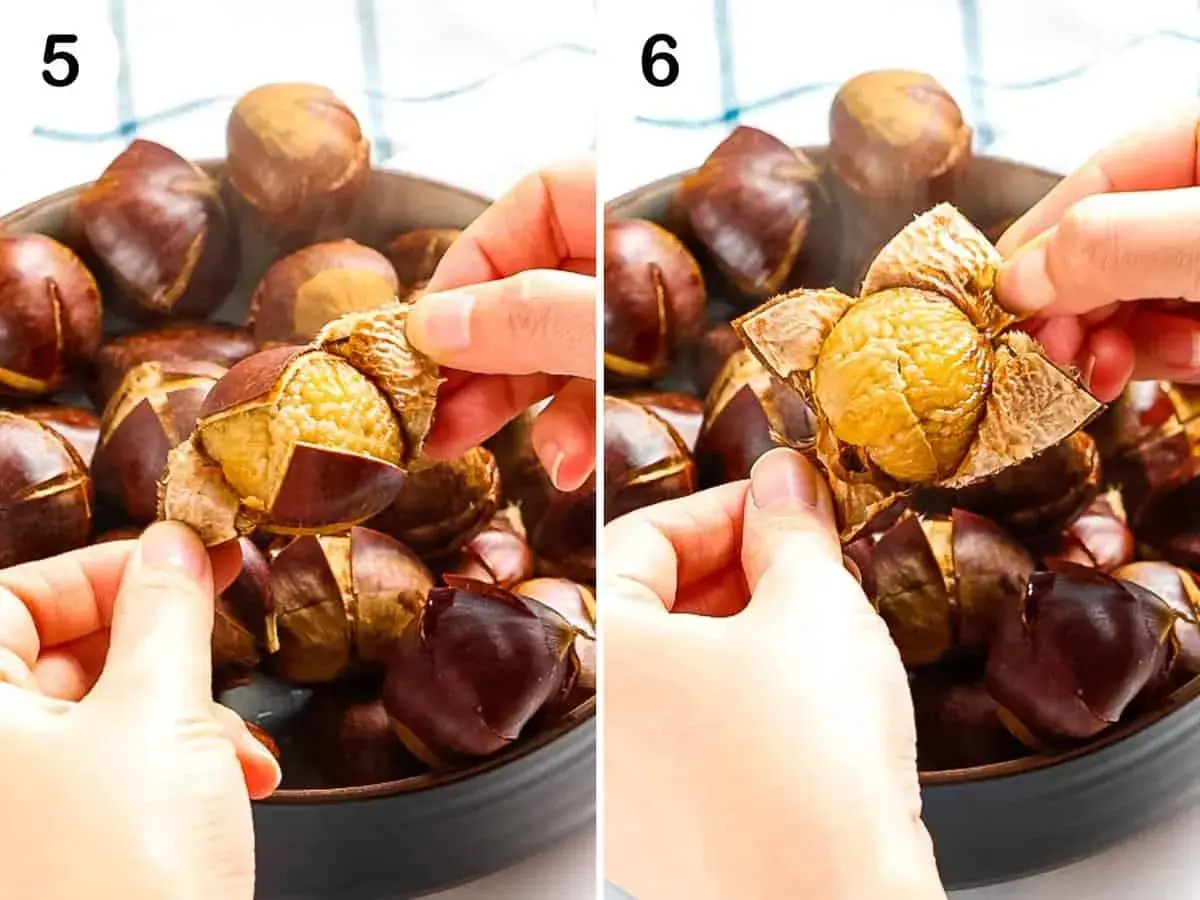
Peeling chestnuts is where timing matters most. I usually tip the hot nuts into a bowl, cover them with a clean towel for a few minutes, and peel them while they are still warm enough to handle. That little burst of trapped steam helps the shell and the inner skin separate more easily. If you wait until they cool completely, the shell clings harder and the work becomes much slower.
When I peel, I remove both the hard outer shell and as much of the papery inner skin as possible. If the inner skin resists, I give the nuts a short rewarm under a towel or a brief return to the oven, then try again. That inner skin, the pellicle, can taste bitter if you leave too much of it on. For storage, I keep raw chestnuts chilled and use them soon, because they do not keep like almonds or walnuts. Once cooked and peeled, they are best used within a couple of days in the fridge, or frozen if I have prepared a larger batch.
- Refrigerate raw chestnuts in a breathable bag or container and cook them soon.
- Keep cooked, peeled chestnuts in an airtight container for short-term use.
- Freeze peeled chestnuts if you want them ready for soup, stuffing, or purée later.
That is when chestnuts become more than a snack, because they start acting like a real ingredient.
Where chestnuts fit in a Basque-style kitchen
Chestnuts feel right at home in a Basque-style kitchen because they sit naturally between sweet and savoury. I would use them with mushrooms, leeks, cabbage, onions, pork, duck, or game, where their mild sweetness balances richer flavours without taking over. They also work well in slow braises, where they absorb stock and herbs, and in autumn soups that need a little body without becoming heavy.
For a simple savoury plate, I like chopped roasted chestnuts folded into sautéed mushrooms with garlic, parsley, and a splash of cider or stock. If I want something more substantial, I add them to a stuffing with onion and herbs, or simmer them into a thick soup alongside leeks and potato. For dessert, chestnut purée has its place too, but I use it sparingly; it is expressive enough to lead a dish, which is exactly why it should not be thrown into everything.
Chestnuts are at their best when you let them stay seasonal and grounded, which is exactly how I would approach them here: simple preparation, careful cooking, and a clear idea of where they belong on the plate.
The small habits that make the next batch easier
If I had to reduce the whole process to one rule, it would be this: score first, cook hot, peel warm. That sequence solves most of the frustration and turns chestnuts into a usable ingredient rather than a fiddly winter project. The second rule is just as useful: match the method to the dish. Roast them when you want flavour, boil them when you need softness, and move quickly once they are cooked so the skins do not set again.
That is the practical rhythm I rely on every time. Once you get it right once, the rest is mostly repetition, and chestnuts stop feeling like a special-case ingredient and start behaving like a dependable part of your kitchen.
