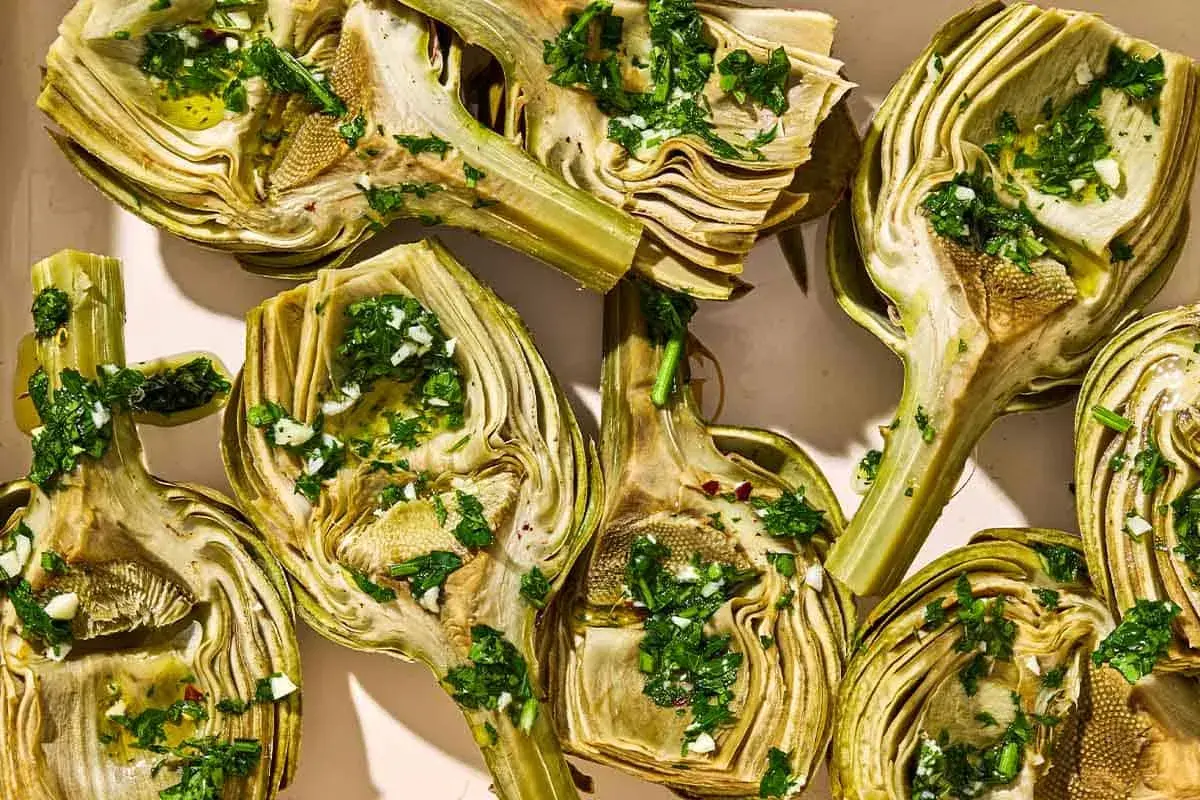
This grilled artichoke recipe is for the moment when you want artichokes to taste smoky, bright, and properly seasonal rather than simply boiled and served with butter. I’m focusing on the practical parts that decide the result: which produce to buy in the UK, how much trimming it really needs, when to steam before grilling, and which ingredients lift the flavour without hiding it. I’ll also point out the mistakes that usually make artichokes tough, bitter, or oddly bland.
The essentials before you light the grill
- Choose firm globe artichokes with tight leaves and fresh-looking stems; in the UK they are usually at their best from June to November, according to BBC Good Food.
- Steam medium artichokes for 20 to 30 minutes before grilling so the heart turns tender before the leaves char.
- Keep the seasoning simple: olive oil, lemon, garlic, salt, pepper, and parsley are enough for a clean finish.
- Grill cut-side down first for 4 to 6 minutes, then turn and finish briefly on the other side.
- Serve them warm with aioli, melted butter, or a Basque-leaning touch such as piment d'Espelette.
Why artichokes need a two-stage cook
I rarely grill artichokes from raw unless they are very small baby ones. The reason is simple: the outer leaves and cut edges will take on heat fast, but the heart needs time to soften, and if you skip the par-cook step you usually end up with scorched leaves and a stubborn centre. A short steam or boil first gives you tenderness; the grill then adds the smoke, char, and colour that make the dish feel finished.
That two-stage method is the difference between a vegetable that tastes merely cooked and one that tastes layered. I think of the steam as the part that builds texture and the grill as the part that builds personality. It is also the main reason this dish works so well as a starter or shared plate, because you get real flavour without turning the artichoke into heavy comfort food.
Baby artichokes are the one exception I treat with more freedom. They are smaller, less fibrous, and easier to cook through, so they need less trimming and less time. For the classic version, though, I still prefer globe artichokes because they give you that satisfying leaf-by-leaf eating experience and a more dramatic plate.
Which artichokes I buy in the UK
For this kind of cookery, I want artichokes that feel dense in the hand and look tight around the leaves. If the leaves are splayed, the stem looks dry, or the base feels light and woody, I usually keep walking. In the UK, globe artichokes are at their best in the warmer months, and BBC Good Food notes the June-to-November window as the sweet spot. That is the period when I buy them most often, because the flavour is cleaner and the trimming is less punishing.
| Type | Best use | Prep level | What I look for |
|---|---|---|---|
| Globe artichokes | Classic starter or shared plate | Moderate | Heavy for size, tightly packed leaves, fresh stem, no dry patches |
| Baby artichokes | Quicker side dish or antipasti | Light | Small size, pale cut surfaces, tender leaves, very little choke |
I choose globe artichokes when I want the full restaurant-style effect. I choose baby artichokes when I want less waste and a faster path to the plate. Both can be excellent, but they do not ask for the same amount of work, and that matters more than most recipes admit.
The ingredients that make the flavour work
Artichokes already bring a mild, nutty, almost sweet flavour, so I keep the ingredient list short and let the produce do the talking. The grill should sharpen that flavour, not bury it under a sauce that behaves like a cover-up. When I want a Basque-leaning finish, I use olive oil, lemon, garlic, and a small pinch of piment d'Espelette for warmth.
| Ingredient | Amount | Why it matters |
|---|---|---|
| Globe artichokes | 4 medium | The main produce; choose fresh, heavy ones for the best texture |
| Lemon | 1 large, halved | Stops browning and keeps the flavour bright |
| Extra-virgin olive oil | 3 tbsp, plus more for serving | Helps the artichokes char without drying out |
| Garlic | 2 cloves, finely grated | Adds savoury depth without masking the artichoke |
| Flaky sea salt | 1 tsp, plus to taste | Brings the flavour forward after grilling |
| Black pepper | 1/2 tsp | Gives a clean, gentle heat |
| Parsley | 2 tbsp, chopped | Freshens the finish and keeps the plate lively |
| Piment d'Espelette | 1/4 tsp, optional | A Basque-style touch that adds warmth rather than heat |
| Aioli or melted butter | For serving | Useful, but best kept light so the artichoke stays central |
If I am serving these with fish, I lean towards lemon and aioli. If they are the start of a longer meal, I keep them almost minimalist. That restraint is what makes the char taste intentional instead of simply smoky.

How I trim and steam them before grilling
This is the part that scares people unnecessarily. Once you do it a couple of times, the process is straightforward, and the payoff is worth it. I always keep a bowl of cold water with lemon in it nearby, because artichokes brown quickly once they are cut.
- Fill a large bowl with cold water and the juice of half a lemon, then set it beside your board.
- Snap off the toughest outer leaves until you reach the paler, more tender ones.
- Trim the stem to about 2 to 3 cm, then peel the stem if the outer layer looks fibrous.
- Slice off the top third of each artichoke and snip any sharp tips with kitchen scissors.
- Steam the artichokes over simmering water for 20 to 30 minutes, until a knife slides into the base with only slight resistance.
- Drain them well, let them cool for 5 minutes, then halve them lengthwise and scoop out the fuzzy choke if it is still present.
- Pat the cut sides dry before oiling them; this matters more than most people think, because wet artichokes steam on the grill instead of browning.
I prefer steaming over boiling because the flavour stays cleaner and the artichokes do not pick up quite as much water. If I am working with baby artichokes, I shorten the steam considerably and often skip the full halving step. The goal is always the same: tender enough to eat comfortably, still sturdy enough to take a proper sear.
How I grill them for char without dryness
Once the artichokes are par-cooked, the grill work is fast. I heat the grill or griddle pan to medium-high, brush the cut surfaces with olive oil, garlic, salt, and pepper, and lay them cut-side down first. That first contact should be confident. If you move them too soon, you lose the char and end up with pale, slightly tired artichokes instead of something with shape and colour.
- Heat the grill to medium-high and oil the grates lightly if needed.
- Toss or brush the artichoke halves with olive oil, grated garlic, salt, and pepper.
- Place them cut-side down and grill for 4 to 6 minutes, until the surface is deeply marked.
- Turn them over and grill for another 2 to 3 minutes so the leaves pick up a little more smoke and the hearts heat through.
- Transfer to a plate and finish with lemon juice, chopped parsley, and a final pinch of flaky salt.
If my grill is running very hot, I shift the artichokes to a cooler edge after the first sear. That small adjustment keeps the exterior from blackening before the interior is fully hot. I also keep the seasoning modest at the grill stage, because anything sugary or overly thick can burn before the artichokes are ready.
How I serve them with a Basque touch
I like grilled artichokes as a starter, a shared plate, or a side for grilled fish. They are at their best warm, not piping hot, because the flavour reads more clearly once the surface heat settles. For a Basque-leaning table, I keep the accents bright and direct rather than creamy and heavy.
- Lemon aioli with a pinch of piment d'Espelette for a soft, peppery finish.
- Olive oil, parsley, and flaky salt if I want the cleanest possible flavour.
- Melted butter with lemon if the artichokes are serving a richer main course.
- Grilled sourdough and a few anchovies if I want the plate to feel closer to pintxo style.
A crisp dry white works beautifully here, and a chilled txakoli is an especially natural fit if you want to stay close to the Basque spirit of the dish. I keep the dip on the side rather than soaking the artichokes in it, because the leaves and heart should still taste like themselves after the first bite.
The small adjustments I make when the artichokes are larger or smaller than expected
Size changes the whole cook. For large globe artichokes, I extend the steam by 5 to 10 minutes and check the base with a knife before I even think about the grill. For smaller artichokes, I shorten the steam and keep a close eye on them during the char step so they do not go from tender to soft in a hurry. That is the kind of adjustment that makes this dish repeatable instead of temperamental.
If I am cooking ahead, I steam and trim the artichokes earlier in the day, drain them well, and chill them until I am ready to grill. Leftovers keep well in the fridge for a day or two and are excellent chopped into a salad, folded through pasta, or tucked into an omelette. The one thing I do not do is smother them in sauce before serving, because the point of the dish is the contrast between the smoky exterior and the clean, tender centre.
That balance is what makes grilled artichokes worth repeating: the produce stays in charge, the grill adds depth, and the final plate feels generous without being heavy.
