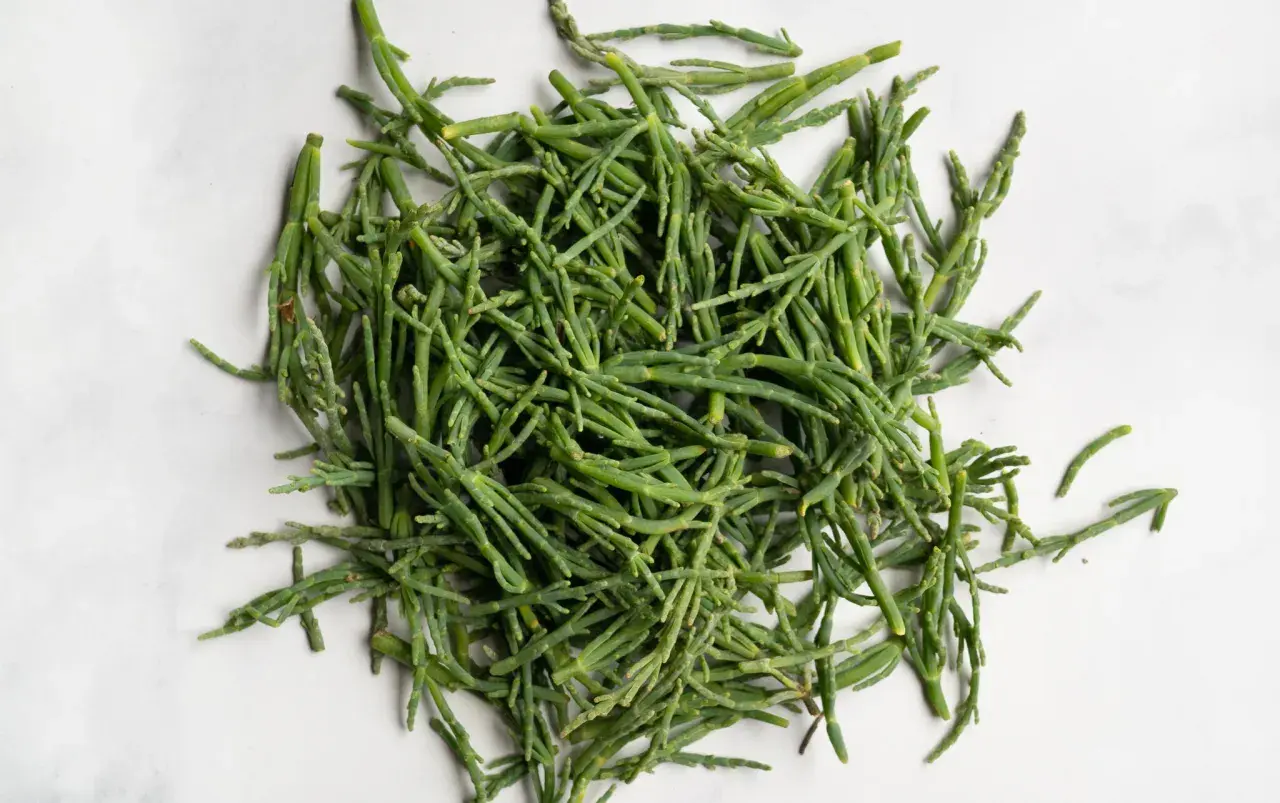
Sea beans are one of those ingredients that can make a plate feel coastal without much effort. They bring salt, crunch, and a clean green flavour, which is why they work so well with fish, eggs, potatoes, and olive oil-based dishes. This guide covers what they are, how to buy them in the UK, how to handle them, and the best ways to cook them without losing their snap.
What matters most before you cook them
- Look for bright green, plump stems with no slimy patches or yellow tips.
- In the UK, they are usually sold as samphire, most often the marsh type.
- They need only a brief cook, because too much heat turns them limp and dull.
- Season lightly, because the plant already tastes naturally salty.
- They shine with fish, shellfish, eggs, new potatoes, and lemon.

What this coastal green actually is
Botanically, it is a salt-loving succulent, which means it thrives where many vegetables would fail. That matters because the growing environment shapes the flavour: crisp, briny, and slightly mineral, with a texture that sits somewhere between asparagus and green beans. In Britain, you will most often see it labelled as samphire, usually the marsh type rather than the rock form.
I think the confusion around the name is part of the reason people overcomplicate it. It is not seaweed, and it is not a leafy salad green. It is a halophyte, a plant adapted to salty ground, and that salt tolerance is exactly why it tastes so distinctive on the plate. The best bunches feel juicy, not woody, and they taste like the shoreline in the cleanest possible way.
That makes it a natural fit for seafood, but not only seafood. Once you understand the flavour, it becomes easier to place it in everyday cooking, which is where it starts to earn its keep.
How to buy and store it in the UK
The ingredient is seasonal in a very literal sense. In British shops and fish counters, I look for it from late spring through summer, with the strongest quality usually landing in midsummer. If the bunch looks tired on the shelf, it will not magically improve at home.
| What to check | Good sign | Why it matters |
|---|---|---|
| Colour | Bright green throughout | Suggests freshness and better crunch |
| Texture | Firm, plump stems | Holds its shape after a brief cook |
| Moisture | Lightly damp, not soggy | Soggy bunches spoil faster |
| Smell | Fresh, sea-like aroma | A fishy note can mean age |
At home, I store it loosely wrapped in a slightly damp paper towel inside the fridge and use it quickly, ideally within 2 to 3 days. If a bunch is extremely fresh, it may hold a little longer, but this is not the kind of produce I would leave forgotten in the drawer. Also, do not wash it until you are ready to cook, because extra surface moisture shortens its life.
Once it is in the kitchen, the real job is to clean it without flattening its personality.
Cleaning and preparing it without losing the crunch
I keep prep simple. A quick rinse in cold water is usually enough to remove grit and stray bits of seaweed, then I trim any woody ends and dry the stems well. If a bunch looks especially salty or sandy, I swish it in a bowl of cold water rather than blasting it under the tap for too long.
- Rinse briefly in cold water.
- Trim away any tough or woody base ends.
- Pat the stems dry on a clean towel.
- Taste one tip before adding extra salt to the dish.
If the stems are tender, I will sometimes serve them raw in very small amounts, especially as a garnish or in a cold salad. More often, though, I give them a short blanch, just long enough to calm the salt and brighten the colour. The moment they start to soften, stop. That is the difference between a crisp garnish and a limp afterthought.
The cooking methods that respect its character
The biggest mistake is treating it like a standard green vegetable that needs several minutes of heat. It does not. I think of it as a fast-cooking side, more like asparagus tips than cabbage, and sometimes even faster.
| Method | Time | Best use | My note |
|---|---|---|---|
| Raw | Only with the most tender tips | Salads and tartines | Taste first, because some bunches are too saline |
| Blanch | 20 to 30 seconds | Cold salads and side dishes | Brings out colour and removes the harsh edge |
| Sauté | 1 to 2 minutes | Fish, eggs, and potatoes | Use olive oil, a little garlic, and little else |
| Steam | 1 to 2 minutes | Delicate plates | Gentler than boiling and easier to control |
| Quick pickle | Light brine, then rest | Pintxos and antipasti | Best when you want brightness rather than heat |
I usually finish it with lemon, white wine vinegar, or a little butter, not all three at once. Garlic, chilli, parsley, dill, and a pinch of Espelette pepper all make sense, but only if they support the plant instead of covering it up. The flavour is subtle enough that heavy sauces tend to flatten it.
Where it fits in Basque cooking
In Basque cooking, this ingredient makes the most sense when it sits beside the sea. I like it with hake, cod, grilled sea bass, clams, or prawns, because it echoes the marine character of the dish without stealing focus. It also works beautifully with the region’s clean, olive oil-led style, where freshness matters more than ornament.
- With hake - tuck a small handful beside pan-fried hake with garlic and parsley. The plant adds salinity without needing a heavy sauce.
- With eggs - fold it into a soft scramble or a tortilla-style dish. The saltiness lifts the eggs and keeps the plate from feeling flat.
- With potatoes - pair it with warm baby potatoes, olive oil, and a little vinegar. This is a simple combination that tastes more deliberate than it looks.
- As a pintxo topping - place a few crisp stems over anchovy, roasted pepper, or tuna. The result feels very natural on a Basque-style bar plate.
I would not bury it under cream, breadcrumbs, or a lot of cheese. Its job is to bring salt, texture, and a trace of the shoreline, which is exactly why it fits so well into a coastal kitchen.
The mistakes I avoid with it
The first mistake is over-salting the dish before tasting it. This ingredient already comes with enough natural salt to change the balance of a sauce, a fish pan, or a salad dressing. The second mistake is overcooking, which strips away the crunch and leaves you with something oddly flat.
The third problem is buying bunches that are too old. Pale, floppy stems are a poor buy, even if the price looks tempting. I would rather buy less of a fresh bunch than more of a tired one. A small quantity of good produce will always outperform a larger quantity of mediocre produce.
If you are foraging, be even more careful. Only harvest where it is legal, avoid areas near roads, harbours, or runoff, and never assume that salty water means clean food. Coastal plants can pick up contamination just as easily as they pick up flavour, and that is a risk I would not ignore.
Why I keep it around for the final seasoning
What makes this ingredient useful is not just its flavour, but its timing. It solves a very specific kitchen problem: a dish needs freshness, salt, and texture, but you do not want to add another heavy vegetable or another aggressive acid. A small handful can finish a plate in a way that feels intentional rather than decorative.
That is why I keep coming back to it in seafood dishes, egg dishes, and warm vegetable plates. If you buy it fresh, keep the cooking brief, and let the natural salinity do the work, it becomes a genuinely practical ingredient rather than a seasonal curiosity. Used well, it brings a clean coastal note that fits beautifully with Basque-style cooking and with everyday British produce alike.
