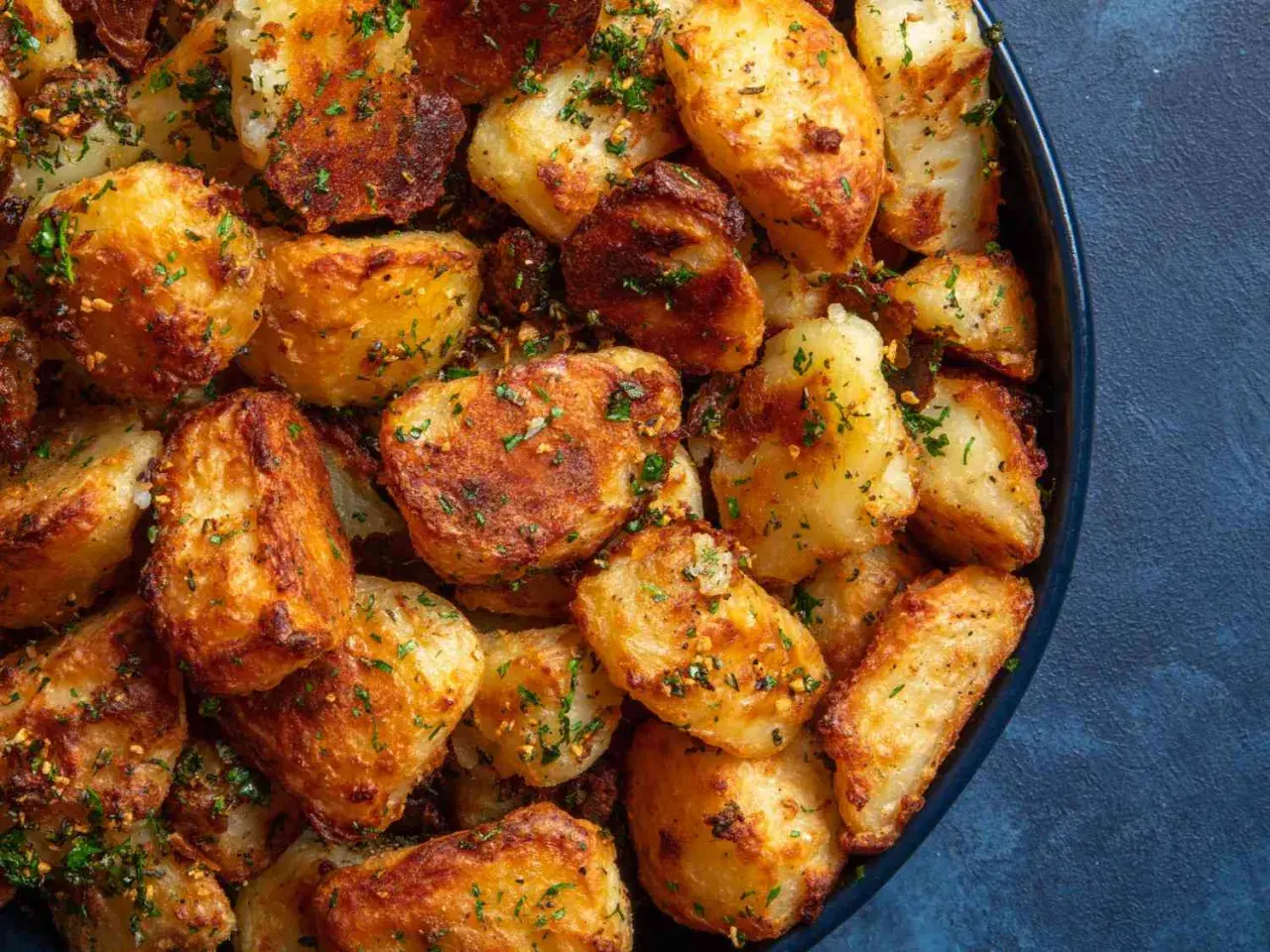
New potatoes are one of those ingredients that reward restraint: they are harvested early, so the skins stay thin, the flesh stays moist, and the flavour reads as sweet rather than heavy. In a Basque-style kitchen, that makes them useful in the simplest possible way, where olive oil, herbs, fish, peppers and good salt do most of the work. In the sections below I’m focusing on what they are, how to buy and store them in the UK, and the cooking methods that keep their texture intact.
What matters most before you cook them
- New potatoes are not a variety; they are potatoes lifted early, before the skins fully set.
- They are best when firm, small to medium, and free from greening, sprouts or bruises.
- In the UK, the season is strongest from late spring into early summer, so freshness matters more than size.
- I cook them whole whenever possible, because that keeps the centre creamy and the flavour clean.
- The Food Standards Agency now allows raw potatoes to be stored in the fridge or a cool, dark place, but these delicate ones still deserve quick use.
What makes them different from mature potatoes
I think of these potatoes less as a special variety and more as an early stage of the crop. Because they are lifted before the skins thicken, they hold more moisture, cook faster and usually taste a little sweeter and more buttery than fully matured potatoes.
| Feature | Early-season tubers | Mature potatoes | Why it matters |
|---|---|---|---|
| Skin | Thin, tender, often easy to rub off | Thicker and more set | You can often leave the skin on for better flavour and less prep |
| Texture | Firm but creamy, with a waxy bite | More starchy and fluffy | They hold shape better in salads, stews and warm sides |
| Moisture | High | Lower | They cook quickly, but they also overcook quickly |
| Best use | Boiling, steaming, smashing, light roasting | Mashing, baking, chips, heavier roasts | The cooking method should match the texture |
| Seasonality | Short and fresh | Longer storage crop | Freshness matters more than convenience |
That difference is the reason I never treat them like a pantry staple. The next decision is how to choose the best ones while they are in season, because the quality window is short and the texture is very unforgiving.
How to choose them in a UK market
At the shop or market, I look for potatoes that feel dense for their size and have skin that rubs cleanly rather than flaking off in patches. A little soil is fine; softness, wetness and green areas are not.
- Choose similar sizes so they cook evenly.
- Avoid sprouting eyes, deep cuts and wrinkled skin.
- Prefer dry, unwashed tubers if you plan to keep them for a day or two.
- If the bag smells damp or stale, leave it.
- Loose potatoes let you inspect the skin better than opaque bags.
In Britain, I’m especially happy when I find early Jersey or Cornish crop because that is usually when the texture is at its most convincing, and from there the real question becomes how to store them properly.
How to store them without losing freshness
These potatoes are at their best quickly, so I buy only what I expect to cook within a few days. The key is to keep them dry, dark and well ventilated; moisture and light are what make them age badly, not just time on its own.
The Food Standards Agency now says raw potatoes can be kept in the fridge or in a cool, dark place, which is useful if your kitchen is warm. For the early-season kind, I still prefer a paper bag or a loosely closed container, away from onions and away from direct light, because the skins are too delicate for rough handling.
- Do not wash them until just before cooking.
- Keep them away from onions and strong-smelling produce.
- Discard any with green patches, deep sprouting or a bitter smell.
- If you peel or cut them ahead of time, submerge them in cold water and chill them for a very short hold only.
Once they’re stored sensibly, the next decision is method, and that is where a small amount of technique pays off.

How I cook them for the best texture
If I want the cleanest flavour, I boil or steam them whole. If I want a more textured side with crispy edges, I roast or smash them after a short boil; parboil simply means cooking them partway before finishing them in the oven.
| Method | Typical time | Best result | My note |
|---|---|---|---|
| Boiled whole | 12 to 18 minutes | Soft, creamy centres with intact skins | Start in cold salted water so the heat reaches the middle evenly |
| Steamed whole | 15 to 20 minutes | Clean flavour and less waterlogging | Good when you want the potato taste to stay front and centre |
| Roasted | 25 to 35 minutes at 200C or 180C fan | Golden edges and a fluffy interior | Dry them well before oiling so they actually crisp |
| Smashed then roasted | Boil first, then 20 to 25 minutes in the oven | Crunchy exterior with a tender middle | This is the most forgiving option for a crowd |
I season them as soon as they drain, while they are still hot enough to drink in olive oil, butter or a quick herb dressing. For a Basque leaning plate, I keep the finish sharp and simple: parsley, garlic, lemon zest, flaky salt and a little olive oil usually do more than any heavy sauce ever could.
What to serve them with in a Basque-style meal
In a Basque-style meal, I treat them as a supporting ingredient, not the headline. They sit naturally beside grilled hake, cod, roast peppers, green beans, squid, or a simple omelette, because all of those dishes benefit from a soft, earthy side that doesn’t fight the main flavour.
- Grilled fish with olive oil and lemon: the potatoes absorb the juices and keep the plate balanced.
- Roast peppers and onions: the sweetness echoes the potatoes instead of overpowering them.
- Garlic mayonnaise or aioli: good when you want richness, but keep the portion modest.
- Herb-finished summer salads: best when the potatoes are still slightly warm and dressed lightly.
If I’m building a more traditional table, I still keep the seasoning simple and let the produce show through, which is what makes the ingredient feel Basque rather than generic.
Mistakes that flatten their flavour
Most bad results come from treating them like ordinary storage potatoes. The two most common errors are overcooking and over-seasoning, and both make the flesh taste dull instead of delicate.
- Boiling too hard breaks the skins and clouds the water.
- Peeling too aggressively removes the part that gives them character.
- Leaving them in water after cooking makes them soggy.
- Masking them with heavy cream sauces hides the clean flavour they are known for.
- Buying too many at once means you lose the short window when they are really worth eating.
Handled gently, they need very little intervention, and that is exactly why they can look so good on a plate with almost no effort.
A simple seasonal plate I keep coming back to
My fallback is small potatoes boiled until just tender, drained well, then tossed with olive oil, flaky salt, chopped parsley and a little lemon zest. If I want more texture, I smash them lightly and finish them under a hot oven until the edges catch and crisp. Served with grilled fish, a fried egg or roast peppers, that is a small dish that still feels complete, which is exactly what I want from a good seasonal ingredient.
- Boil in salted water until just tender.
- Drain well and let the steam escape for a minute.
- Toss with olive oil, parsley, garlic or lemon zest, and sea salt.
- Serve warm, not piping hot, so the flavour stays rounded.
When the season is short, I’d rather cook them simply and often than overcomplicate them once and forget them the rest of the year.
