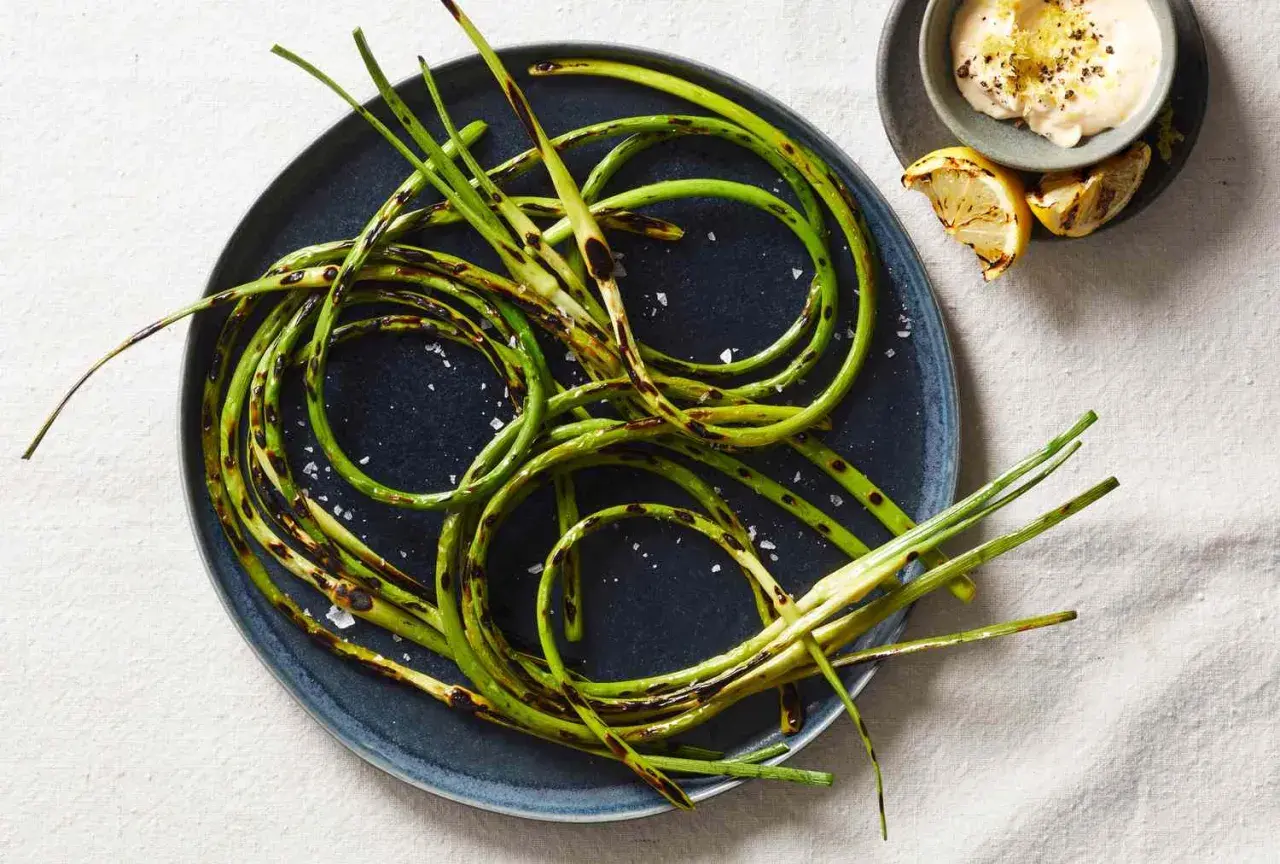
The best thing about garlic scapes is that they give you garlic flavour before the cloves are ready, with a fresher, greener edge that behaves more like a spring vegetable than a stored pantry staple. In the kitchen, they sit somewhere between chives, asparagus and young green beans, which is exactly why they are worth paying attention to when the season is short. This guide covers what they are, how to choose them in the UK, the best ways to cook them, and how to keep a bunch useful for longer.
What to know before bringing them to the pan
- They come from hardneck garlic, not the softneck bulbs most people buy all year.
- Choose stalks that are bright green, firm and still curled; straight, woody ones are past their best.
- They work raw in small amounts, but a quick cook keeps the flavour sweet and clean.
- They pair especially well with eggs, potatoes, fish, beans, olive oil and sharp cheese.
- Fridge storage is short, so freezing or pickling makes sense if you buy more than you need.
What these spring stalks actually are
These curly stems are the flowering shoots of hardneck garlic. Growers often remove them so the plant puts more energy into the bulb, and cooks benefit because the stalk itself is edible: milder than a clove, more aromatic than a leek, and with enough snap to feel fresh rather than heavy.
I find the easiest way to think about them is as a seasonal bridge between green alliums and mature garlic. That makes them useful in a very different way from the familiar bulb, which is why I like to compare the options side by side before I decide how to cook them.
| Ingredient | Flavour | Best use | Season |
|---|---|---|---|
| Curly hardneck stalks | Fresh, grassy, gently garlicky | Sautéing, grilling, pesto, dressings | Short late-spring window |
| Green garlic | Soft, sweet, onion-like | Soups, fritters, omelettes | Earlier spring |
| Mature cloves | Sharp, concentrated, deeper | Roasting, braising, sauces | Long-stored, year-round |
| Garlic chives | Mild, green, chive-like | Raw garnish, dumplings, eggs | Longer, depending on growing conditions |
Once you see that difference, the next question is obvious: how do you choose the right bunch when they show up in the market?
How to spot good ones in a UK market
In the UK, I usually see them in farm shops, veg boxes, farmers’ markets and the better greengrocers rather than on an everyday supermarket shelf. The season is brief, generally late spring into early summer, and the best stalks are vivid green, evenly curled, and firm enough to bend without feeling brittle.
- Pick stalks with tight flower buds if the tip is still visible.
- Look for a clean break at the base, not a dry, fibrous split.
- Choose similar-sized stalks so they cook at the same speed.
- Favour smaller, younger stalks if you plan to eat them raw.
- Leave behind anything that looks dull, floppy or heavily blemished.
If the stalk is straight, dull, or fibrous when you snap the end, it will cook up tougher; I leave those behind unless I plan to mince them very finely. Once you know what good looks like, the real payoff comes from trimming and cooking them with a light hand.

How to trim and cook them well
Start by trimming off the dry end and any tough tip. The tender middle section is the part you want, and you can cut it into short lengths, slice it thin for raw use, or leave it whole for roasting and grilling.
- Sauté: 2 to 4 minutes in olive oil or butter until just tender.
- Roast: 10 to 15 minutes at 200C/180C fan, enough to soften and lightly brown.
- Grill or barbecue: a few minutes per side until blistered but still green.
- Raw: shave very young stalks into salads, herb butter or a dressing, but keep the amount modest so the flavour stays balanced.
The biggest mistake is overcooking them until they go dull and soggy. Keep some texture and they taste vivid; take them too far and they become a flat, generic garlic note. That fresh edge is what makes them useful in dishes that need lift, not just punch.
The flavours they pair with best
I reach for them with eggs, potatoes, peas, white beans, mushrooms, spring cabbage, asparagus, cod and other mild fish because they add depth without masking anything. In a Basque-style kitchen, they sit naturally beside peppers, tomatoes, olive oil, piment d'Espelette, and simple omelettes, where a little garlic fragrance goes a long way.
- Eggs and omelettes: chop finely and cook briefly in the fat.
- Potatoes: fold into crushed potatoes, tortilla or pan-fried cubes.
- Fish: use as a garnish or quick sauté beside hake, cod or sardines.
- Beans and pulses: blend into a purée or stir into warm white beans.
- Cheese: pair with goat’s cheese, feta or a mild hard cheese for contrast.
If you like a sharper finish, add them near the end of cooking. If you want sweetness, give them a little more heat. That flexibility is what makes them useful beyond one recipe, so the next step is preserving the ones you do not use immediately.
How to store them and stretch the season
Fresh stalks keep best in the fridge for about 1 to 2 weeks. I store them unwashed in a perforated bag or wrapped loosely in a damp towel in the crisper drawer, then trim the ends before cooking.
| Method | How long | Best use |
|---|---|---|
| Fridge | About 1 to 2 weeks | Quick weeknight cooking, raw garnish, sautéing |
| Freezer | Several months | Soups, pesto, sauces, mashed potatoes |
| Pickled | A few months chilled | Cheese boards, salads, sandwiches, grilled fish |
For longer storage, chop and freeze them flat on a tray before bagging, or make a quick pickle if you want a sharper, more pantry-friendly version. I avoid drying them, because most of what makes them interesting is the fresh green flavour; once that is gone, they are just another mild allium. For oil-based preserves, keep them refrigerated or frozen and use a tested recipe rather than leaving garlic-infused oil on the counter.
A practical way to use them before the season ends
If I were building a simple Basque-leaning meal around them, I would start with a tortilla-style omelette, add a pile of pan-fried potatoes or peppers, then finish with a handful of chopped stalks for brightness. They also work well blitzed into a quick herb sauce, folded into mayonnaise for fish, or tossed through warm beans with olive oil and parsley.
The main rule is simple: treat them like a seasonal fresh vegetable first and a garlic substitute second. Use them while they are still curled, keep the cooking gentle, and you get a flavour that feels both familiar and a bit more vivid than the bulb alone. When the brief UK season opens, that is the moment to buy a bunch, use one immediately, and save the rest for the freezer.
