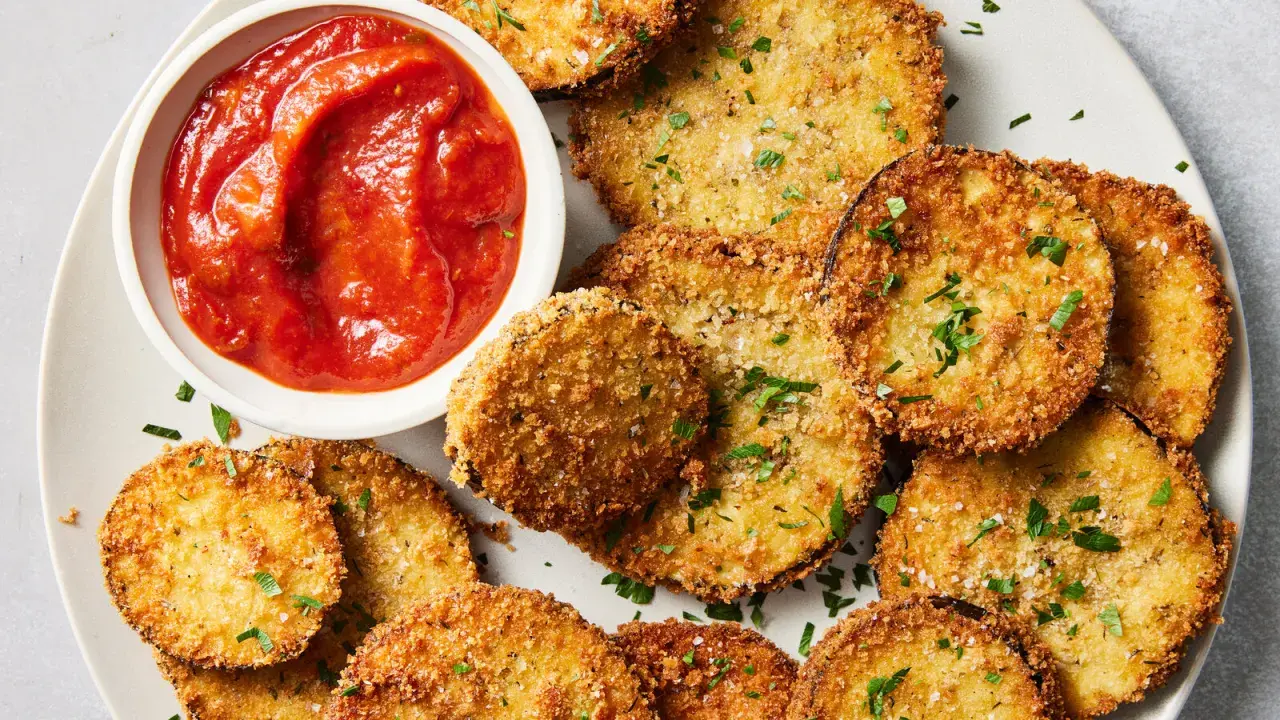
Spanish fried eggplant is one of those dishes that looks almost too simple until you taste how much depends on the ingredients. The best versions balance a firm aubergine, a light flour coating, hot oil and a sweet finish that lifts the vegetable without burying it. In this guide, I break down what to buy, how to judge the produce, how to fry it properly and how to serve it so it feels natural on a tapas table.
Key points to keep the flavour bright and the texture crisp
- Choose medium aubergines with glossy skin, a heavy feel and no soft spots.
- Use a thin flour coating, not a thick batter, so the aubergine stays the centre of the dish.
- Fry in oil that is hot enough to sizzle immediately, then drain the slices on a rack.
- Finish with honey or cane syrup and a little salt so the sweetness tastes clean rather than flat.
- Buy produce that feels dense and fresh; the dish is only as good as the aubergine you start with.
- Serve it straight away, while the crust is crisp and the inside is still soft.
What a good plate should taste and feel like
For me, the point of this dish is contrast. The outside should be lightly crisp, the inside should go soft and almost creamy, and the final sweetness should sit on top rather than dominate the plate. That balance is what makes a simple tapa memorable instead of merely fried.
It also explains why the ingredient list stays short. When a dish relies on so few components, every choice matters: the size of the aubergine, the quality of the oil, the fineness of the flour and even the kind of sweetener you drizzle at the end. If those pieces are right, you do not need much else. Once you know what the finished plate should feel like, choosing the ingredients becomes much easier.
Choose the aubergines and pantry staples with care
The produce is the real story here. I look for medium aubergines with glossy skin, a firm feel and a green calyx that still looks fresh. If the fruit feels light for its size or the skin looks wrinkled, it usually means the flesh will be spongy or seedy, which is exactly what you do not want in a fried dish.
In the UK, aubergines are easy to buy all year, but I still pay more attention in late summer and early autumn, when the best ones tend to be denser and less watery. That matters because a watery aubergine soaks up more oil and gives you a softer crust. I would rather cook a smaller, tighter aubergine than a large one that looks impressive but eats dull.
| Ingredient | What to buy | Why it matters | UK notes |
|---|---|---|---|
| Aubergine | 1 large or 2 medium, firm and glossy | Fresh flesh fries cleanly and stays tender inside | Choose medium fruit first; they are usually less seedy |
| Flour | Plain flour, or plain flour mixed with a little rice flour | Creates a thin, crisp coating | Rice flour gives extra crunch without making it heavy |
| Oil | Olive oil or sunflower oil | Needs enough heat to seal the coating quickly | Light olive oil is a good compromise for frying at home |
| Sweet finish | Honey or cane syrup | Provides the classic sweet-savoury contrast | Runny honey is the easiest substitute if cane syrup is unavailable |
| Salt | Fine sea salt for the slices, flaky salt for finishing | Draws out excess moisture and sharpens the final taste | Use lightly; too much salt masks the sweetness |
| Optional garnish | Sesame seeds, lemon wedges, chopped parsley | Adds aroma and a small extra layer of texture | Keep the garnish restrained so the aubergine stays central |
One practical detail matters more than most people expect: the flour should be a dusting, not a coat. If you pack flour onto the slices, the crust turns dense and pasty. A thin layer is enough to give the aubergine structure without hiding it, and that is the difference between a good tapa and a heavy one.
The frying method that keeps it light rather than greasy
I prefer slices or batons, depending on how I plan to serve them. Batons feel more casual and work well for sharing, while slices are neat for a plated starter. Either way, keep the cut even so the pieces fry at the same pace.
- Cut the aubergine into 5 to 8 mm slices or into batons about finger-width thick.
- Salt lightly and let the pieces sit for 15 to 20 minutes if the aubergine is large or feels slightly old.
- Pat them dry very well. If they still feel damp, the flour will clump instead of clinging evenly.
- Dust them lightly in plain flour, shaking off the excess.
- Heat the oil to about 170 to 180°C. If you do not have a thermometer, the flour should sizzle immediately when it hits the pan without darkening at once.
- Fry in small batches for roughly 2 to 3 minutes per side, until the coating is pale gold and the inside is soft.
- Lift them out onto a wire rack or a tray lined with paper, then season while they are still hot.
The rack matters. Paper towels work in a pinch, but they trap steam underneath the slices, and steam is the enemy of crispness. If you want the best texture, let the oil drain away freely. I also avoid crowding the pan, because too many slices at once drop the oil temperature and leave you with soggy edges instead of a clean fry.
How to finish it in the Spanish way
The finishing touch is where the dish becomes recognisably Spanish rather than just fried aubergine. The most traditional versions lean on honey or cane syrup, especially in southern Spain, where that sweet note is part of the dish’s identity. Cane syrup has a deeper, more molasses-like flavour; honey is brighter and easier to find in the UK.
I keep the drizzle light. Think glaze, not sauce. If the sweetness pools around the slices, it starts to flatten the dish. A thin thread over the hot aubergine is enough, especially if you add a pinch of flaky salt or a few sesame seeds on top. That small salty edge is what makes the sweetness feel deliberate instead of sugary.
- Use honey for a clean, familiar sweetness.
- Use cane syrup if you want the most traditional Andalusian-style flavour.
- Add sesame seeds if you want a little nuttiness and extra texture.
- Add a tiny squeeze of lemon only if the plate needs brightness.
- Do not drown the slices; the vegetable should still taste savoury first.
If you are serving the dish as part of a wider tapas spread, that balance becomes even more important. You want one bite to invite the next, not to feel like dessert in disguise. From there, it is easy to build a fuller table around it.
What to serve alongside it
This dish works best as a tapa, a starter or a small sharing plate. I like it alongside things that bring salt, acidity or freshness, because they stop the fried aubergine from feeling one-note. In a Basque-leaning meal, that approach makes sense: good produce, careful seasoning and plates that let the ingredients do the talking.
- Tomato salad with olive oil and a little sherry vinegar
- Pimientos de padrón or other blistered peppers
- Good olives and warm bread
- A simple tortilla made with potatoes and onions
- Grilled vegetables with a clean, savoury dressing
For drinks, I would reach for something crisp rather than rich. A dry white, a light cider or a bright Basque-style txakoli works well because it cuts through the oil and keeps the palate fresh. If you are building a meal for guests, serve the fried aubergine first while the coating is still sharp, then move on to the more substantial dishes.
The small adjustments that make it work better in a UK kitchen
Most of the failures I see come from small, fixable issues. The pan is not hot enough. The aubergine was cut unevenly. The coating was too thick. Or the cook waited too long to serve the slices, which is usually when the crispness disappears. None of those problems need a different recipe; they just need a bit more control.
In a UK kitchen, I would make three adjustments more often than not. First, I would choose aubergines that are medium-sized and dense rather than oversized. Second, I would use a light frying oil that lets me keep the temperature steady without a heavy flavour. Third, I would keep the finish simple, because honey, salt and good produce already do the hard work.
- If the aubergine tastes bitter, salt it a little longer before frying.
- If the coating goes pale and soft, the oil was too cool.
- If the slices taste oily, the pan was crowded or the aubergine was too wet.
- If the sweetness feels clumsy, reduce the drizzle and add a pinch of salt.
- If you want a lighter plate, fry shallower rather than deeper, but keep the oil hot.
When I want this dish to feel at its best, I think less about technique as a performance and more about restraint. Start with a good aubergine, keep the coating thin, fry quickly and finish lightly. That is enough to make the dish feel honest, balanced and worth putting on the table again.
