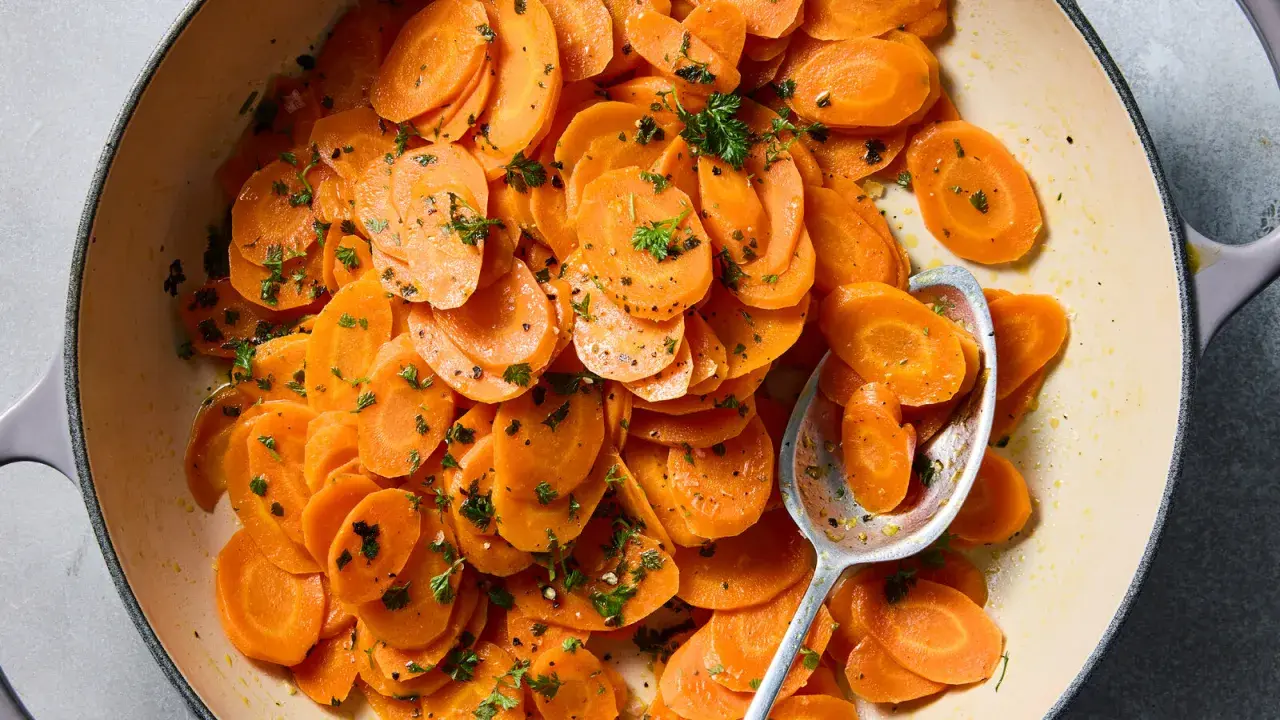
The classic French version, often called vichy carrots, turns a basic root into a glossy side dish with very little effort. In this article I look at what the dish actually is, which carrots work best in the UK, how to get the glaze right, and where it fits on a Basque-leaning table. If you want a vegetable side that tastes refined without becoming fussy, this is a useful one to understand.
What matters most before you cook
- The dish depends on a shallow, glossy glaze, not a heavy sauce.
- Sweet, even-sized carrots make the biggest difference to the final flavour.
- Butter and a small amount of sugar are enough; stronger sweeteners usually push it away from the classic style.
- Vichy mineral water is traditional, but good sparkling water or plain water still works well.
- A final sprinkle of parsley keeps the flavour fresh; a tiny pinch of piment d'Espelette is a sensible Basque-style variation.
Why the glaze works so well
The logic behind this dish is almost disarmingly simple: carrots soften in a little water, butter melts around them, sugar nudges the natural sweetness forward, and the liquid reduces into a light coating. That reduction stage is the whole trick. If the pan is too full, you get boiled carrots; if the pan is shallow and the heat is steady, you get a thin syrup that clings to the vegetables instead of drowning them.
I like this method because it respects the ingredient instead of hiding it. The classic version uses mineral-rich water from Vichy, which gave the dish its name, but the practical value of the recipe does not depend on hunting down a specialty bottle. Good water, gentle heat, and carrots that actually taste sweet are what matter. It is a technique built on restraint, not on complication.
That is also why the dish still makes sense on a modern table: it feels old-school in the best way, but it is fast enough for a weeknight if the rest of the meal is already in motion. Once you understand that, the next question is which carrots deserve the pan in the first place.
Choosing carrots that taste like themselves
| Carrot type | Why I choose it | What it gives you |
|---|---|---|
| Chantenay | Short, sweet, and even | Clean shape and a neat glaze |
| Young medium carrots | Easy to find and versatile | Classic flavour with minimal fuss |
| Baby carrots | Convenient for a quick side | Soft texture, but sometimes less depth |
| Rainbow carrots | Best for a more decorative plate | Good flavour, though the colour can tint the pan |
In the UK, British carrots are available in shops for nearly 12 months of the year, with the new season starting around early to mid-June and running through to May. That matters more than it sounds, because fresher carrots need less sugar to taste complete. When I am buying them, I look for firm roots that feel heavy for their size, with skin that looks smooth rather than shrivelled.
Cut size matters too. If the carrots are very thick, I halve them lengthwise so they cook at the same pace as the slimmer pieces. If they are very thin, I leave them whole. The goal is visual neatness as much as flavour: when the pieces are similar in size, the glaze finishes evenly instead of burning on some pieces and undercooking on others. Once the carrots are chosen well, the method itself becomes much easier to control.

How I cook them for a clean shine
For four servings, I keep the ingredient list short and let the proportions do the work. I want enough butter for shine, enough sugar for balance, and just enough water to create steam at the start and a glaze at the end. If you are using unsalted butter, you can season more precisely; if you use salted butter, keep the added salt modest.
The ingredient list
| Ingredient | Amount for 4 | Notes |
|---|---|---|
| Carrots | 500g | Peel if the skin is tough; leave young carrots unpeeled if they are scrubbed clean. |
| Unsalted butter | 20-30g | Use salted butter only if you reduce extra salt. |
| Caster sugar | 2 tsp | Use up to 1 tbsp for older or less sweet carrots. |
| Water or lightly sparkling mineral water | 120-150ml | Enough to come halfway up the carrots, not cover them. |
| Fine salt | Small pinch | Keep it light; the glaze should stay clean. |
| Parsley | 1-2 tbsp chopped | Add at the end, not at the start. |
Read Also: Slow-Roasted Tomatoes - The Secret to Deep Flavor
The method
- Cut the carrots into 5-7 mm batons or diagonal slices. If they are thin, leave them whole; if they are thick, halve them lengthwise first.
- Put the carrots, butter, sugar, salt, and water in a wide sauté pan. The liquid should sit about halfway up the carrots, not drown them.
- Bring the pan to a steady simmer over medium heat. Keep it mostly uncovered so the water can reduce.
- Stir once or twice as the liquid drops. Thin carrots usually take 12-15 minutes; thicker pieces need 15-18.
- When only a thin syrup remains, toss in the parsley and serve immediately.
This is the point where I stop thinking about the recipe and start watching the pan. Once the liquid has almost vanished, the carrots should look lacquered, not wet. If you are using a proper mineral water, the result can taste a touch cleaner and lighter, but I would not overcomplicate that part; the main job is still to cook the carrots until they are tender and lightly glazed. From there, the difference between a good version and a mediocre one is usually a handful of small mistakes.
The mistakes that flatten the flavour
| Mistake | What happens | What I do instead |
|---|---|---|
| Using too much water | The carrots boil rather than glaze | Add only enough liquid to come halfway up the carrots |
| Overloading the sugar | The dish starts to taste candied | Keep sweetness modest and let the carrots lead |
| Choosing a deep pan | Steam lingers and slows reduction | Use a wide sauté pan or frying pan |
| Cooking until dry | The glaze turns sticky or scorched | Stop when a light syrup coats the carrots |
| Adding parsley early | It fades and looks tired | Stir it in just before serving |
I also avoid turning this into a different dessert-like carrot side by adding honey, maple syrup, or too much citrus. Those can all be pleasant, but they move the dish away from the classic profile. If the carrots are weak to begin with, extra sugar will not rescue them; better produce will do more for the result than another spoonful of sweetener ever will. Once that is clear, the dish becomes much easier to place on a real menu.
How I serve them on a Basque-minded table
Because the flavour is gentle rather than loud, I usually pair these carrots with something savoury and structured. Roast chicken, guinea fowl, pork loin, grilled hake, and cod all work naturally. The sweetness in the carrots catches the salt and fat in the main dish, which is why the side feels more useful than decorative. It is not a side that tries to dominate the plate; it steadies the plate.
For a more Basque-inspired menu, I would keep the rest of the food equally clear and produce-led. Think grilled fish, roast poultry, simply cooked pork, or a vegetable-heavy spread where the carrots sit alongside potatoes, green beans, or peppers rather than fighting them. If I want a subtle regional nod, I use the barest dusting of piment d'Espelette at the end, but only when the rest of the meal can support that extra warmth. That keeps the dish in balance instead of turning it into a different recipe altogether.
In a British context, it also makes sense as part of a Sunday roast, especially when the main dish is rich and the plate needs a lighter, sweeter vegetable to break it up. The carrots bring colour, gloss, and a touch of sweetness without demanding attention, which is exactly why they still feel at home on both restaurant plates and family tables. From there, the only thing left is to remember what really makes the dish succeed.
Good produce does most of the work
- Buy carrots that feel firm and look fresh rather than bendy or wrinkled.
- Keep the pieces even so they finish at the same moment.
- Use just enough sugar to sharpen the glaze, not cover the vegetable.
- Stop cooking the moment the pan turns glossy.
- Serve immediately so the carrots keep their shape and shine.
When I want a side dish that looks modest but tastes carefully thought through, I come back to this method. Keep the produce good, keep the pan wide, and let the liquid reduce until only a thin glaze remains; that is where the dish finds its balance. It is a small technique, but it rewards attention, which is usually the mark of a side dish worth keeping in regular rotation.
