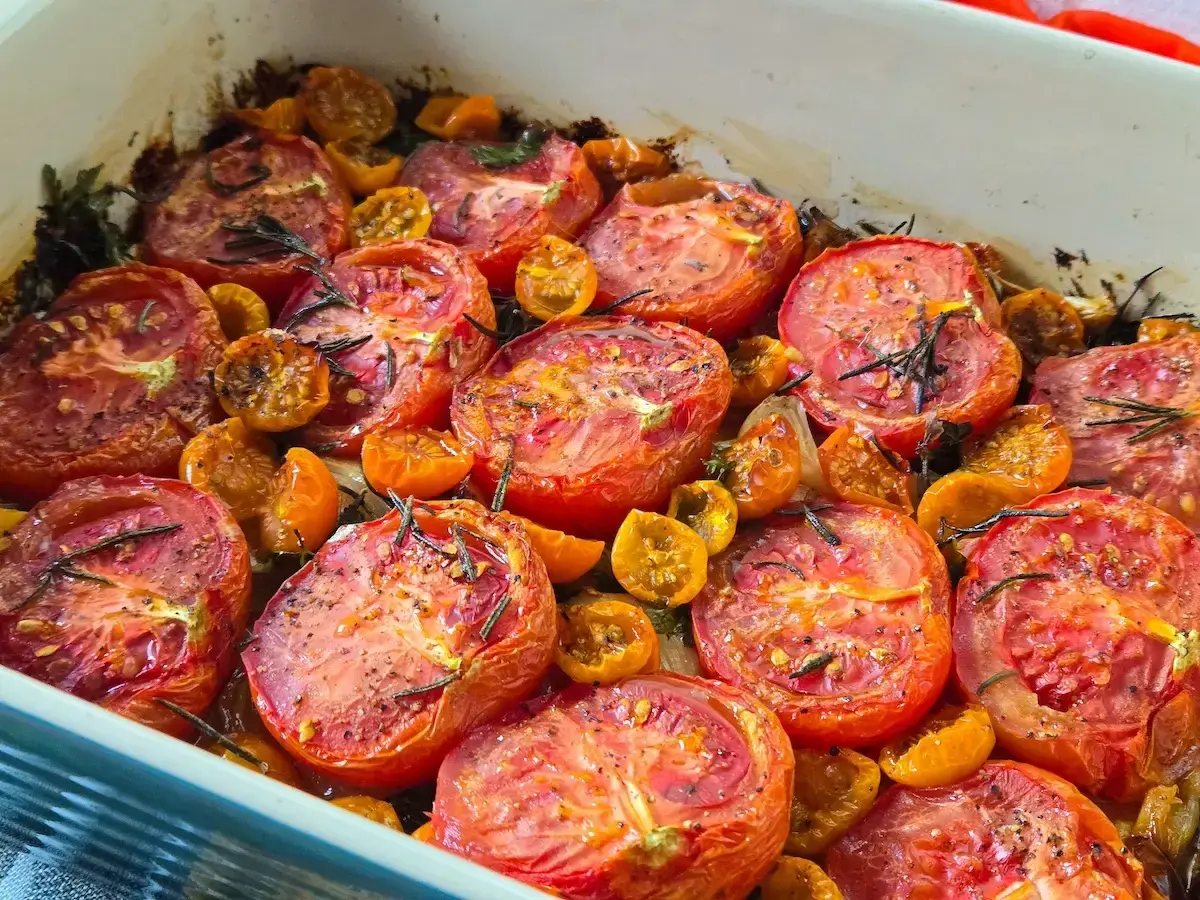
Slow-roasted tomatoes turn a simple surplus of ripe fruit into something deeper, sweeter, and far more useful across the week. I like this technique because it gives you a proper ingredient rather than a one-off side dish, and it works just as well for a summer glut as it does for supermarket tomatoes that need help. Here I cover which tomatoes to buy, how long to roast them, how to season them without flattening the flavour, and how I use them in a Basque-leaning kitchen.
The best result comes from ripe fruit, low heat, and restraint
- Plum, vine, and cherry tomatoes are the safest bets in the UK because they hold shape and concentrate well.
- A low oven, usually 130-160C depending on the size of the fruit and your oven type, gives you jammy texture without burning the sugars.
- Keep the seasoning simple: olive oil, salt, garlic, and herbs are usually enough.
- The goal is deep flavour and glossy texture, not hard edges or a dried-out tray.
- Cool quickly, refrigerate, and freeze extras if you want them to last longer.
- They are excellent on toast, with eggs, under grilled fish, or folded into pasta and grain dishes.
Why low heat changes the tomatoes so much
Tomatoes are mostly water, so the point of slow roasting is not to blast them into submission but to let water evaporate gently while their natural sugars and acids tighten up. That is why the finished result tastes fuller and feels almost confit-like: the flesh softens, the juices thicken, and the flavour becomes more concentrated without turning harsh. I find this method especially useful when the fruit is ripe but not spectacular, because low heat gives it structure and makes the best parts more obvious.
High heat can brown the edges quickly, but it often leaves the centre watery or the skins bitter. With a slower approach, I can stop the tomatoes when they are wrinkled, glossy, and lightly collapsed rather than charred. Once that balance makes sense, the next question is which tomatoes deserve the tray in the first place.

How I choose the best tomatoes in the UK
In the UK, I reach for tomatoes with the least water and the most aroma. Summer-grown field tomatoes are ideal when they are available, but good greenhouse vine tomatoes can still do a solid job outside the peak season. If I want the most reliable result, I usually buy based on texture and smell rather than looks alone.
| Tomato type | Why it works | Best use | What to watch for |
|---|---|---|---|
| Plum or Roma | Dense flesh, lower water content, good natural sweetness | Spoonable topping, sauce base, bruschetta | Choose firm fruit with a strong tomato smell |
| Cherry or grape | Sweet, fast to roast, stays glossy and intense | Whole-roasted garnish, salads, toast | They cook faster, so check early |
| Vine tomatoes | Balanced flavour and easy to find in supermarkets | Everyday tray roasting | Can be watery if they are under-ripe |
| Beefsteak or heritage tomatoes | Big flavour, dramatic texture, good for thick slices | Chunks for pasta, soups, or flatbreads | Need longer roasting and careful spacing |
I usually avoid fruit that feels pale, oddly hard, or scentless, because the oven cannot create flavour that was never there. If I am buying in winter, I am more forgiving with the supermarket crop and lean harder on salt, garlic, and herbs to bring the dish into focus. Once the tomatoes are chosen well, the oven work becomes much more predictable.
The roasting method that gets you jammy fruit, not dried-out edges
I start with a low oven and a tray lined with parchment so the tomatoes can release juice without sticking. For most batches, 140C fan is a good starting point, or roughly 160C conventional; if the tomatoes are especially small, I sometimes go a touch lower. The fruit should sit in a single layer with a little space around it, because crowding the tray makes them steam instead of roast.
- Halve larger tomatoes and leave cherry tomatoes whole unless they are very juicy.
- Set them cut-side up if they are halved, then drizzle lightly with olive oil.
- Season with salt, then add garlic or herbs if you want them.
- Roast until the skins wrinkle, the juices look syrupy, and the flesh has collapsed without drying out.
For timing, I work from the size of the fruit rather than the clock alone. Cherry tomatoes usually need about 60-90 minutes, plum halves about 75-120 minutes, and larger tomatoes can take 90-150 minutes depending on how much moisture they carry. If I want a more spoonable, almost jam-like result, I extend the time slightly; if I want a fresher, brighter finish, I stop sooner. From there, the seasoning decides whether the tray tastes merely good or genuinely layered.
Seasoning that deepens the fruit instead of hiding it
My rule is simple: season enough to sharpen the tomatoes, not enough to cover them. Olive oil helps with texture and mouthfeel, salt draws the flavour forward, and a little garlic or thyme gives the tray a savoury backbone. If I want a Basque note, I often add a pinch of piment d'Espelette; it brings warmth without overpowering the fruit.
The best combinations are the ones that respect the tomato itself. These are the ones I use most often:
- Classic - olive oil, salt, black pepper, and thyme. This is the safest, most versatile version.
- Basque-leaning - olive oil, salt, garlic, thyme, and a pinch of piment d'Espelette. I like this with grilled fish or on toast.
- Brighter finish - olive oil and salt during roasting, then a few drops of sherry vinegar after. This keeps the acidity clean.
- Richer finish - a little garlic and an anchovy fillet melted into the oil. It works when I want depth for pasta or pan con tomate-style toast.
I am careful with sweeter additions such as balsamic, because they can make the tomatoes taste one-dimensional if the fruit is already good. If I use vinegar, I prefer to keep it subtle and add it late rather than letting it dominate the tray. Once the flavour is right, the real pleasure is deciding how to serve them.
How I use them in a Basque-style kitchen
In a Basque-influenced meal, slow-roasted tomatoes are less of a garnish and more of a bridge ingredient. I like them on grilled sourdough with anchovies and parsley, beside tortilla española, or under a piece of hake with olive oil and lemon. They also sit well next to sardines, tuna, or roast peppers, which makes them easy to fold into the kind of simple, produce-led cooking that Basque food does so well.Here are the pairings I reach for most:
- On toast - with anchovies, herbs, and a little olive oil for a quick pintxo-style bite.
- With eggs - spooned over a soft omelette or folded into scrambled eggs for breakfast or lunch.
- With fish - especially hake, cod, mackerel, or sardines, where the tomatoes add sweetness against the salt of the sea.
- With pasta or grains - stirred through hot pasta, freekeh, or rice when I want a fast dinner with more depth.
- With cheese - especially a mild sheep's cheese or a firm, nutty cheese that can handle the sweetness.
If I have a jar of these in the fridge, I can build a meal around them in minutes, which is exactly why I keep making them. The final piece is making sure a good batch stays useful, not forgotten.
Storage, freezing, and the mistakes that waste a good batch
I let the tomatoes cool quickly, then move them into a clean container and refrigerate them as soon as they are no longer hot. For me, that means treating them as a short-life ingredient, not something to leave on the counter in oil. The Food Standards Agency is cautious about vegetables stored in oil, so I use oil for flavour rather than as a preservation method.
When I know I will not use the whole batch within a few days, I freeze the rest in small portions. That keeps the flavour useful for sauces, soups, and hot dishes, even if the texture softens a bit after thawing. I also avoid four common mistakes that flatten the result:- Too much oil - the tomatoes turn greasy instead of glossy.
- Too much sugar or sweet vinegar - the flavour gets blunt and sticky.
- Crowding the tray - the fruit steams, then collapses without concentration.
- Rushing the oven - high heat gives you burnt edges before the centre has done its work.
When the tray is handled properly, the tomatoes keep their identity and just become more useful. That is the difference between a decent side dish and a produce staple you will want to make again.
One tray can do a lot of work for the next few meals
If I were making a batch for maximum flexibility, I would use about 1 kg of ripe plum tomatoes, 2 tablespoons of olive oil, 1 teaspoon of salt, 2 or 3 garlic cloves, and a few thyme sprigs. That gives me enough for toast at breakfast, a pasta sauce at lunch, and something sweet and savoury beside fish or chicken at dinner. It is a small amount of work for a lot of practical payoff, which is why I see this as one of the most useful things you can do with good produce.
When the tomatoes are ripe, the seasoning is restrained, and the oven stays low, the result does not need much explanation. It just tastes like concentrated summer, and that is usually enough.
