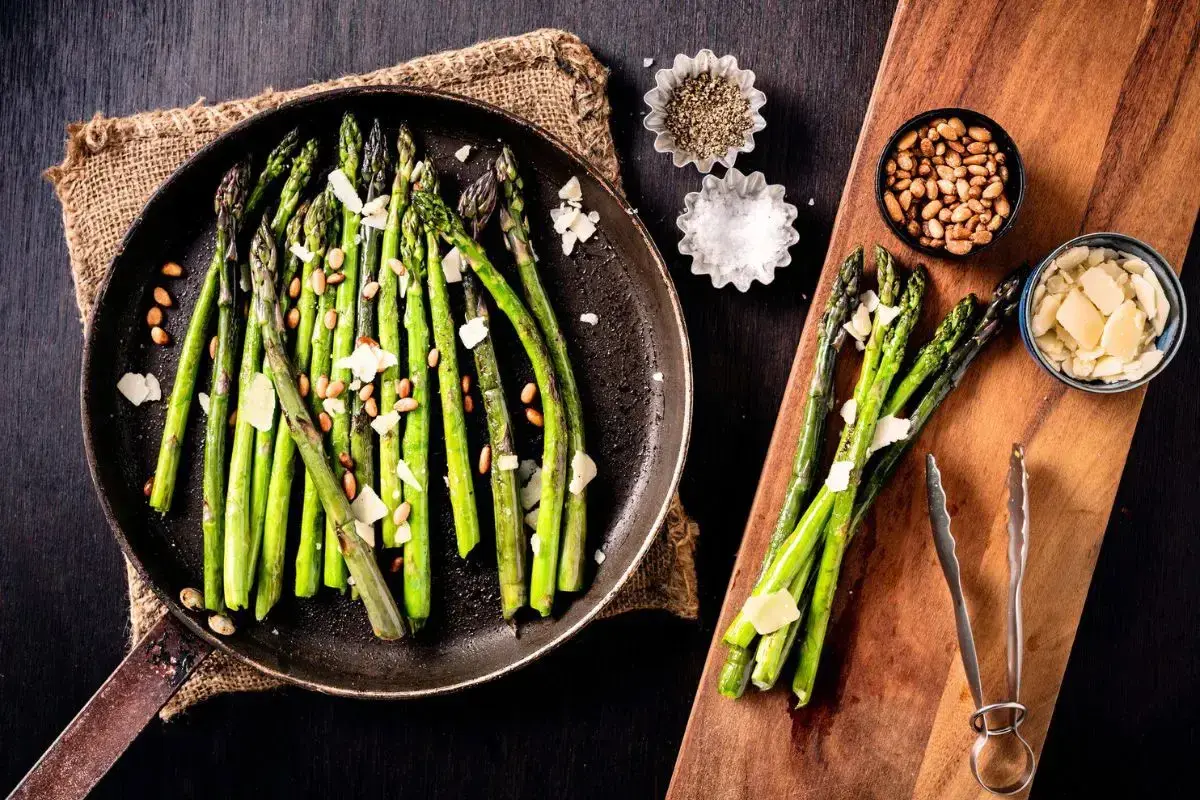
Knowing how to make asparagus well is mostly about restraint: buy it fresh, trim it cleanly, and stop cooking while the spears still have some spring. In this guide I cover how to choose the spears, which methods work best, how long each one takes, and the finishing touches that make the vegetable taste vivid rather than flat. I also include a few Basque-leaning serving ideas, because asparagus is at its best when the produce leads and the garnish stays precise.
The quickest route to good asparagus is fresh spears, a clean trim, and a very short cook
- Choose firm spears with tight tips and no wrinkling, then cook them quickly.
- Snap or cut off the woody ends, and peel thicker or white spears where needed.
- Steam, blanch, roast, grill, or sauté depending on the texture you want.
- Stop as soon as the spears turn bright green and tender-crisp.
- Finish with olive oil, butter, lemon, sea salt, or a little piment d'Espelette.
- For thick spears, use dry heat; for delicate spears, use steam or blanching.
Choose spears that will cook evenly
Good asparagus starts before the pan is hot. I look for spears that feel firm, springy, and evenly coloured, with tips that are tight rather than splayed. In the UK, I always choose British asparagus when it is in season, because the flavour is usually sweeter and the stalks need less intervention than tired imported spears.
| Type of spear | What to look for | Best use |
|---|---|---|
| Thin green spears | Bright colour, closed tips, no limpness | Steaming, blanching, quick sautéing |
| Medium green spears | Even thickness, firm stems, fresh cut ends | Roasting, grilling, pan-frying |
| Thick green spears | Heavy feel, minimal fibrousness, straight stalks | Roasting or grilling, often with a light peel on the lower third |
| White spears | Smooth surface, pale colour, no drying at the base | Gentle steaming or poaching after peeling |
For prep, I snap or cut away the woody end where the spear naturally gives, usually the bottom 2-3 cm. If the stalks are thick, I peel the lower third with a vegetable peeler so the texture stays tender instead of stringy. I also dry them well before roasting or grilling, because surface moisture is the easiest way to lose flavour. Once the spears are in good condition, the real choice is the cooking method.

The methods that give the best texture
There is no single right way to cook asparagus, only the method that suits the spear and the meal. When I want the cleanest flavour, I steam or blanch; when I want more depth, I roast or grill; and when I need a fast side dish, I go straight to the pan.
| Method | Time | Texture and result | Best for |
|---|---|---|---|
| Steaming | 2-4 minutes | Bright green, tender-crisp, very clean flavour | Thin spears, delicate lunches, simple vegetable sides |
| Blanching | 30 seconds to 2 minutes | Vivid colour, tender bite, good shape retention | Salads, make-ahead dishes, serving chilled |
| Roasting | 8-12 minutes at 220°C / 200°C fan | Nutty edges, more concentrated flavour, slight caramelisation | Medium or thick spears, richer meals, oven dinners |
| Grilling or griddling | 4-6 minutes | Light char, smoky flavour, firmer bite | Basque-style plates, fish, eggs, and meat dishes |
| Sautéing | 5-7 minutes | Glossy, lightly browned, seasoned throughout | Weeknight cooking and quick side dishes |
I reach for steam when the spears are slender and especially fresh, roast when I want the ends to brown, and grill when I want a little smoke without much effort. Whatever method you choose, keep the spears in a single layer and do not crowd the pan; otherwise they soften in their own moisture instead of taking on flavour. If you are cooking them ahead, blanching plus an ice bath is the cleanest way to preserve colour before serving.
Seasoning that lifts rather than hides the flavour
Asparagus does not need a heavy sauce to taste complete. In fact, the more delicate the spear, the more I prefer a short list of ingredients that support its natural flavour instead of covering it up.
| Finish | How I use it | What it adds |
|---|---|---|
| Extra virgin olive oil | Drizzle after cooking or toss lightly before grilling | Roundness, shine, and a gentle fruitiness |
| Butter | Use sparingly on steamed or sautéed spears | Softness and a more rounded finish |
| Sea salt or flaky salt | Season at the end so the spears stay bright | Clean, direct flavour and a little texture |
| Lemon zest or juice | Add just before serving | Brightness that cuts through richness |
| Piment d'Espelette | Use as a light dusting at the end | Warmth and a Basque accent without harsh heat |
| Chopped parsley or chives | Scatter over the top after cooking | Freshness and a greener finish |
For a more distinctly Basque plate, I like olive oil, sea salt, lemon, and a pinch of piment d'Espelette, sometimes with a spoonful of aioli on the side. If the asparagus is excellent, that is usually enough. Stronger sauces, cream, or too much cheese can flatten the vegetable instead of enhancing it, so I use them only when the rest of the dish is very restrained. The biggest problems, though, usually happen before the seasoning even comes into play.
The mistakes that make asparagus taste flat
Most disappointing asparagus is not ruined by the ingredient itself, but by a few avoidable errors. I see the same ones again and again, and they are easy to fix once you know what to watch for.
- Cooking it too long - Asparagus goes from tender to limp fast. I pull it from the heat while it still has a little resistance, because carryover cooking finishes the job.
- Ignoring thickness - Thin spears need less time than thick ones. If you cook both the same way, one batch will be perfect and the other will be tired.
- Roasting wet spears - Moisture blocks browning. I dry the spears thoroughly before they go into a hot oven or onto a grill.
- Overcrowding the pan - This traps steam and softens the edges. A single layer gives you better flavour and better texture.
- Waiting too long to season - Salt, lemon, herbs, and oil work best when they are added at the end, not left to fade while the asparagus sits.
Once those errors are out of the way, asparagus becomes one of the easiest vegetables to build around. That makes it useful for a quick lunch, a smarter supper, or a simple starter that still feels considered.
The plates I reach for when the spears are at their best
When asparagus is in season, I keep the rest of the plate focused and let the produce do most of the work. In Britain, the season is short, usually from late April into late June, so I treat fresh local spears as something worth keeping simple.
- Quick lunch - Blanch the spears, add a soft-boiled egg, finish with olive oil, lemon, and flaky salt.
- Weeknight side - Roast medium spears and serve them with fish, chicken, or new potatoes, then add parsley and piment d'Espelette.
- Basque-leaning starter - Grill the spears until lightly charred, then finish with aioli and a few shavings of a firm sheep's cheese.
- Simple salad - Chill blanched spears and dress them with a sharp vinaigrette, capers, and herbs.
That is the version I trust most: fresh spears, a short cook, and one clear finishing note. If the asparagus is excellent, I let it stay simple; if it is thicker or slightly less delicate, I lean on roasting or grilling, because direct heat gives the vegetable back some character without asking for much else.
