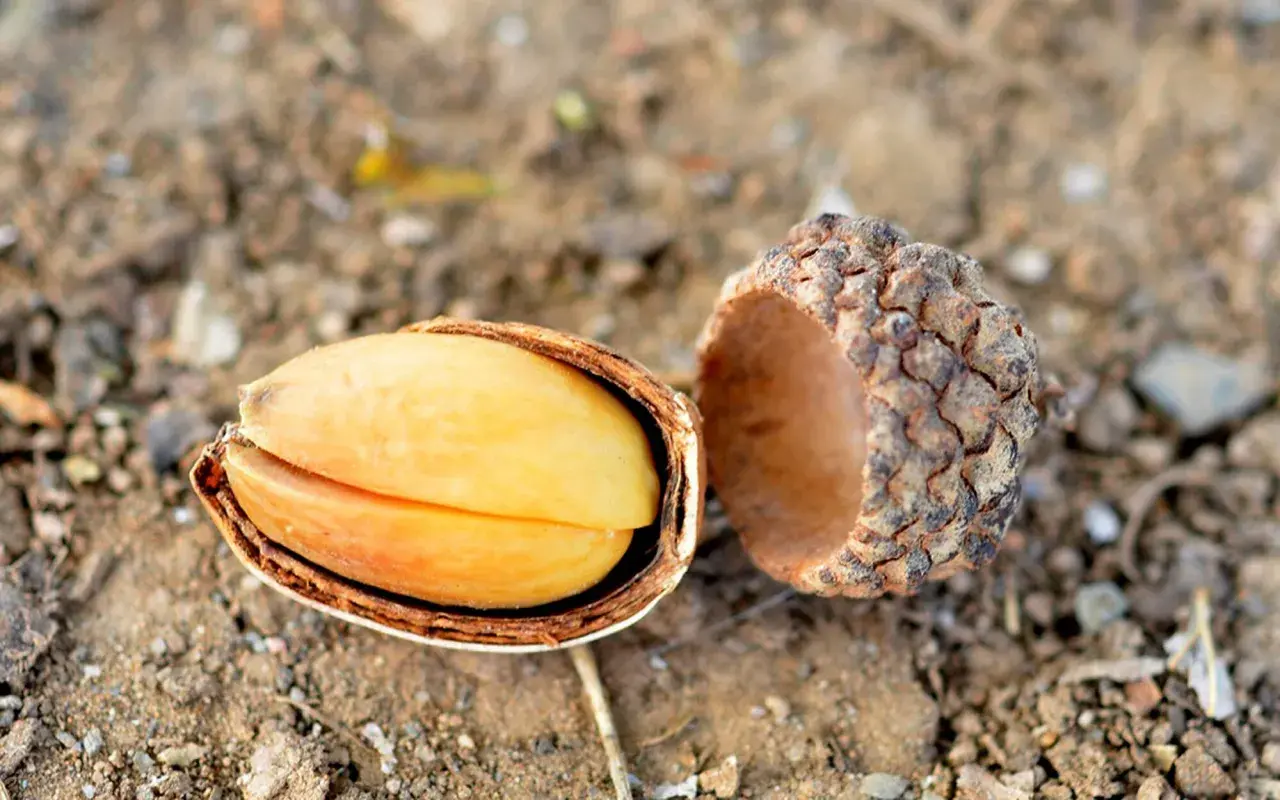
Acorns can be a useful wild ingredient if you handle them properly: they need shelling, cleaning, and leaching before they are pleasant to eat. The short answer is yes, you can eat acorns, but only after proper preparation removes the tannins. I focus here on what makes them safe, how to process them at home, and where acorn flour actually works in cooking.
Key facts to know before cooking with acorns
- Never eat raw acorns as a casual snack. Their tannins make them bitter and can upset your stomach in larger amounts.
- Choose ripe, brown, uncracked nuts that feel heavy for their size and come from a clean collecting spot.
- Hot leaching is quicker; cold leaching is better if you want flour for baking.
- Acorn meal behaves more like a rustic ingredient than a direct replacement for wheat flour.
- Dry the nuts or meal thoroughly after processing, or they will spoil quickly.
Are acorns safe to eat?
Acorns are edible, but they are not ready-to-eat food in their raw state. The issue is tannins, which give acorns their harsh, puckering bitterness and can cause digestive discomfort if you eat enough of them. In practice, I treat raw acorns the same way I would treat a wild mushroom that needs proper handling first: interesting, useful, but not something to nibble on without preparation.
For a kitchen use case, the important distinction is not “edible or not” in the abstract. It is whether the acorns have been processed well enough to taste mild and behave safely in a recipe. Ripe nuts from common oaks in the UK can work well, but only after you remove the tannins and discard any mouldy, insect-damaged, or green underdeveloped ones. Once you understand that rule, the rest becomes a straightforward prep job.
That leads naturally to the practical part: how to choose, shell, and leach them without wasting good nuts.

How to prepare acorns for the kitchen
I would start with freshly fallen, brown acorns collected from a clean area. Avoid nuts from roadside verges, sprayed parks, or anywhere with obvious contamination on the ground. In the UK, autumn is the normal gathering window, and the best nuts are the ones that feel firm, look intact, and separate cleanly from the cap.
- Sort the acorns and discard any that are cracked, mouldy, pierced, or soft.
- Remove the caps and rinse off leaves, grit, and debris.
- Shell the nuts with a nutcracker, pliers, or a heavy knife used carefully.
- Split, chop, or grind the kernels depending on the method you plan to use.
- Leach the tannins with hot or cold water until the bitterness is gone.
- Dry the finished material completely before storing it or turning it into flour.
For flour, I prefer grinding after shelling and before cold leaching, because that gives you a finer, more even meal. For a quicker savoury use, you can leave the acorns in larger pieces and use hot water. Either way, taste is the real test: when the bitterness fades to a mild, nutty flavour, you are on the right track.
Once the nuts are cleaned up, the real choice is whether you want speed or flour-friendly texture, which is where the two leaching methods diverge.
Hot leaching or cold leaching
Both methods work, but they do not give the same result. Hot leaching is faster and more convenient for small batches. Cold leaching takes longer, but it preserves more of the starch that makes acorn flour useful in baking. If I want a usable ingredient for bread, pancakes, or thickening, I usually lean cold. If I want to move a small batch through the kitchen quickly, hot leaching is the easier route.
| Method | Best for | Typical pace | Main advantage | Main drawback |
|---|---|---|---|---|
| Hot leaching | Small batches, savoury uses, faster turnaround | Hours rather than days | Quickly removes bitterness | Can cook the starch, so the result is less useful for baking |
| Cold leaching | Acorn flour, baking, better texture in doughs | Usually several days, sometimes longer | Preserves starch and gives a better flour | Requires patience and regular water changes |
The exact timing depends on the species, how finely you grind the nuts, and how much water you change. I would not lock myself into a fixed number of hours or days. Instead, I would keep tasting small samples until the bitterness is gone and the flavour turns softly nutty rather than astringent. That simple check matters more than any rigid schedule.
With the tannins out, the question becomes less about safety and more about where acorns actually shine in the kitchen.
How I would use acorns in real cooking
Acorns are at their best in rustic, earthy dishes rather than delicate pastries. Acorn flour is naturally gluten-free, but it is not a 1:1 substitute for wheat flour because it lacks gluten structure. In my view, it works best as part of a blend: enough to add flavour, colour, and depth, but not so much that the texture falls apart.
A useful starting point is to replace about 10 to 25 percent of the flour in a recipe with acorn flour. In hearty recipes, you can push that higher, but the dough or batter will usually need extra care. If I were working on a Basque-inspired menu, I would use acorn meal the same way I use other strong seasonal ingredients: in a supporting role that adds character, not in a way that overwhelms the dish.
| Use | Best form | Why it works |
|---|---|---|
| Pancakes or flatbreads | Cold-leached acorn flour | Gives a nutty flavour and a slightly rustic crumb |
| Soups and stews | Fine acorn meal | Acts as a gentle thickener |
| Biscuits and shortbread | Blended flour | Adds depth without needing much structure |
| Savoury crumbs or crusts | Lightly toasted meal | Pairs well with mushrooms, root vegetables, and roasted fish |
If you want a flavour cue, think of acorn flour as somewhere between chestnut, toasted grain, and a mild nut. It likes butter, honey, apples, mushrooms, and stock-based dishes. It does not need much embellishment, which is exactly why it can feel elegant in the right recipe.
The fastest way to ruin a good batch is usually not the recipe itself but sloppy handling before and after leaching.
Mistakes that waste good acorns
The most common mistake is simple: people assume the acorns are ready because they look like nuts. They are not. Raw acorns need processing, and under-leached acorns still taste harsh even if they are technically “cooked.” I would also avoid the temptation to work with every acorn in the bowl; one bad piece can spoil the flavour of the rest.
- Skipping the leaching step. This is the main reason acorns taste unpleasant.
- Collecting green, damaged, or mouldy nuts and trying to save them later.
- Leaving damp meal in a warm room, which invites spoilage fast.
- Using acorn flour as if it were plain wheat flour and then blaming the ingredient for a heavy result.
- Gathering from dirty ground or heavily trafficked areas and washing away the obvious warning signs.
There is one more practical point I would not ignore: dry the finished acorn product completely before storage. If it still feels cool and damp, it is not ready. A sealed jar of under-dried acorn meal can go off quickly, and that is a waste of time as well as effort. If you keep those basics in mind, acorns stop being a curiosity and become a genuinely usable seasonal ingredient.
What to remember before you turn acorns into food
My rule is straightforward: treat acorns as a foraged ingredient that rewards patience. Collect only sound nuts, remove the tannins properly, and choose cold leaching when you want flour that behaves well in baking. If you want the quickest possible result, hot leaching still gives you a safe, usable ingredient, just with a less flour-friendly texture.
Handled that way, acorns fit naturally into simple, seasonal cooking. They bring a quiet, nutty depth that works especially well in rustic breads, pancakes, soups, and savoury bakes, which is exactly why they still deserve a place in a serious kitchen.
