What matters before the mushrooms hit the grill
- Choose firm, dry mushrooms with intact caps; the fresher the produce, the better the browning.
- Keep the flavour list short: olive oil, garlic, parsley, lemon, salt, pepper, and a Basque touch like piment d'Espelette.
- Medium-high heat is the sweet spot for colour without collapse.
- Small mushrooms need support, either a grill basket or skewers, so they do not fall through the bars.
- Serve quickly; grilled mushrooms are at their best when the edges are still springy and the centres are juicy.
Choose mushrooms and produce that can stand up to fire
Not every mushroom behaves the same over charcoal or gas, so I start by matching the produce to the way I want to serve it. In Britain, chestnut mushrooms are usually the most reliable all-round buy: affordable, easy to find, and sturdy enough to hold their shape. Portobellos give you a more substantial, almost steak-like result, while oyster and king oyster mushrooms reward you with fast caramelisation and a better edge-to-centre ratio.
| Mushroom | Best use | What I look for | Grill behaviour |
|---|---|---|---|
| Portobello | Main plate, burger-style serving | Large caps, dry surface, no slimy spots | Meaty, forgiving, best for direct heat |
| Chestnut / cremini | Side dish, mixed grill | Closed caps, even size, firm stems | Brown quickly and stay juicy |
| King oyster | Neat slices, pintxo-style serving | Thick stems, tight texture, no cracking | Excellent char, very steady on the grill |
| Oyster | Quick, lighter grilling | Clean edges, not dried out at the base | Delicate, so they need attention |
| Mixed wild mushrooms | More rustic plate, seasonal cooking | Variety of shapes with similar moisture levels | Flavourful, but best in a basket or foil |
For four generous portions, I keep the ingredient list tight and let the mushrooms stay in charge:
- 500 g mixed mushrooms, or 4 large portobello caps
- 3 tbsp extra-virgin olive oil
- 2 garlic cloves, finely grated or minced
- 1 tbsp chopped flat-leaf parsley
- 1 tbsp lemon juice or a few drops of sherry vinegar
- 1/2 tsp fine sea salt, plus flaky salt to finish
- Freshly ground black pepper
- 1/2 tsp piment d'Espelette, or mild paprika if you cannot find it
- Optional 25 g butter for a richer finish
- Crusty bread, to serve
The point of the ingredient list is restraint. Mushrooms already bring earthiness and umami, so the supporting produce should sharpen, not hide, that character. Once you choose the right mushrooms, the next job is preparing them so the grill can do its work cleanly.
Prep them so they sear, not steam
Moisture is the enemy of browning. That is why I wipe mushrooms clean, dry them thoroughly, and avoid loading them with marinade before they ever hit the heat. A quick rinse is fine if they are visibly dirty, but they need to be patted dry properly afterwards.
- Trim the stems if they are tough, but do not over-trim; you want the caps to stay intact.
- Keep sizes similar so they finish at the same time. Halve bigger chestnut mushrooms if needed.
- Toss the mushrooms lightly with olive oil, garlic, pepper, and just a pinch of salt.
- Let them sit for 10 to 20 minutes, not much longer, so the seasoning clings without drawing out too much liquid.
- For small mushrooms, use skewers or a grill basket. That keeps the cook controlled and avoids losing pieces through the bars.
I usually leave the gills on portobellos unless I am stuffing them. They are edible, and for grilling they are not the problem people often think they are. The real issue is excess water, and that is solved by drying, not by fussing over every small detail. With the prep sorted, the grill itself becomes much easier to manage.

Build the grill heat and timing
For the best results, I preheat the grill to medium-high and make sure the bars are clean and lightly oiled. On charcoal, I wait until the coals are covered with a pale ash. On gas, I give it a proper preheat so the mushrooms start sizzling the moment they land.
Direct heat is the right tool here. You want quick browning, a little char, and a tender centre, not a slow roast. Large caps can go straight on the bars, while smaller mushrooms are safer in a basket or skewered. A foil packet is a useful backup when you have very small wild mushrooms, but it softens the edges, so I treat it as a compromise rather than the default.
- Small chestnut or button mushrooms: about 4 to 6 minutes total, turning often.
- Medium mushrooms: about 5 to 7 minutes total, with one or two turns.
- Large portobellos: about 8 to 10 minutes total, depending on thickness.
You are looking for shallow char marks, a glossy surface, and a texture that gives slightly when pressed but does not collapse. If the mushrooms shrink aggressively or start looking dry, the heat has been too low or the cook has gone on too long. When the timing is right, the mushrooms feel concentrated rather than shrivelled, which is exactly what you want before adding the finishing flavours.
Give it a Basque accent without masking the mushrooms
This is where the dish starts to feel tied to the Basque table instead of just being another barbecue side. I like a finish built on olive oil, garlic, parsley, lemon or sherry vinegar, and a little piment d'Espelette. The pepper adds warmth and gentle complexity without flattening the mushroom flavour the way a heavy chilli blend sometimes can.
- 2 tbsp olive oil
- 1 tsp lemon juice or sherry vinegar
- 1 small garlic clove, grated very finely
- 1 tbsp chopped parsley
- 1/2 tsp piment d'Espelette
- Flaky salt, to finish
Mix the dressing and spoon it over the mushrooms as soon as they come off the grill, or brush it on during the final minute if you want a slightly more integrated glaze. If you cannot find piment d'Espelette, mild paprika plus a tiny pinch of cayenne will get you close in heat, though not in character. For a richer plate, a few shavings of aged sheep's cheese at the table work well, but I would not make that the main event. The mushrooms should still be the thing you remember first.
That same logic helps when you decide how to serve them, because the best accompaniment is the one that lets the grilled flavour stay clear.
Serve them while the texture is still lively
Grilled mushrooms are generous food, but they are also time-sensitive. I like to serve them immediately, or at most hold them for 10 to 15 minutes in a warm dish while everything else catches up. After that, the texture starts to soften and the edges lose their snap.There are a few ways to turn them into a proper plate:
- On toasted sourdough with a spoon of aioli and extra parsley for a pintxo-style snack.
- Beside grilled fish or lamb, where the mushrooms provide depth without crowding the main dish.
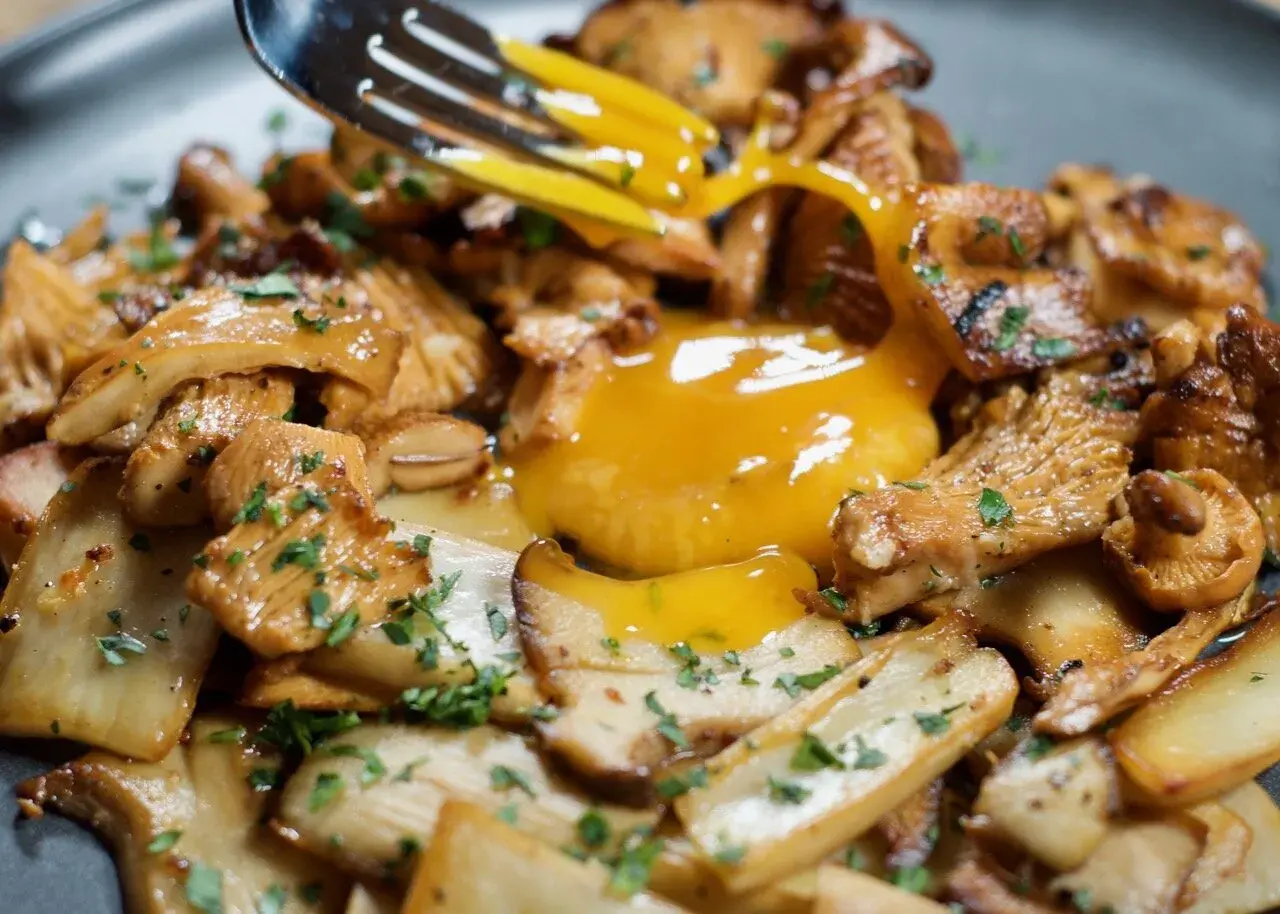
- With a fried egg and dressed leaves for a light lunch that still feels complete.
- As part of a mixed barbecue with peppers, onions, and crusty bread.
If I am aiming for a more Basque-inspired spread, I serve them with charred peppers, good bread, and a sharp dressing rather than a heavy sauce. The mushrooms already carry enough body; they only need brightness and salt to finish the job. That brings us to the small mistakes that make the biggest difference.
The details I would not skip on the next batch
Most disappointing grilled mushrooms come down to three avoidable problems: too much moisture, too little heat, or too much time on the bars. If the mushrooms look pale and soft, they were probably crowded. If they taste flat, they probably needed more seasoning at the end rather than more marinade at the start.
- Do not grill wet mushrooms. Dry them well, or they steam before they brown.
- Do not overload the grates. Give each piece enough room for direct contact with heat.
- Do not salt too early. Seasoning is important, but too much early salt can pull out moisture.
- Do not keep turning them unnecessarily. A little movement is fine; constant fussing stops colour from forming.
- Do not chase a deep char at the expense of texture. Mushrooms should taste roasted and savoury, not dried out.
If you keep the process simple, the result is dependable: firm mushrooms, a clean smoky edge, and a finish that feels at home on a Basque-inspired table or a straightforward British barbecue. That is the version I keep coming back to, because it respects the ingredient first and lets the fire do the rest.
