Edible wild onions are one of the most rewarding spring ingredients because they give you a big flavour return for a very small, careful harvest. In the UK, they usually mean more than one plant, and that matters if you want to identify the right species, pick the best parts, and cook them in a way that keeps their freshness intact. This guide covers the field clues, the safe harvest habits, and the kitchen uses I would actually rely on.
Key facts to know before you pick and cook
- In Britain, this is usually a loose label for several edible Allium species, not one single plant.
- The safest checks are smell, leaf shape, and habitat used together, not one clue on its own.
- Ramsons like damp woodland; crow garlic, also called wild onion, turns up more often in grassland, hedges, roadsides, and waste places.
- Harvest leaves, buds, flowers, or bulbils where appropriate, but avoid digging bulbs unless you have permission and a good reason.
- They work best like a spring allium: in omelettes, potato dishes, soups, green sauces, fish dishes, and quick pickles.
- If anything feels uncertain, I would leave it alone. With foraged food, caution is part of the recipe.
What counts as edible wild alliums in the UK
In Britain, the phrase wild onions is usually a loose label for several Allium species, the same plant group that includes onions, garlic, leeks, chives, and their wild cousins. The two names people most often mix together are ramsons, or wild garlic, and crow garlic, which the RHS lists as wild onion. They are both edible, but they behave differently in the field and they bring different textures to the kitchen.
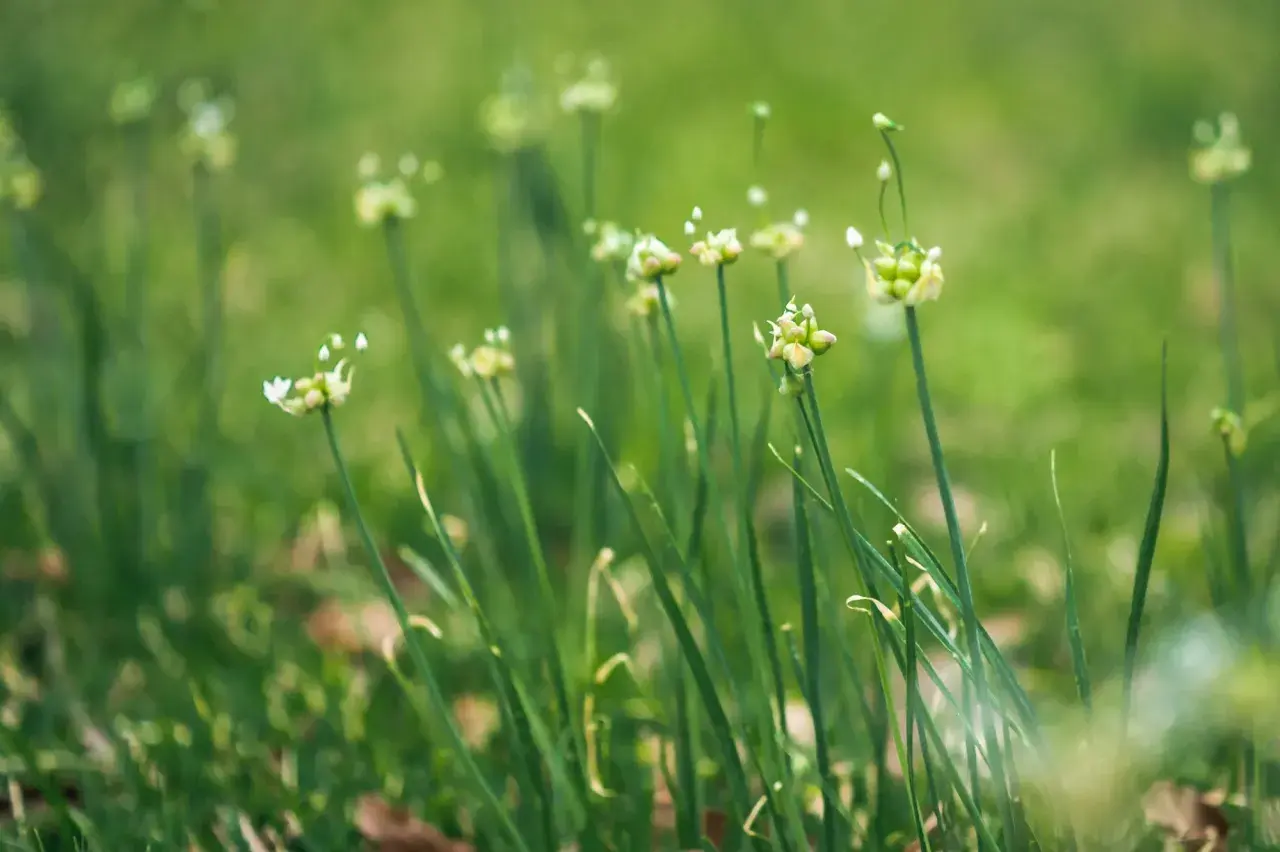
I think that naming mess is part of the reason people get confused. Ramsons are the soft, leafy woodland plant that can form broad carpets in damp shade. Crow garlic is slimmer and more upright, with hollow tubular leaves and flowerheads that often carry small bulbils rather than a showy flower. If you know which one you have, you already know how to use it.
| Plant | Field clues | Best culinary use | Important note |
|---|---|---|---|
| Ramsons | Broad, soft leaves; damp woodland; loose heads of small white flowers | Leaves, buds, flowers, pesto, soups, eggs | Can spread into large carpets, so harvest lightly |
| Crow garlic / wild onion | Hollow tubular leaves; garlic scent; June flowerheads often carrying bulbils | Leaves, bulbils, pickles, finishing greens | Often found in grassland, hedgerows, roadsides, and waste places |
| Lily of the valley | Paired leaves and bell-shaped flowers, no allium smell | None | Toxic lookalike, not for the kitchen |
The practical lesson is simple: I do not treat the label as proof. I treat it as a starting point, then I check the plant itself.
How to identify them safely before you pick
When I identify an edible allium, I want three things to agree with each other: the smell, the shape, and the setting. If only one clue fits, I keep looking. That is especially important in spring, when a lot of woodland plants are pushing out fresh growth and some dangerous species are trying to look harmless.
For ramsons, I expect a woodland plant with soft leaves and a distinct garlic smell when the leaf is rubbed. For crow garlic, I look for narrow, hollow leaves and a stronger onion-garlic scent, often with a bulbil-heavy flowerhead in early summer. A plant that looks allium-like but has no smell, the wrong leaf form, or a habitat that does not make sense is not worth the risk.
- Smell matters, but I never let it do all the work.
- Leaf shape matters more than many beginners expect; hollow tubes and broad flat leaves point to different plants.
- Habitat matters because ramsons like damp woodland, while crow garlic turns up in rougher, drier, more open places.
- Mixed patches need slow, stem-by-stem checking, especially where arum, bluebells, or lily of the valley are nearby.
My rule is plain: if I have to argue myself into the identification, I do not cook it. That is the sort of discipline that keeps foraging useful instead of dramatic.
Where they grow and when they taste best
Ramsons are the better-known spring find. In the UK, they favour damp woodland, shaded banks, stream edges, and other cool places where they can spread into impressive green carpets. They are often treated as an ancient woodland indicator, which tells you something about the richness of the habitat as well as the plant itself. For the kitchen, that usually means the best leaves arrive in the hungry gap, when the garden has not quite caught up with the season.
Crow garlic is a more opportunistic plant. It turns up in grassland, hedgerows, roadsides, and waste places, and it is not shy about spreading. Its flowerheads appear in June, and the plant can carry bulbils that make it especially easy to spot once it matures. In cooking terms, that means you can use it a little later than ramsons, and the bulbils give you a second edible ingredient rather than just a pile of leaves.
- Young leaves are the most versatile and usually the mildest.
- Flower buds are useful just before opening, when they still have a little snap.
- Flowers are best as a garnish, in salads, or lightly pickled.
- Bulbils are the distinctive bonus on crow garlic and are worth using when they are still green and tender.
If you like to cook seasonally, this is exactly the kind of ingredient that makes sense in Britain: brief, vivid, and most interesting when you stop trying to force it into the wrong month.
How to harvest, clean, and store them without losing flavour
I harvest alliums the same way I handle any fragile produce: gently, with a bias toward the leaves rather than the roots. Cut what you need with scissors or a small knife, and leave enough of the plant behind that the patch can recover. In a wild stand, I never dig bulbs unless I have explicit permission and a clear reason, because the leafy parts are usually better eating anyway and much easier to replace.
Cleaning matters more than people think. These plants often grow low to the ground, which means grit, insects, and damp debris collect near the bases of the leaves. I rinse them in cold water, separate the leaves if they are tangled, and dry them properly before storing. A clumsy wash is better than none, but a soggy bunch is a good way to flatten the aroma.
- Pick only firm, fragrant leaves or edible flower parts.
- Shake off loose dirt before you bring them into the kitchen.
- Rinse quickly in cold water and dry well.
- Store them in a lined container in the fridge rather than a loose bag that bruises them.
- Use them within 3 or 4 days if you want the strongest flavour, or freeze chopped leaves if you want to keep them for longer.
When I buy or pick spring alliums, I want them crisp, aromatic, and still lively. Once the leaves look limp or the scent has faded, they are no longer the ingredient I went out for.
How I would use them in a Basque-style kitchen
This is where they earn their place on the plate. In a Basque-style kitchen, I would use these greens the way I use any good spring allium: sparingly enough to stay fresh, but confidently enough to matter. They fit naturally with eggs, potatoes, beans, fish, and olive oil, which is exactly the kind of simple, grounded cooking that lets a seasonal ingredient speak.
The leaves are the easiest place to start. A small handful chopped into an omelette, a hot potato dish, or a pan of beans is enough to give the whole plate lift. The flowers are milder and more decorative, but they are not just garnish; they bring a clean onion note to salads and cold dishes. Crow garlic bulbils are sharper and a little more unusual, so I like them best in quick pickles or as a bright finishing touch.
| Part | Flavour | What I would do with it |
|---|---|---|
| Leaves | Fresh, oniony, slightly garlicky | Omelettes, soups, sauces, sautéed potatoes, herb butter |
| Buds | Sweeter and tighter in flavour | Quick pickles, salads, gentle sautés |
| Flowers | Milder and more delicate | Salads, finishing garnish, compound butter |
| Bulbils | Sharp, a little nutty, more concentrated | Pickles, relishes, tiny crunchy accents |
For a two-egg omelette, 2 to 3 tablespoons of finely chopped leaves is usually enough. For a pesto-style sauce, I would start with a packed cup of leaves and then build out from there with oil, nuts, and cheese. The important thing is not to bury the flavour under too much garlic, lemon, or spice before you have tasted the plant on its own.
What I keep in mind before serving a foraged bunch
The last check is the one that saves bad decisions: I only serve a foraged allium when I am completely sure of the identification, the harvest site, and the freshness. Road edges, sprayed verges, dog-heavy paths, and polluted ground are out. So are weak-smelling plants that make me hesitate. I also keep the first use simple, because the best way to learn an ingredient is to let it be itself.
If you want the short version, it is this: pick lightly, clean well, cook quickly, and pair the plant with food that respects it. Eggs, potatoes, cod, beans, and good olive oil all do that job beautifully. Once you know which allium you have, the ingredient stops feeling like a forager’s gamble and starts behaving like a very good piece of spring produce.That is the sweet spot for me: a clear identification, a restrained harvest, and a kitchen that understands when to stop. When the plant, the season, and the dish are all working together, these greens bring exactly the kind of honest, compact flavour that makes simple cooking feel complete.
