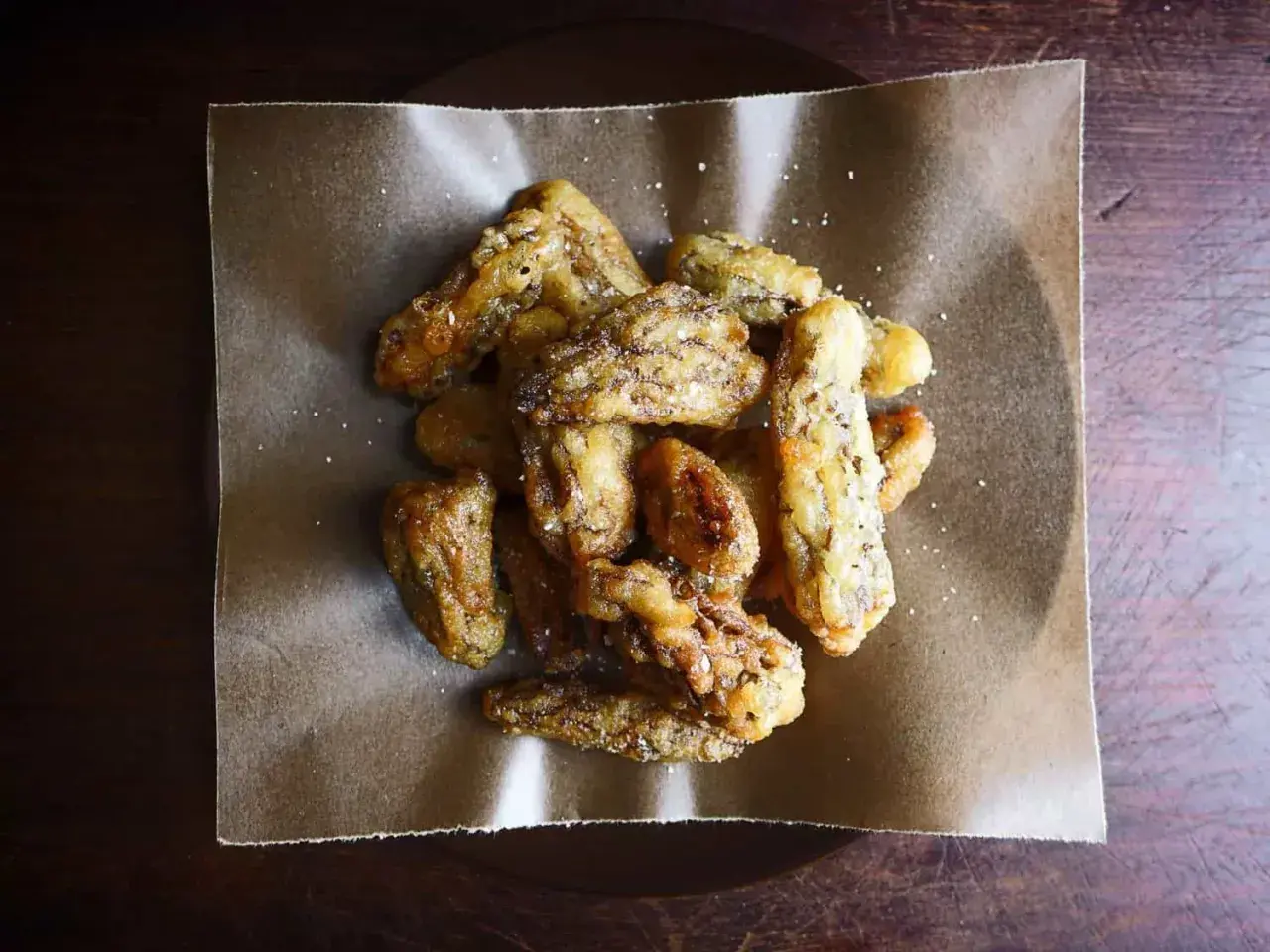
Morel mushrooms are one of those ingredients that only reward you if you treat them with respect, and fried morel mushrooms are at their best when the coating is light, the pan is hot, and the seasoning is disciplined. In this guide I cover what to buy, how to clean them safely, how to fry them without turning them soggy, and what to serve alongside them when you want the dish to feel seasonal rather than heavy. I also shape the plate with a Basque sensibility, which means keeping the flavours clear, rustic, and worth sharing at the table.
What matters before you turn the pan on
- True morels should be cooked thoroughly; I never treat them like a raw garnish.
- A light flour coating usually gives the best balance of crispness and mushroom flavour.
- Brief cleaning is enough in most cases, but the mushrooms must be dried properly before frying.
- Spring produce such as asparagus, peas, wild garlic, and spring onions fits the dish naturally in the UK.
- Keep the pan hot and uncrowded, or the morels will steam instead of crisp.
Why morels need a gentle fry
Morels are not a mushroom you want to bully. Their honeycomb shape traps flavour, but it also traps grit, and their flesh is delicate enough that a heavy coating or a long soak can flatten everything that makes them interesting. What I like about them is the contrast: a nutty, almost woodsy aroma outside, then a tender bite inside that tastes of spring rather than sauce.
That is why I favour a frying method that is crisp, quick, and controlled. A proper fry should accent the mushroom’s flavour, not hide it. If the result tastes mostly of batter, flour, or old oil, the morels were not the problem. The method was.
This is also why the dish fits Basque-style cooking so well. The best plates from that part of the world tend to rely on good produce, a precise pan, and a short list of ingredients that know when to step back. From here, the only real question is what you need on the counter before you start.
What I would put on the counter first
I keep the ingredient list short. Morels are a seasonal buy, often from a specialist greengrocer or forager in the UK, so I want them to taste unmistakably like morels. For two starter portions, this is the setup I use most often.| Ingredient | Suggested amount | Why it matters |
|---|---|---|
| Fresh morels | 250-300 g | Enough for two starters without crowding the pan |
| Plain flour | 50-70 g | Gives a thin, crisp shell without drowning the mushroom |
| Fine salt | About 1 tsp total | Seasoning matters because morels are mild until they hit heat and fat |
| Black pepper | 1/2 tsp | Enough warmth without masking the flavour |
| Butter | 30-40 g | Gives the mushrooms a nutty finish |
| Neutral oil | 1-2 tbsp | Helps the butter cook without burning too fast |
| Parsley or chives | 1 small handful | Freshens the plate at the end |
| Lemon | 1 wedge | Useful if the final dish feels too rich |
If you want a richer version, you can add egg and a little milk for a batter, but I reserve that for larger, sturdier morels. Smaller mushrooms usually taste better when the coating stays thin and the pan does the heavy lifting. Next comes the part that makes or breaks the whole dish: cleaning them properly.
How I clean and prep morels safely
Morels need handling, but not fuss. I usually slice them lengthwise first, because that exposes any grit hiding in the hollow interior and lets me check that I am dealing with true morels rather than a lookalike. A good one should be clean inside, springy, and earthy, not slimy, bitter, or exhausted.
If they are dusty, I give them a brief swish in cold water with a little salt, then lift them out quickly rather than letting them sit. After that, I dry them thoroughly on a tea towel or layers of kitchen paper. Wet mushrooms will fight the pan, and wet coatings never crisp properly.
I also trim away any woody base and discard pieces that seem damaged or oddly soft. Morels should always be cooked before eating, and that point matters more than people often assume. The FDA has warned that cooking can reduce risk, but it does not make wild mushrooms automatically safe if they are misidentified or badly handled. In other words, if you are not sure what you have, do not guess.
Once they are clean and dry, the pan work is straightforward and much less forgiving than it looks.

How I fry them so they stay crisp
The method I trust most is the simplest one: a light flour coating, a hot pan, and enough fat to brown the surface without soaking the mushroom. I usually use a mix of butter and neutral oil because butter gives flavour, while oil helps prevent the butter solids from scorching before the morels are done. The pan should be hot before the mushrooms go in, but not smoking aggressively.
| Coating style | Best for | Texture | My take |
|---|---|---|---|
| Plain flour | Most fresh morels | Light, crisp, clean | The best default choice |
| Egg and flour | Larger mushrooms | Richer and more substantial | Good when you want a heartier starter |
| Thicker batter | Pub-style serving | Heavy crunch | Works, but it hides more of the mushroom |
| No coating | Very small, very clean morels | Soft and buttery | Best if you want a more delicate result |
- Pat the morels dry, then season them lightly with salt and pepper.
- Toss them in a shallow bowl with plain flour, then shake off the excess.
- Heat a skillet with butter and a little oil over medium-high heat.
- Lay the morels in a single layer. Do not crowd them.
- Fry for about 2 to 3 minutes per side, until the exterior is golden and the steam has quietened down.
- Turn them once, not constantly, so the crust has time to form.
- Finish with parsley, chives, or a squeeze of lemon if the richness needs brightness.
I think the biggest mistake is to stop too early. Morels should be fully cooked, not just warmed through, and the inside should feel tender rather than damp. If you want garlic, add it at the very end, because it burns quickly and can dominate the dish in a way the mushrooms do not deserve. From there, the only real decision is what kind of meal you want them to become.
What I serve them with in a Basque-style meal
When morels are good, I prefer to keep the plate spare. In a Basque-style setting, that usually means something rustic, something seasonal, and something that lets the mushrooms stay the headline rather than one element among many. A slice of good bread, a few spring vegetables, and maybe an egg are usually enough.
- Soft eggs or a runny yolk, which add richness without burying the flavour.
- Asparagus or peas, which bring the same spring energy and keep the plate bright.
- Toasted bread with a little aioli, if you want a pintxo-style bite that feels right at home on a Basque table.
- Spring onions or wild garlic, which add savoury lift without making the dish heavy.
- A crisp white wine, preferably dry and lively, so the fat in the pan does not sit too long on the palate.
If I am building this into a small meal, I usually make the mushrooms the centre of a starter, then serve something very simple afterwards. That approach suits the ingredient better than trying to turn it into a complicated main course. The morels already bring enough character, so the rest of the plate should know its place.
That said, even a simple recipe can fail if the technique is sloppy, and the usual mistakes are easy to spot once you know what to look for.
The mistakes that cost you the best texture
Most problems with morels come from trying to rush them or overwork them. I see the same errors again and again, and each one leaves a clear trace in the final dish.
| Mistake | What it does | Better move |
|---|---|---|
| Soaking them for too long | Dulls the flavour and makes them waterlogged | Use only a brief rinse or quick swish when needed |
| Not drying them well | The coating turns soft instead of crisp | Drain thoroughly on a towel before flouring |
| Overcrowding the pan | The morels steam and go limp | Cook in batches if necessary |
| Using too much flour | The crust tastes dusty and heavy | Shake off the excess and keep the coating thin |
| Underseasoning | The finished dish tastes flat | Season before and after frying, not just once |
| Stopping the cooking too early | The mushrooms can feel rubbery or underdone | Cook until the texture is tender and the interior is hot |
For me, the real lesson is restraint. Morels do not need a rescue mission, just a careful hand and a pan that is doing exactly what it should. Once you get that balance right, the dish becomes almost effortless.
The spring plate I keep coming back to
Morels have a short season, a distinctive flavour, and just enough fragility to punish careless cooking. That is why I treat them as a buy-now, cook-now ingredient rather than something to stash away and think about later. If I have a few leftovers, I do not reheat them aggressively; I fold them into eggs, tuck them into a warm toast, or use them as part of a simple sauce where their flavour still has room to show.
For storage, I keep fresh morels in a paper bag or a ventilated container in the fridge and try to use them quickly. They are at their best when they still smell of the forest floor and feel firm in the hand. If I had to give one final rule, it would be this: keep the preparation simple, keep the heat honest, and let the mushroom do the talking.
That is usually enough to turn a modest pan of morels into a plate worth remembering.
