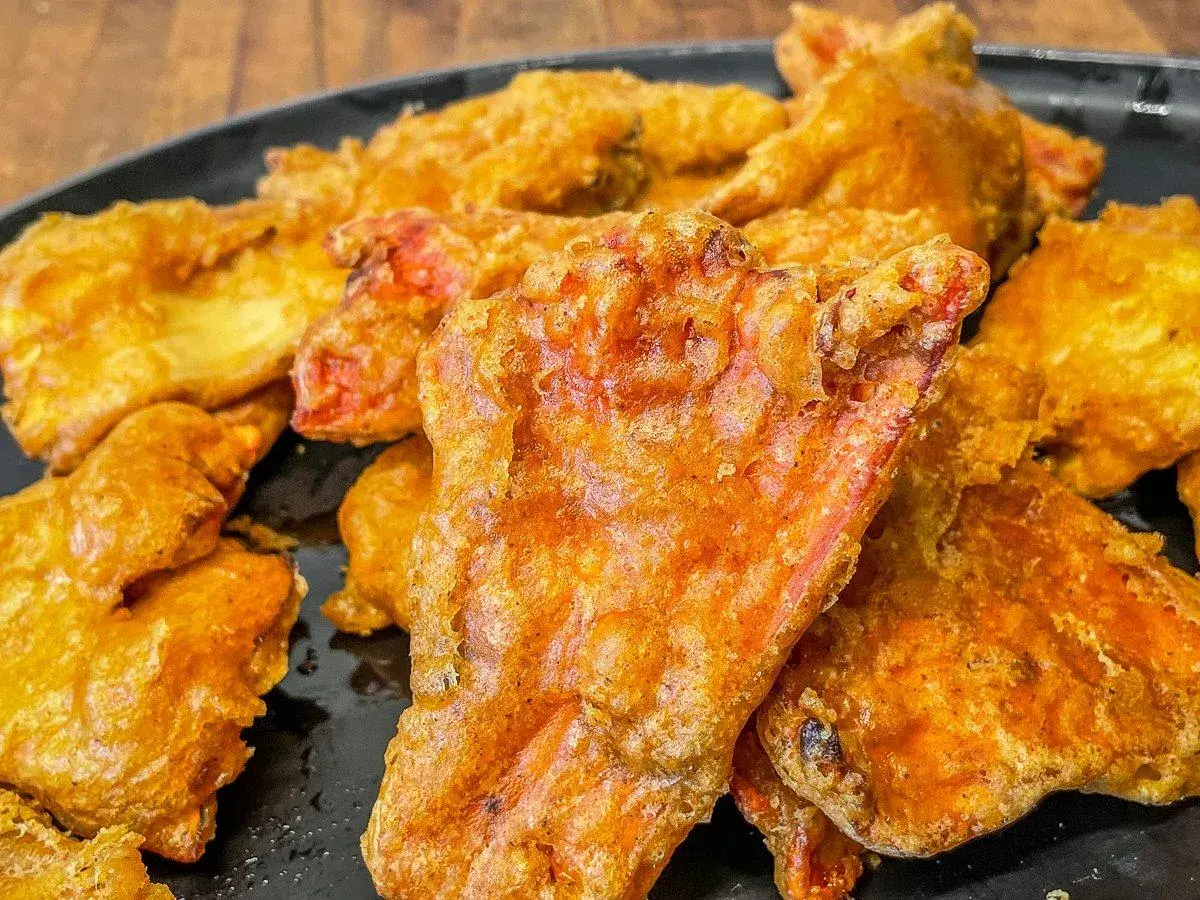
This chicken of the woods recipe is built around one idea: treat the mushroom like a first-rate seasonal ingredient, not a novelty. When the pieces are young and tender, a simple pan-fry with garlic, parsley, lemon, and good olive oil gives you something close to the savoury depth of poultry without pretending to be chicken.
I am keeping this focused on the practical side, because the difference between a brilliant plate and a chewy one usually comes down to the produce itself, how you trim it, and how hard you let the pan work.
The essentials that make this dish work
- Choose young, flexible pieces with bright colour and a clean smell, not dry or woody shelves.
- Cook it thoroughly; I like a hot saute of 10-12 minutes, or a brief par-cook first if the pieces are thick.
- Keep the ingredient list short so the mushroom stays in charge: olive oil, butter, garlic, shallot, parsley, and lemon.
- Start small the first time, because some people are more sensitive to wild mushrooms than others.
- Serve it with something absorbent such as bread, potatoes, eggs, or peppers.
Why this mushroom works so well in a pan
The appeal is texture as much as flavour. Properly cooked chicken of the woods stays meaty enough to hold its shape, but it also takes on garlic, butter, herbs, and a squeeze of citrus in a way that delicate mushrooms simply do not.
I think of it as a mushroom that rewards restraint. If you drown it in cream, heavy spice, or too many competing ingredients, you lose the clean flavour that makes it interesting in the first place. That is why a Basque-style approach works so well: olive oil, allium, herbs, and a bright finish do most of the work.
In the UK, I usually think of it as a late-summer to autumn ingredient, so I like the plate to feel both fresh and warming. Once that balance is clear, the next step is choosing pieces that are genuinely worth cooking.

Choose the right pieces before they reach the pan
I would start by looking for small to medium shelves with a vivid yellow-orange colour, springy edges, and a fresh scent. The best parts are usually the outer lobes, where the texture is still tender; the centre can be tougher and sometimes needs trimming away.
| What I look for | What it tells me | What I do |
|---|---|---|
| Bright yellow-orange colour and springy edges | The mushroom is still young and tender | Cook it the same day if possible |
| Hard, dry, or woody centres | The texture is fading | Trim aggressively or leave it behind |
| Sour, musty, or off smell | The mushroom is tired or spoiled | Do not cook it |
| Growing on uncertain, treated, or contaminated wood | The source is not trustworthy | Leave it alone |
If the mushroom feels dry, brittle, waterlogged, or sour, I leave it alone. I also avoid any specimen I cannot identify with confidence or any host tree I am unsure about. Foraged food is only worth cooking when the basics are solid, and the Food Standards Agency's safe-foraging guidance lines up with that simple rule.
Once a good specimen passes that test, the ingredient list can stay refreshingly short.
The ingredients I use for a Basque-leaning version
If I am cooking for two as a light main, or four as a starter, this is the set I reach for. I also prefer to buy from a specialist wild-food seller if I am not foraging it myself, because freshness matters here as much as identification.
| Ingredient | Amount | Why it matters |
|---|---|---|
| Chicken of the woods, trimmed | 250-300 g | The main ingredient and the source of the meaty texture |
| Extra-virgin olive oil | 2 tbsp | Builds flavour and helps the edges brown |
| Unsalted butter | 1 tbsp | Adds roundness without making the dish heavy |
| Shallot, finely sliced | 1 small | Soft sweetness underneath the mushroom |
| Garlic, finely sliced or crushed | 2-3 cloves | Gives the dish its savoury backbone |
| Flat-leaf parsley, chopped | 2 tbsp | Freshness at the finish |
| Lemon juice or sherry vinegar | 1-2 tsp | Brightens the final flavour |
| Fine sea salt | 3/4 tsp, plus more to taste | Brings out the mushroom's natural flavour |
| Black pepper | 1/4 tsp | Gives a gentle edge |
| Piment d'Espelette or mild paprika | 1/4 tsp | Optional heat with a Basque feel |
| Dry sherry or dry white wine | 1 tbsp | Optional deglazing for a little extra depth |
I like the Basque tilt because it stays direct: garlic for depth, parsley for freshness, a little piment d'Espelette or mild paprika for warmth, and a final splash of sherry vinegar or lemon juice to sharpen the whole plate. It is a small set of ingredients, but each one has a job.
If you do not have piment d'Espelette, do not force a louder substitute. Mild paprika or a tiny pinch of chilli flakes is enough, because the mushroom should stay in front.
With the ingredients set, the cooking itself is straightforward if you manage moisture properly.
Cook it gently first, then let the pan do the rest
My preferred method is a hot saute with one optional extra step for thicker pieces. If the mushroom is especially dense, I give it a brief 5-minute simmer in lightly salted water, then drain and dry it well before frying. That small pre-cook helps even out the texture and keeps the pan from turning watery.
- Trim away any hard, woody, or discoloured parts. Cut the mushroom into 1.5-2 cm strips or bite-size pieces.
- If needed, briefly simmer the pieces in lightly salted water for about 5 minutes, then drain and pat them dry.
- Heat the olive oil and butter in a wide frying pan over medium-high heat.
- Add the shallot and cook for 1-2 minutes until softened, then add the garlic and cook just until fragrant.
- Add the mushroom in a single layer. Let it sit long enough to colour before stirring too often.
- Cook for around 8-12 minutes in total, until the pieces are golden at the edges and the moisture has mostly cooked off.
- Finish with lemon juice or sherry vinegar, parsley, salt, pepper, and a pinch of piment d'Espelette if you want a little lift.
I usually taste one piece before serving a full portion, especially the first time I cook a batch. That is not paranoia; it is just good sense with any wild mushroom.
Once the pan is right, the best question is how to serve it while the edges are still hot and crisp.
What to serve with it
This is one of those dishes that can sit comfortably on a tapas-style table or become the centre of a simple supper. I like it best when something starchy or creamy is there to catch the juices.
- Rustic bread or sourdough, so the pan sauce does not go to waste.
- New potatoes, either boiled and buttered or roasted with olive oil and salt.
- A fried or poached egg, which turns the mushrooms into an easy lunch.
- Chargrilled peppers or a soft tomato pepper stew for a more Basque-leaning plate.
- Simple greens, especially if you want the mushroom to stay the focus.
For drinks, I would reach for a dry cider, a crisp white, or txakoli if you have it. The point is to keep the meal bright rather than heavy, because the mushroom already brings enough body to the plate.
That also means the most common mistakes are usually the ones that add too much, too soon.
The mistakes that usually ruin the texture
The first mistake is using old pieces. If the mushroom is already woody, no amount of clever seasoning will bring it back. The second is washing it like a sponge and leaving it wet in the pan, which steams the surface instead of browning it.
- Overcrowding the pan, which traps steam and gives you a grey result instead of a golden one.
- Adding garlic too early, so it burns before the mushroom has finished cooking.
- Under-salting, which leaves the final dish flat even when the mushroom itself is good.
- Overdoing cream or cheese, which can bury the clean flavour you actually want.
- Serving it too fast after a weak cook, when the centre is still spongy rather than tender.
If you avoid those five problems, you are already most of the way there. The remaining job is to handle any leftovers in a way that keeps the flavour useful rather than dull.
How to store the leftovers and make the flavour go further
Cool leftovers quickly, then refrigerate them in a shallow container and use them within 1-2 days. When I reheat them, I prefer a hot pan over a microwave, because it brings back the edges and drives off any last bit of moisture.
Leftover chicken of the woods works well folded into a tortilla, scattered over toast with a little aioli, or stirred into pasta with a spoon of the cooking juices. If the batch is larger than you need, you can also cook the mushrooms gently first and keep them ready to finish later in the week.
Handled this way, the mushroom keeps its shape, the flavour stays clean, and you can move it from the pan to a second meal without losing much. That is exactly the kind of produce-led cooking I like on a Basque-style table, where a hot pan, good seasoning, and a little acid do most of the heavy lifting.
