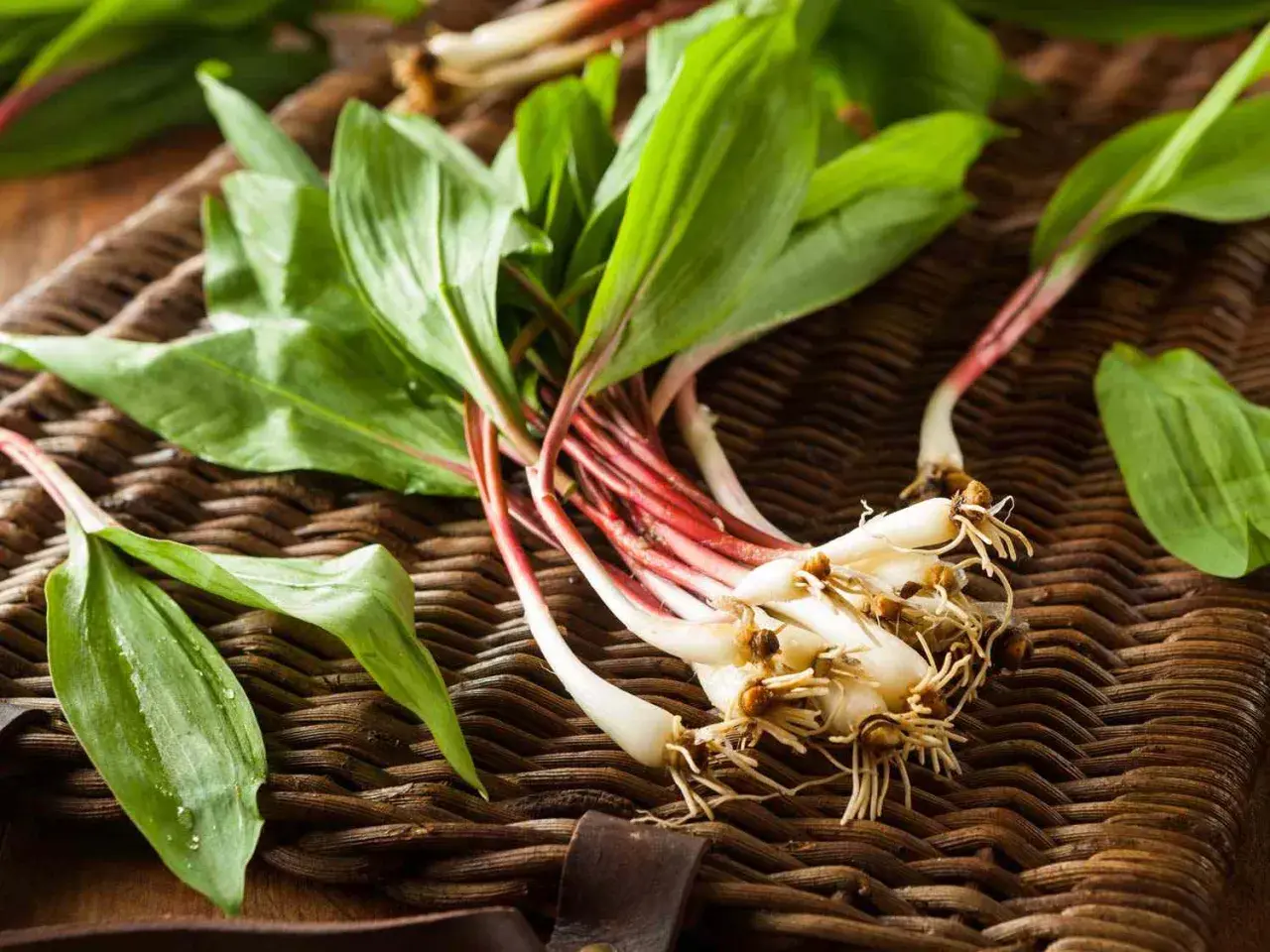
Ramps are one of the most rewarding spring ingredients because they bring garlic, onion, and fresh green flavour in the same bunch. The practical answer to what to do with ramps depends on which part you want to emphasise: the bulbs are best for gentle cooking, the leaves are better for quick wilting or finishing, and the whole plant can be preserved for later. In this piece I’m focusing on usable ideas, not theory, so you can turn a small bunch into breakfast, supper, or a jar for next week.
Key things to know before you cook ramps
- Use the bulbs and leaves differently so you do not waste their best flavour.
- Buy or pick firm, bright bunches; ramps wilt fast once they are warm.
- Keep the season simple: eggs, potatoes, fish, beans, and butter all work well.
- For longer keeping, pickle the bulbs, freeze chopped leaves, or make compound butter.
- Cook gently if you want sweetness, or char them if you want a smokier edge.
Treat ramps as two ingredients in one
I think of ramps, or wild leeks, as a built-in flavour gradient. The white bulb tastes sharpest when raw and turns sweet and savoury when it meets heat, while the green leaves are more delicate, almost like a cross between chives and spinach. That split matters, because the best ramp dish usually lets each part do a different job.
- Bulbs give body, bite, and a soft onion note once cooked.
- Leaves bring a fresher, greener edge and should go in late.
- Whole bunch works well when you grill, roast, or pickle them.
If I’m making eggs, potatoes, or a simple pan sauce, I usually cook the bulbs first and add the leaves only at the end. That gives me more control over texture and keeps the flavour bright rather than muddy. Once you understand that, buying and cleaning ramps becomes much easier.
How to choose and clean a good bunch
In the UK, ramps are usually a seasonal speciality rather than an everyday supermarket buy, so I look for freshness first and worry about the recipe second. The best bunches have firm stems, crisp leaves, and roots that still look alive rather than shrivelled. If the leaves are yellowing or slimy, the bunch is already past its best.
- Choose stems that feel crisp, not floppy.
- Look for deep green leaves with no black spots.
- Avoid bunches that smell sour or look crushed.
- Trim off the tangled root ends before cooking.
Ramps are often gritty, so I rinse them in cold water, separate the leaves, and swish everything in a bowl to loosen soil. Then I dry them thoroughly on a clean towel or salad spinner. If I am not cooking them the same day, I keep them unwashed if possible, wrapped loosely in a damp paper towel inside a container in the fridge. I plan on 3 to 4 days of good quality, and I only stretch that to about a week if the bunch was very fresh to begin with. If you forage, keep sustainability in mind and avoid taking more than you can use well.
Once the bunch is clean and cold, the real choice is speed: a quick cook gives you sweetness, while a more assertive method gives you contrast.

The fastest ways to cook ramps well
The simplest ramp dishes usually work because they do not fight the ingredient. When the seasoning is restrained, you get that sweet garlic-onion flavour without masking it. I use the method below as a quick guide when I’m deciding whether to sauté, grill, pickle, or blend.
| Method | Best for | Time | Result | What to watch |
|---|---|---|---|---|
| Raw, thinly sliced | Salads, butter, sandwiches, soft cheese | 0 to 2 minutes | Brightest and most pungent | Use sparingly; raw ramps can dominate |
| Sautéed in butter or olive oil | Eggs, potatoes, rice, pasta | 3 to 5 minutes | Sweet, mellow, and savoury | Do not brown the leaves too long |
| Grilled or roasted | Fish, chicken, mushrooms, bread | 8 to 12 minutes | Light smoke and a tender bite | Brush with oil so the leaves do not dry out |
| Pickled | Pintxos, sandwiches, cheese boards | 15 minutes active, then chill | Sharp, bright, and longer-lasting | They lose some freshness but gain lift |
| Blended into pesto or oil | Pasta, beans, grilled vegetables | 10 minutes | Concentrated green flavour | Blanch the leaves first if they taste too aggressive |
My default move is simple: bulbs into the pan first for 30 to 60 seconds, leaves in at the end, then straight off the heat. That gives me sweetness without losing the fresh edge. From there, the most satisfying recipes are usually the ones that let ramps sit naturally beside eggs, potatoes, fish, and beans.
Basque-leaning dishes that suit ramps naturally
Ramps fit comfortably into a Basque-inspired kitchen because they behave like a sharper, more spring-like cousin of the onion and garlic that already anchor so many dishes. I would not bury them under heavy cream or too many competing aromatics. I would keep the plate direct, salty, and clean.
A tortilla with ramps and potatoes
Use about 250 g of waxy potatoes, 6 eggs, 1 bunch of ramps, and 3 tablespoons of olive oil. I cook the potatoes slowly until just tender, add the chopped bulbs for the last 2 minutes, then fold in the leaves only when the pan is almost ready to come off the heat. The ramps give the tortilla the same comfort as spring onion, but with a deeper, more interesting finish.
Cod with ramp oil
Blanch 30 g of ramp leaves for 20 seconds, shock them in cold water, squeeze them dry, and blend with 100 ml of olive oil, a pinch of salt, and a squeeze of lemon. Spoon the oil over baked or pan-seared cod. The fish stays central, the oil adds colour and aroma, and the dish still feels spare enough to work as a proper dinner.
White beans with ramps and peppers
Start with cooked white beans, soften the ramp bulbs in olive oil, add roasted peppers, then fold in chopped leaves at the end. Finish with a little sherry vinegar or cider vinegar. If I want a more unmistakably Basque note, I add a pinch of piment d’Espelette. This is the kind of dish that turns ramps from a novelty ingredient into a useful spring staple.
Read Also: New Potatoes - Cook Them Perfectly Every Time
Pintxo-style toast with ramps and anchovy
Toast good bread, rub it lightly with garlic, top with ramp butter or very thin raw slices, and finish with anchovy or a sliver of Idiazabal. That combination works because ramps bring enough aroma to carry the whole bite, while the salt and smoke keep it grounded. It is a small plate, but it teaches you exactly how much flavour the ingredient can deliver.
If the bunch is larger than what you need for one meal, I do not force every part of it into the same recipe. I preserve the surplus in forms that are easy to use later, which is where ramps become especially valuable.
Preserve the season before it disappears
Ramps are short-season ingredients, so the smartest kitchen move is usually to preserve at least part of the bunch. I do not try to freeze every ramp the same way, because the leaves, stems, and bulbs behave differently once stored.
| Preservation method | How I do it | How long it keeps | Best use later | Trade-off |
|---|---|---|---|---|
| Compound butter | Mix chopped leaves into softened butter with salt and lemon zest, then roll and freeze | About 2 to 3 months frozen | Grilled fish, potatoes, pasta, steak | Needs dry leaves or the butter can split |
| Quick pickle | Cover trimmed bulbs and stems with a hot mix of 250 ml vinegar, 250 ml water, 20 g sugar, and 12 g salt | Roughly 1 to 2 months chilled | Sandwiches, cheese, charcuterie, pintxos | Less fresh crunch, more brightness |
| Pesto or ramp oil | Blend leaves with nuts, olive oil, and cheese, or just oil for a lighter paste | About 1 week chilled, longer frozen | Pasta, beans, dressings, roast vegetables | The flavour can turn fierce if you overdo the leaves |
| Freezing chopped leaves | Chop and freeze flat, or portion into cubes with a little oil | About 2 to 3 months | Soups, omelettes, sauces | Texture softens, so keep it for cooked dishes |
If I had to pick one preserve, I would make ramp butter first because it is the easiest to use on a busy night. Pickles come second for me, especially when I want something sharp alongside rich food. That said, the best preserve is the one you will actually reach for, and that usually comes down to how you cook during the week.
How I would use one bunch from the market to the last leaf
- For the first meal, I would make a tortilla or scrambled eggs with the bulbs cooked gently and the leaves stirred in at the end.
- For the second use, I would either pickle the stems or mix the leaves into butter and freeze it.
- For the final stretch, I would fold the last chopped leaves into soup, beans, or pasta rather than letting them fade in the fridge.
That sequence keeps the flavour bright and the waste low, which is exactly how I prefer to handle a small seasonal ingredient. If I am cooking for a Basque-style table, I lean toward restraint, good olive oil, and one or two supporting ingredients that let the ramps speak clearly. That is usually enough.
