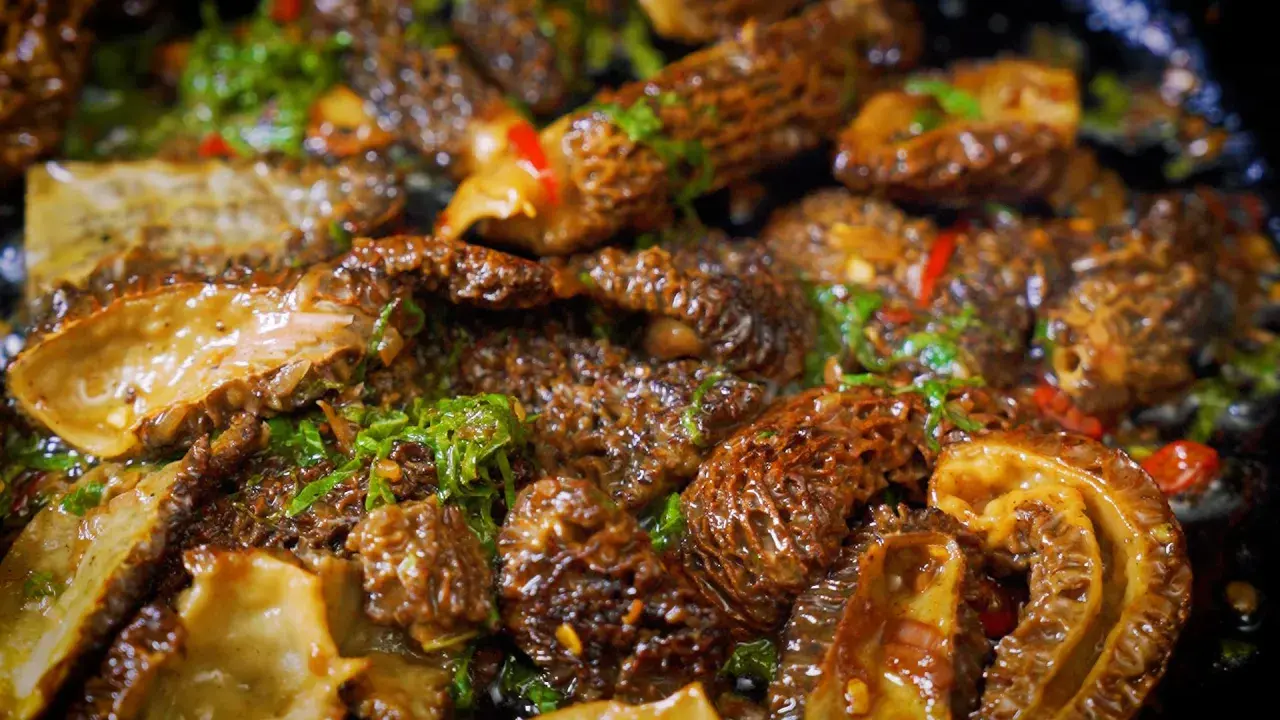
The quickest route to good morels
- Use high enough heat to drive off moisture and create browning, not steaming.
- Clean them gently, then dry them thoroughly before they hit the pan.
- Cook in batches with butter, olive oil, or a mix of both so the pan stays hot.
- Fresh morels shine in quick sautés, while dried morels are excellent in sauces and creamy dishes.
- Never eat them raw, and do not cook any mushroom you cannot identify with certainty.
Why a hot pan usually gives the best flavour
Morels are spongey, hollow, and full of tiny folds, which is exactly why they taste so good when they are cooked correctly. They hold onto moisture and release it as soon as heat hits them, so a cool pan gives you a grey, wet result. A hot pan gives you contrast: browned edges, a meaty centre, and that concentrated spring flavour people want from them.
When I cook them, I treat them like a delicate but valuable produce item, not a mushroom to bury under heavy sauce. A little oil helps the pan stay hot, then butter can come in for flavour once the mushrooms start to colour. That is the kind of simple, ingredient-led cooking that fits naturally with Basque cuisine, where good produce is usually given room to speak for itself.
Once you understand that principle, the next job is choosing mushrooms that are worth the heat.
Choose morels that are worth cooking
If you are buying fresh morels in the UK, look for mushrooms that feel dry, firm, and springy rather than damp or slimy. The cap should look like a proper honeycomb, not a collapsed sponge. If you are foraging, confidence matters even more: a true morel has a hollow stem and a cap that is attached in a way that looks structured, not brain-like. If you are not completely sure, leave it alone.
| Type | Best use | What to look for |
|---|---|---|
| Fresh morels | Quick sautés, eggs, spring vegetables, fish | Dry surface, firm texture, hollow stem, no mould or slime |
| Dried morels | Sauces, risotto, cream-based dishes, out-of-season cooking | Whole pieces, strong earthy aroma, very little dust or grit |
Dried morels are not a compromise if they are good quality. They often give a deeper, more concentrated flavour than tired fresh ones, and they are practical when the spring season has passed. I keep them in mind as a pantry ingredient, not a last-resort substitute. That is why they deserve proper prep before cooking.
How to clean and prep them without losing texture
Morels trap grit inside the folds, so cleaning them well matters as much as the cooking itself. I usually trim the stem end, split larger morels lengthways, and inspect the hollow cavity. Halving them is not just about cleaning; it also helps them cook evenly and makes it easier to spot debris.
- Trim away any dry or dirty stem ends.
- Cut large morels in half lengthways.
- Brush off loose dirt first, then rinse briefly in cold water only if needed.
- Lay them on a tea towel or kitchen paper and dry them thoroughly.
- If you are using dried morels, soak them until supple, then strain the soaking liquid through a fine sieve or muslin before using it.
The mistake I see most often is over-washing. A long soak can turn a delicate mushroom into something watery and flat. If the morels are visibly dirty, a brief swish is fine, but the aim is always the same: get them clean without stripping away their texture. After that, the cooking method matters even more.

Cooking methods that actually do them justice
Not every method gives the same result. Some highlight the mushroom itself, while others turn it into part of a larger dish. If your goal is to taste the morel clearly, start with a quick saute. If your goal is richness or crunch, there are other good options too.
| Method | Best for | Typical time | Texture | My take |
|---|---|---|---|---|
| Hot pan saute | Fresh morels, simple sides, first-time cooking | About 6-10 minutes | Browned, meaty, lightly crisp at the edges | The most reliable all-round method |
| Light flour fry | Smaller morels, snacks, breakfast plates | About 3-5 minutes | Crisp shell, tender centre | Good when you want a treat, not the cleanest flavour |
| Roast | Mixed spring vegetables, larger batches | About 12-15 minutes at 220°C or 200°C fan | Deeper, drier, slightly firmer | Useful, but less characterful than pan cooking |
| Cream sauce | Pasta, chicken, toast, soft eggs | About 10-15 minutes total | Silky and rich | Excellent if you want a fuller dish, as long as the mushrooms still brown first |
If I had to choose one method, I would still go with the pan. Cook the morels in a hot frying pan with a little oil, then add butter once they begin to colour. Salt late, not early, so they brown properly. Keep the pan uncrowded, because too many mushrooms at once will drop the temperature and push them into a steam rather than a sear.
That gives you the clearest flavour, but the dish still needs the right companions. In a Basque-inspired kitchen, that is where the fun starts.
What to serve them with in a Basque-inspired kitchen
Basque cooking tends to be direct and confident, which is exactly why it suits morels so well. You do not need a long ingredient list. You need clean flavours, careful heat, and a plate that lets the mushroom stay central.
- Eggs - soft scrambled eggs, an omelette, or a lightly set tortilla give morels a creamy partner without covering their flavour.
- Asparagus and spring peas - these bring freshness and keep the dish seasonal.
- New potatoes - ideal when you want something earthy and satisfying under the mushrooms.
- Hake or cod - a good match if you want a lighter main course with a distinctly coastal feel.
- Chicken or lamb - useful when the mushrooms are part of a fuller dinner rather than a side.
- Olive oil, parsley, garlic, and a splash of dry white wine - enough to build a sauce without drowning the morels.
I especially like morels with eggs and spring vegetables because the whole plate stays in balance. A few spoonfuls of mushroom juices over warm bread or a slice of toasted sourdough can be enough. If I want a drink alongside, I lean toward something dry and brisk rather than oaky or heavy. The idea is to keep the plate lively, not make it feel like a winter casserole.
Even good pairings fail if a few avoidable mistakes get in the way, and morels have a handful of those.
Mistakes that flatten morels
Morels are forgiving in some ways, but a few habits will blunt them fast. Most of the damage comes from too much water, too little heat, or too many competing flavours.
- Soaking them for too long - they can turn watery and lose their texture.
- Skipping the drying step - wet mushrooms will steam instead of brown.
- Crowding the pan - the temperature drops and the mushrooms soften before they colour.
- Salting too early - salt pulls moisture out and slows browning.
- Using too much cream or garlic - both can bury the morel flavour if you are not careful.
- Cooking mushrooms you cannot identify - if there is any doubt at all, do not eat them.
The biggest red flag is false confidence. Morels are a seasonal luxury, so it is tempting to rush them onto the plate. I think they are better treated with a little patience and a light hand. That is what keeps the flavour clean and the texture interesting.
The first plate I would make with a small basket of morels
If I had a modest basket of fresh morels, I would make a simple spring plate: halved morels sauteed in olive oil and a small knob of butter, a finely sliced shallot, salt added only after the mushrooms had started to brown, and a handful of parsley at the end. I would serve them over soft scrambled eggs or good toasted bread, with tender asparagus on the side if I had it. That is a plate that feels generous without being heavy.
If the mushrooms were dried, I would rehydrate them first, strain the soaking liquid, and use a little of that liquid to build a quick sauce in the pan. It adds depth without turning the dish into cream soup. In both cases, the same rule holds: let the morels taste like morels. If you do that, you do not need much else.
