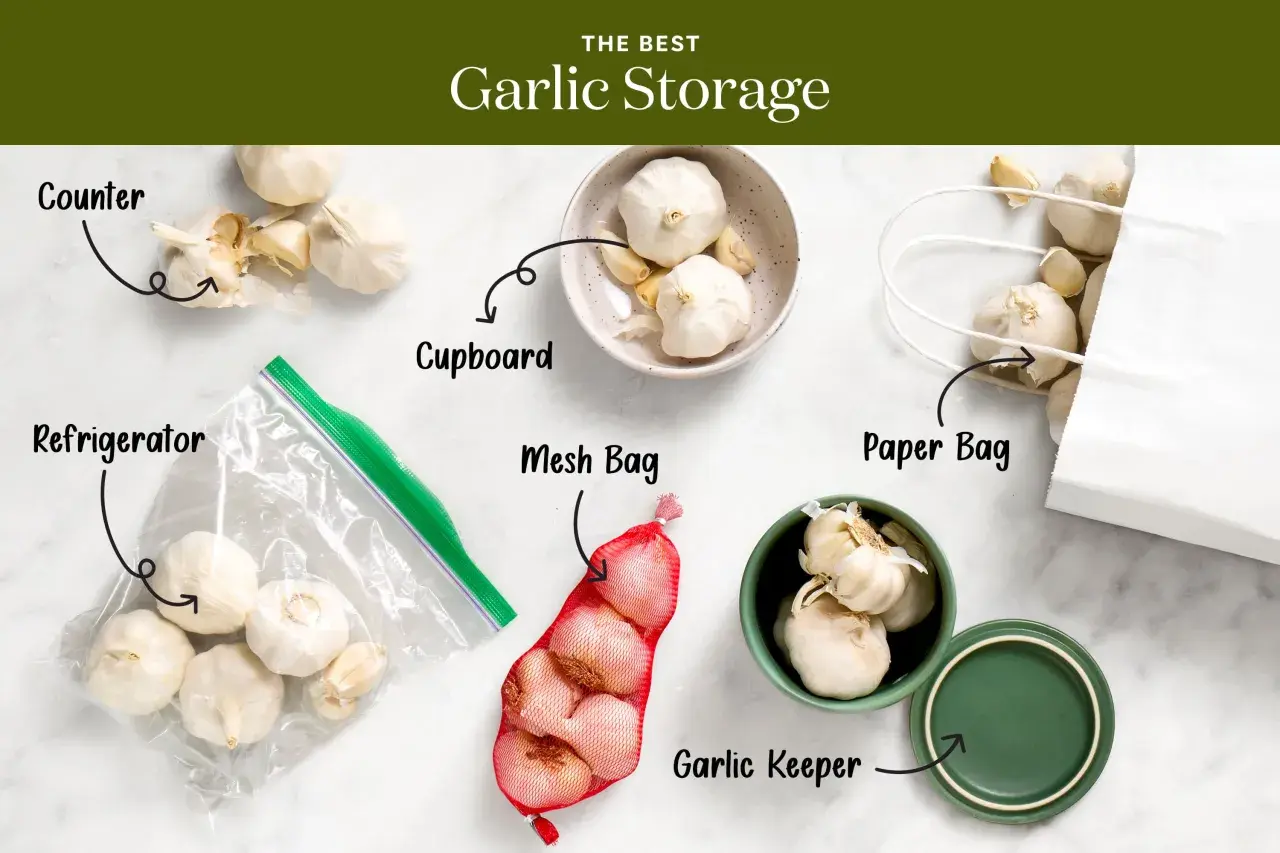
Garlic keeps its best flavour when it stays dry, cool, and intact. In a Basque-style kitchen, that matters because garlic often has to carry a sauce, sharpen seafood, or round out a stew, and tired cloves taste flat fast. This guide covers the practical side of how to store garlic: where whole bulbs belong, what to do with peeled or chopped cloves, when the fridge helps, and which preservation methods are safe.
The safest rule is simple: keep garlic dry, airy, and matched to the form you bought
- Whole cured bulbs last longest in a cool, dark, ventilated cupboard or larder, not in a sealed container.
- Once a bulb is broken, the cloves age faster, so use them sooner and keep them away from heat and moisture.
- Peeled, chopped, or minced garlic belongs in the fridge for only a short time unless you freeze it.
- Garlic stored in oil is a safety issue unless it is refrigerated for a few days or frozen for longer keeping.
- Homegrown garlic needs proper curing first, or no storage method will make up for the extra moisture.

Store whole bulbs where air can do the work
The best home storage for whole, cured garlic is boring in the best way: cool, dry, dark, and well ventilated. I keep bulbs in a mesh bag or an open basket in the coolest cupboard I have, usually away from the oven, kettle, and direct sun. A paper bag with holes works too, but a plastic bag does not, because trapped moisture is what turns garlic soft and mouldy.
A kitchen drawer looks convenient, but it usually runs too warm and too closed. Softneck garlic usually keeps longer than hardneck, which is why supermarket bulbs often stay usable for months if they were cured well before sale. Once the papery skin starts to collapse or a clove feels rubbery, move that bulb to the front of the queue. A little sprouting is not the end of the world, but it is a sign that flavour is slipping. Once you understand that basic cupboard rule, the next step is choosing the right method for the garlic you actually have.
Match the storage method to the form of garlic
| Form | Best storage | Typical life | What I would do |
|---|---|---|---|
| Whole cured bulbs | Mesh bag, basket, or paper bag in a cool cupboard | Several months | Use the older bulbs first and keep them dry |
| Separated unpeeled cloves | Same cool cupboard, or fridge if you need them soon | Around 1 week | Keep them uncrushed and check for soft spots |
| Peeled cloves | Covered container in the fridge | About 5-7 days | Dry them after peeling and use them quickly |
| Chopped or minced garlic | Fridge for very short use or freezer in portions | 1-2 days chilled; months frozen | Freeze small spoonfuls so you only thaw what you need |
| Garlic in oil | Fridge at 4°C or below, or freezer | 4 days in the fridge; months frozen | Never leave it on the counter |
| Roasted garlic | Fridge for immediate use or freezer for longer | Up to about a week chilled | Mash it and freeze in teaspoons or cubes |
The table matters because garlic stops being a single ingredient the moment you peel, chop, or cook it. For a quick weeknight supper, peeled cloves in the fridge may be fine; for a longer stretch, freezer portions are far more reliable. That distinction becomes even more important if you grow your own bulbs, because curing changes everything.
Cure homegrown bulbs before you put them away
If you lift garlic from your own garden, do not rush it straight into storage. Leave the bulbs in a dry, shaded, airy place for around 2-4 weeks until the necks are dry and the skins feel papery, then trim the roots and tops. I never wash freshly harvested garlic before curing; I just brush off loose soil so I am not sealing extra moisture into the bulb.
Good curing is what turns a fresh bulb into a keeper. If the stems still bend or the neck feels soft, the bulb is not ready to sit around for months. Softneck varieties can be braided once they are properly dried, which is practical as well as tidy, while hardneck garlic is usually best trimmed and bagged. After this stage, you are ready to think about longer preservation methods rather than simple cupboard storage.Freeze or dry garlic when you need months, not days
Freezing is the easiest long-term option if you want garlic ready for soups, sauces, and Basque-style cooking without the stress of watching every bulb. I usually freeze peeled cloves whole or chopped in small portions, because they can go straight into the pan from frozen. Garlic butter, garlic paste, and plain purée also freeze well if you keep the portions small and label them clearly.
Drying is useful when you want a shelf-stable ingredient for powders or seasoning. Slice it thinly if you want faster drying, then keep it until it is crisp enough to snap cleanly. Pickled garlic is a separate case and should follow a tested recipe, because acidity is what keeps that method safe. Garlic in oil needs the most discipline: it belongs in the fridge at 4°C or below for no more than 4 days, or in the freezer if you want to keep it longer. I treat any homemade garlic oil as a short-life ingredient, not a pantry item, because that is where the real safety risk sits.
Avoid the mistakes that make garlic fail early
Most garlic failures come from a handful of avoidable habits. Washing bulbs before storage is one of them. So is stuffing them into airtight jars or plastic tubs that trap humidity. Heat matters too: a shelf above the cooker, a sunny windowsill, or a warm cupboard near the boiler will shorten life fast.
I also avoid storing garlic with badly damaged produce. One mouldy bulb can ruin the smell and quality of the rest if air movement is poor. I keep garlic away from potatoes and other damp produce so the cupboard does not become a mixed bag of moisture and stray smells. If a clove has sprouted but the bulb is still firm, I usually split it, remove the green core if it tastes harsh, and use it soon. If the bulb is soft, wet, or smells fermented, I throw it out. That sounds strict, but garlic is cheap compared with a bad dish or a spoiled batch.
Keep a simple rotation that fits a UK kitchen
In a typical UK kitchen, the simplest setup is a cool cupboard for whole bulbs, a small covered container for peeled cloves in the fridge, and a freezer stash for anything you have prepared in advance. That gives you a working rhythm without letting the ingredient drift past its peak. If your kitchen runs warm, choose the coldest, driest cupboard you have rather than trying to force every form of garlic into the same spot.
- Keep one bowl for whole bulbs and use the oldest bulbs first.
- Peel only what you need for the next few days.
- Freeze extra cloves in teaspoon-sized portions for quick cooking.
- Label garlic oil, confit, and roasted garlic with the date so you do not guess later.
- Buy smaller amounts more often if you do not cook with garlic daily.
That system works especially well if you cook often from a Basque-inspired pantry, where garlic needs to be ready for fish, vegetables, and pan sauces at short notice. Once you settle on this routine, you will not need to wonder how to store garlic every time you bring a bulb home.
