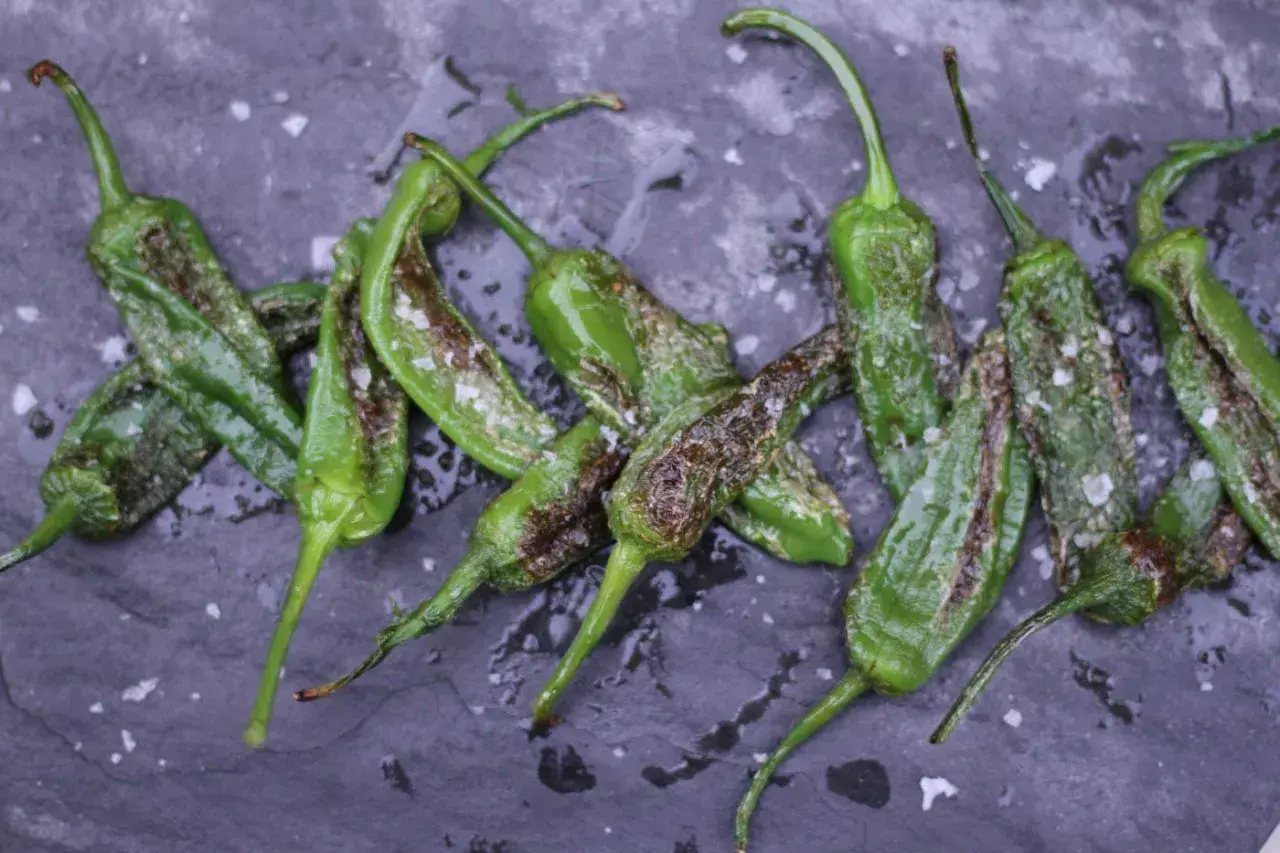
Gernika peppers sit in a useful corner of Basque cuisine: small enough to fry quickly, mild enough to serve with little more than olive oil and salt, and distinctive enough to deserve their own treatment. In this article I cover what they are, how to recognise good fruit, how I cook them, where they fit in everyday dishes, and how they compare with the peppers people in the UK most often use as stand-ins.
The essentials in one glance
- They are small Basque frying peppers, usually picked green before full ripeness.
- The best fruit is firm, glossy, and thin-skinned, with a long, neat stalk.
- The classic treatment is a very hot pan, olive oil, and a short fry.
- They are milder and more consistent than Padrón peppers.
- In the UK, specialist Spanish grocers and good produce suppliers are the most realistic places to find them.
What makes them a proper Basque frying pepper
The authentic pepper is a local Basque variety, and the protected product is tied to the Gernika area and wider Biscay growing zone. Eusko Label identifies it as a local Basque variety, while Foods & Wines from Spain describes it as a small, thin-skinned fruit harvested green, usually 6 to 9 cm long, with sweet flesh. That combination matters because this is not a pepper built for bulk or heat. It is a frying pepper, which means thin walls, a gentle bite, and a flavour that works best when the treatment stays simple.
I like that restraint. A good Basque pepper should taste fresh and clean, with a mild sweetness rather than a bell-pepper heaviness. If you think of it as a produce item with a clear job, the rest makes sense immediately. It is there to be cooked fast, seasoned lightly, and eaten while it still has some brightness left in it. That is also why buying the right fruit matters more than people expect, which leads straight into how I would shop for it in the UK.
How to choose and buy them in the UK
In the UK I would buy them the way I buy any specialist produce: by trusting appearance before the label. Look for peppers that are evenly green, slightly shiny, firm to the touch, and free of wrinkles or soft shoulders. A fresh stalk is a good sign, and so is a shape that stays slender rather than bulging out like a standard salad pepper.
- Choose compact peppers with an intact stalk and no split skin.
- Avoid fruit that feels spongy, looks dull, or has already started to yellow widely.
- If the pack says Gernika, Gernika-style, or Basque frying peppers, check whether it also gives origin details.
- Buy them close to cooking time, because this is delicate fresh produce rather than a long-storing pantry item.
If you cannot find the exact pepper, I would still choose a slender frying pepper over a thick bell pepper. The cooking method depends on thin flesh, so a closer physical match matters more than a perfect name on the bag. Once you have good fruit, the next step is making sure the heat is right, because that is where most home cooks either get the texture perfect or miss it completely.

How I cook them when I want the Basque result
I keep the method stripped back. The peppers should meet hot oil, blister quickly, and leave the pan before they lose their shape. A heavy pan, a shallow layer of olive oil, and a little patience between batches make more difference than any fancy garnish.
- Wash and dry them thoroughly.
- Heat enough olive oil to coat the base of the pan generously.
- Fry in a single layer until the skin blisters and the flesh softens, usually in well under 2 minutes.
- Lift them out, drain briefly, and season with salt while they are still hot.
The two mistakes I see most often are overcrowding the pan and using heat that is too low. In both cases the peppers go limp before they take on that silky, lightly blistered finish that makes the dish work. If you want a small variation, a quick grill or griddle can be useful, but I still prefer the olive-oil fry because it gives the most faithful Basque result. From there, the real question becomes what to serve them with, because these peppers are at their best when the rest of the plate stays disciplined.
Where they shine in the kitchen
These peppers work best when the other ingredients stay modest. I like them beside seafood, eggs, cured meat, or a plain piece of bread that can catch the oil. The flavour is too good to bury under a heavy sauce, but it is also too subtle to stand alone in a strongly spiced dish.
| Use | Why it works | What I would serve with it |
|---|---|---|
| Tapas plate | Shows off the pepper’s sweetness and blistered skin | Sea salt, bread, chilled cider or a dry white |
| Egg dishes | The yolk softens the pepper’s edges | Fried eggs or a simple tortilla |
| Seafood | Matches the clean, Atlantic feel of the Basque coast | Grilled hake, anchovies, or prawns |
| Meat and charcuterie | Adds freshness next to saltier foods | Txistorra, jamón, or roast chicken |
If I wanted a more substantial plate, I would fold them into warm potatoes or serve them with a simple pan sauce rather than stuffing them heavily. The more you add, the more you risk drowning the pepper’s identity. That is also why they are so useful when people ask for a substitute, because the comparison with Padrón and shishito peppers comes down to flavour, consistency, and a little bit of culinary temperament.
How they compare with Padrón and shishito
This is the comparison people usually need, because shishito and Padrón peppers are the closest substitutes you are likely to see. They look similar at first glance, but the eating experience is not the same.
| Pepper | Heat | Flavour | Best use |
|---|---|---|---|
| Gernika | Usually mild and consistent | Sweet, thin-skinned, clean | Quick frying, serving whole |
| Padrón | Mostly mild, but sometimes hot | Greener and slightly more variable | Same frying method, with a bit of drama |
| Shishito | Usually mild | Similar shape, slightly different texture | Good stand-in when the Basque pepper is unavailable |
My rule is simple: if I want a pepper I can serve with confidence to a mixed group, the Basque variety is the safer choice. If I want a little unpredictability, Padrón is the more familiar talking point. Shishito sits in the middle as a practical substitute, but it does not carry quite the same Basque identity. Once you know the difference, the last piece is treating them like fresh produce rather than a shelf-stable ingredient, because handling has a direct effect on the final plate.
How to store and handle them before cooking
Because this is delicate produce, handling matters almost as much as cooking. Keep the peppers dry, refrigerate them unwashed if possible, and use them quickly rather than letting them sit in the drawer for too long.
- Wash only when you are ready to cook, then dry them well so they fry instead of steam.
- Handle them gently, because bruises show up fast on thin-skinned peppers.
- If you have leftovers, cool them quickly and use them in an omelette, potato salad, or sandwich the next day.
- If they start to lose firmness, switch from whole frying to chopped cooked dishes instead of forcing the classic presentation.
I treat that as a small but important produce habit: fresh peppers want speed, not storage. That idea is the real lesson here, and it is worth carrying into the final part of the article because it explains why the pepper has lasted so long in Basque cooking.
The Basque habit worth copying at home
What I take from the Gernika pepper is not just a recipe but a method of restraint. Buy the freshest fruit you can find, keep the seasoning simple, and let a hot pan do the work. If you are cooking in the UK with less access to Basque markets, that discipline matters even more: choose the closest fresh substitute only when you must, then keep the treatment faithful so the pepper still tastes like itself.
When done well, the result is not flashy. It is better than that. It is a small plate that tastes precise, seasonal, and unmistakably Basque, and that is why I keep coming back to this pepper whenever I want to show how much can happen with just produce, olive oil, and salt.
