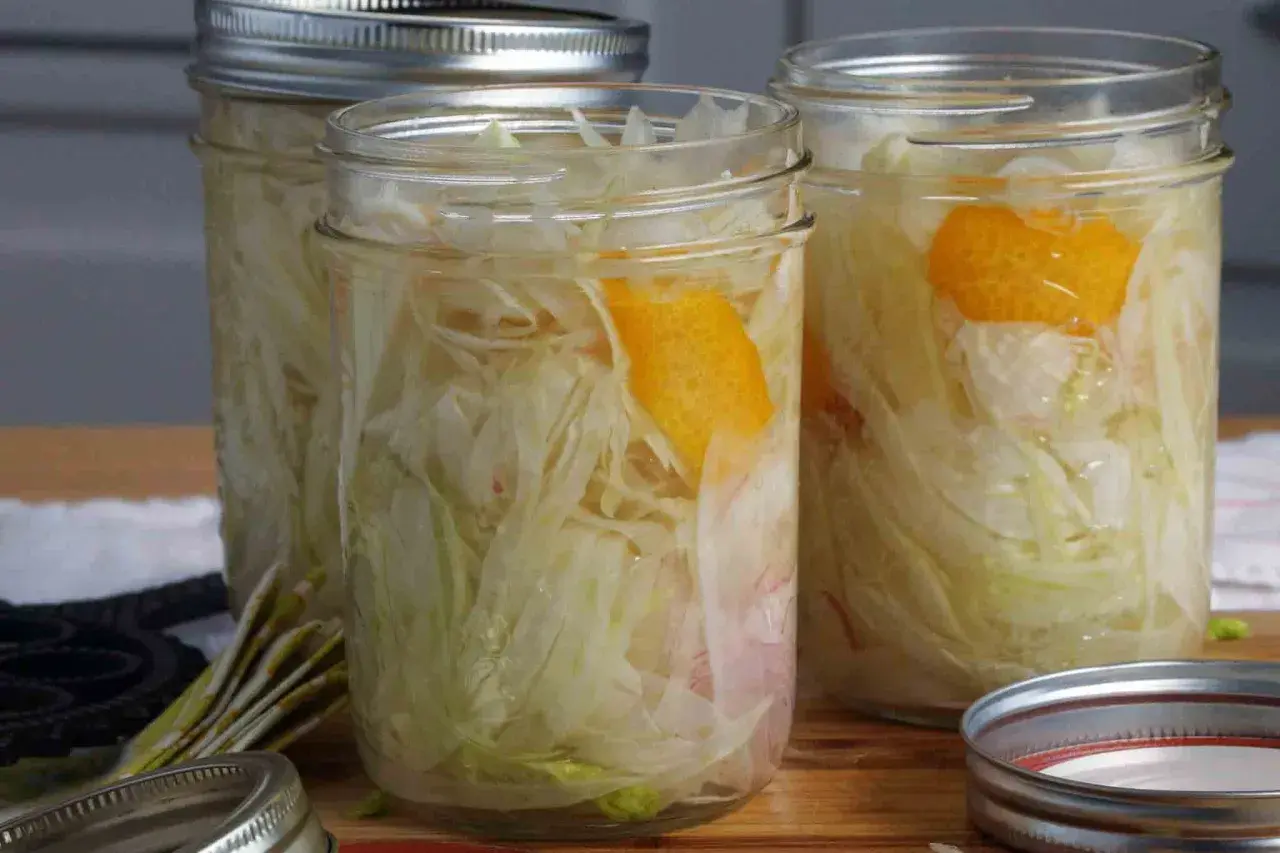
Pickled fennel is one of those ingredients that looks modest in the bowl and then quietly changes the whole plate. In this article I look at how to keep it crisp, when to choose vinegar or brine, what to serve it with, and how to buy good fennel in the UK so the texture starts on your side. I also place it where it naturally belongs on a Basque-style table: next to fish, olive oil, cured ingredients, and a little salt.
These are the details that make the pickle work
- Choose a firm, white bulb with fresh green fronds if you can; older fennel turns fibrous faster.
- A 1:1 mix of vinegar and water keeps the flavour bright without flattening the bulb.
- Thin slices are ready in hours; thicker wedges need overnight to taste balanced.
- It works best with oily fish, shellfish, anchovies, roast chicken, and simple grain or potato salads.
- Keep it chilled; a small-batch fridge pickle is usually best for about 2 to 3 weeks.
Why fennel takes to acid so well
Fennel has a built-in sweetness and a clean anise note, so vinegar does not fight it the way it can with more bitter vegetables. Salt helps too: it pulls out a little moisture, firms the texture, and makes the bulb taste more focused rather than watery. That combination is why I treat it as a condiment, not just a garnish.
- The sweetness stays intact. Even after pickling, fennel keeps a gentle roundness instead of turning harsh.
- The crunch survives. Dense, layered bulbs hold up better than soft summer vegetables.
- The aroma becomes useful. What can feel perfumy raw becomes sharper and easier to place next to fish, cured meat, or eggs.
That is the real draw: it gives you brightness without needing a sauce, which is exactly the sort of balance I look for in Basque-inspired cooking. Once that makes sense, the next question is how to build a jar that stays crisp rather than turning limp.
How I make a small batch that stays crisp
For one medium bulb, I keep the formula tight and clean. I trim the fennel, save the fronds, and slice the bulb very thinly with a sharp knife or mandoline. Then I use a simple brine that is bright enough for seafood but not so sharp that it overwhelms the fennel itself.
| Ingredient | Amount for 1 medium bulb | Why I use it |
|---|---|---|
| Fennel bulb | 1 medium, about 250 to 300 g | Enough for a small jar without crowding the slices |
| White wine vinegar | 120 ml | Clean acidity that suits fish and salads |
| Water | 120 ml | Softens the vinegar so the flavour stays balanced |
| Fine salt | 1 tsp | Seasoning and crunch |
| Caster sugar | 1 tsp, optional | Rounds the edge without making it sweet |
| Coriander seeds | 1/2 tsp | Gives a light citrus-spice note |
| Lemon peel | 2 strips, optional | Useful when I want the jar to lean towards seafood |
- Trim the bulb, remove any bruised outer layer, and keep the fronds aside for later.
- Slice the fennel as thinly as you can. Thin slices absorb flavour quickly and stay elegant on the plate.
- Mix the vinegar, water, salt, sugar, and any spices until the salt dissolves. I do not boil the brine hard; I only warm it enough to dissolve everything.
- Pack the fennel into a clean jar, pour over the liquid, and press the slices down so they are fully covered.
- Let the jar cool, then refrigerate it. It is usable after a few hours, but I prefer it the next day.
My rule: the thinner the slice, the more the fennel feels like a proper garnish; the thicker the slice, the more it behaves like a side salad. That is useful when you want texture, but it changes the role on the plate.
Once the jar is mixed, the more interesting decision is whether you want a vinegar-led result or something closer to a salt-led preserve.
Vinegar or brine gives a different result
When I talk about brined fennel, I separate a quick salted jar from a true ferment. The first is fast and sharply clean; the second is slower, softer, and more savoury. For most home cooking, I reach for vinegar first because it is predictable and easy to use the same day or the day after.
| Style | Mix | Result | Best use | My take |
|---|---|---|---|---|
| Quick vinegar pickle | 1:1 vinegar and water, plus 1 tsp salt per 240 ml brine | Bright, crisp, and direct | Seafood, sandwiches, pintxos | The safest all-round choice for beginners |
| Light salt brine | About 2% salt by weight | Rounder, less sharp, more savoury | Plates with olive oil, eggs, or cured fish | Good when you want the fennel to read like a condiment |
| Fermented brine | Also around 2% salt by weight, handled as a proper ferment | Deeper and more complex | Longer-lasting preserve, if you already ferment safely | Worth it only if you follow a tested fermenting method |
The simplest way to decide is to look at the dish in front of you. If the meal is rich in oil, egg, or fried batter, I want vinegar. If the plate already carries acidity, I back off and let the salt do more of the work. That difference matters more than most people expect, and it leads directly to what the fennel should actually sit beside on the table.
What I serve it with on a Basque-style table
Basque cooking is generous with seafood, olive oil, and direct flavour, so a sharp fennel preserve fits naturally. I like it where it can cut through fat, sharpen cured fish, or act as a bright counterpoint on a small plate. A little goes a long way, which is exactly why it works so well in pintxos and simple home lunches.
- Anchovies and olives. The salt-on-salt combination needs acid to wake it up.
- Grilled hake or sea bass. The fennel gives the fish a cleaner finish and a little crunch.
- Tinned tuna or mackerel. It cuts through the oil and makes a quick lunch feel deliberate.
- Potato tortilla or omelette. The sharpness lifts the eggs and keeps the dish from feeling heavy.
- Roast pork or chicken. It behaves like a light relish without the sweetness of chutney.
- Tomato salad with olive oil. The fennel adds structure and a second layer of freshness.
If I am serving drinks, I lean toward txakoli when I have it, or a dry cider when I do not. Both keep the plate in the same clean, saline register. That idea only works if the fennel itself is fresh to begin with, so the next step is choosing the right bulb in the UK.
How to buy and store fennel well in the UK
In the UK, I treat fennel as a more seasonal buy than a root like carrots or potatoes. The best bulbs are usually the ones that arrive fresh and local in the warmer months, although imported fennel is common enough for year-round use. What changes most is not availability but texture: fresher bulbs are sweeter, denser, and less likely to have a woody core.
| What to check | Good sign | Why it matters |
|---|---|---|
| Bulb | Firm, heavy, and white | Usually means more moisture and better crunch |
| Layers | Tightly closed with few splits | Loose layers dry out faster and pickle unevenly |
| Fronds | Green and feathery, not limp | A freshness signal and a useful herb-like garnish |
| Smell | Clean and lightly sweet | Overly sour or dull aroma often means the bulb is tired |
At home, I keep the bulb in the fridge in a loosely closed bag and use it within about a week, sometimes a little longer if it is very fresh. I separate the fronds and use them quickly, because they wilt before the bulb does. The stalks are worth saving for stock, fish broth, or a quick simmer with onions and herbs.
Once you know how to choose it, the remaining failures are mostly technique rather than luck, and those are easy to clean up.
Common mistakes that flatten the flavour
- Slicing too thick. Thick pieces stay blunt and do not absorb the brine evenly.
- Using too much sugar. Fennel already has sweetness; too much sugar turns the result soft and vague.
- Letting the jar sit warm for too long. That is where crunch disappears fastest.
- Starting with an old bulb. If the fennel is already stringy, no brine will bring back clean texture.
- Ignoring the balance of acid. A brine that is too sharp can make the fennel taste thin rather than fresh.
- Throwing away the tops and stalks. You lose useful flavour and another garnish for the same purchase.
If a jar tastes flat, I do not usually add more sugar. I add a little more salt or a spoonful of vinegar, then chill it again and taste after an hour. That small correction often fixes the problem without making the fennel dessert-like, and it keeps the ingredient in the savoury lane where it belongs.
A sharp little jar that earns its place in the fridge
The real value here is not the preservation trick itself. It is having one clean, acidic ingredient ready to go when a plate needs lift, crunch, and a little restraint. I use it on fish, in sandwiches, on eggs, and on small Basque-style bites where the contrast matters more than the quantity.
It is also one of the best ways to use a bulb that is slightly too large for a salad or slightly too eager to lose freshness in the fridge. In other words, it turns a produce problem into a useful condiment. That is why I keep a small jar of pickled fennel in the fridge whenever I am cooking fish, building a pintxo board, or trying to make a simple lunch feel deliberate.
