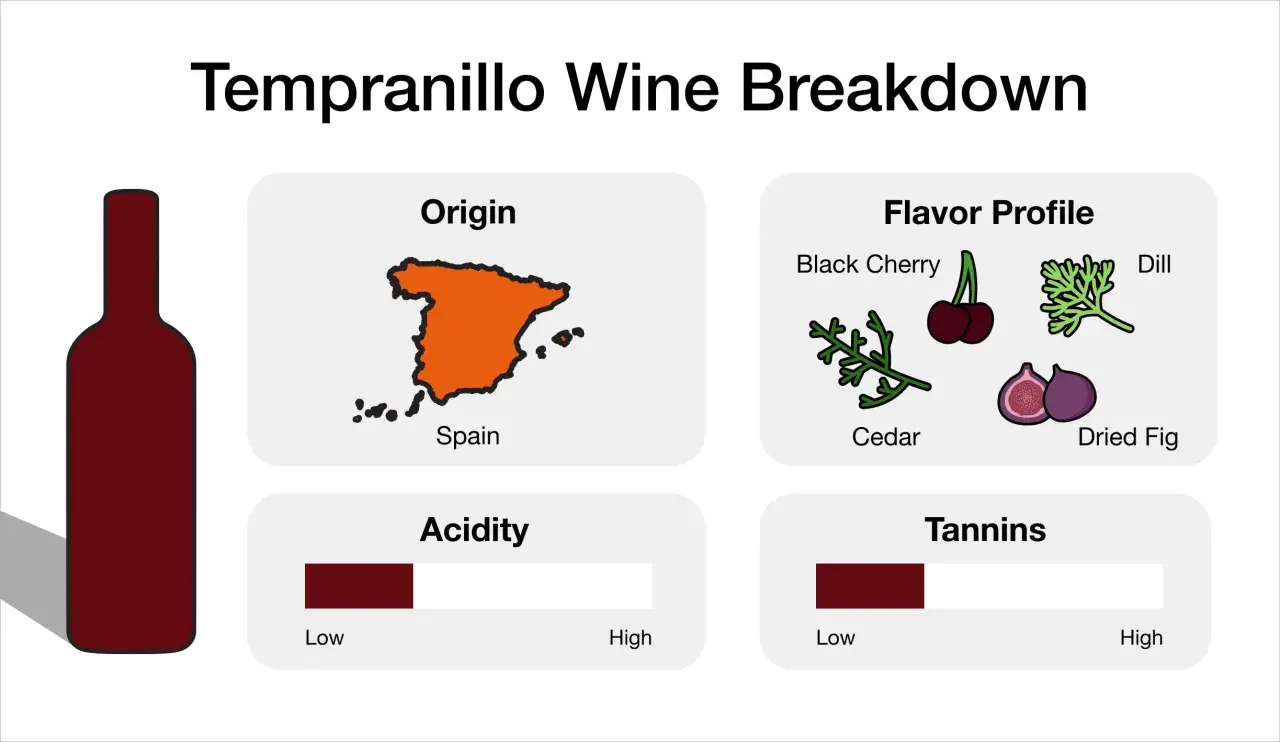
The essentials at a glance
- Tempranillo is usually medium-bodied with medium-plus tannin and medium-minus acidity, so it feels structured without being heavy.
- Younger bottles lean on fresh red fruit; aged bottles move into savoury notes like cedar, leather, tobacco, and dried fig.
- Oak matters a lot: it can add vanilla, clove, dill, coconut, and extra grip depending on the barrel and the time spent in it.
- It works especially well with smoky, salty, and umami-rich food, which is why Basque dishes are such a natural match.
- Serve it around 16-18°C; younger bottles can sit slightly cooler, while more structured wines usually benefit from a little air.
What Tempranillo actually tastes like
I usually describe Tempranillo as a red-fruited wine with a savoury backbone. The first impression is often cherry, plum, and strawberry, sometimes with a hint of raspberry or dried cranberry if the wine is lighter and fresher. On the palate, it tends to feel smooth rather than sharp, with enough tannin to give shape but not so much that it turns rustic or drying.
That balance is what makes the grape easy to like and still interesting. A good bottle rarely tastes flat. Even when the fruit is ripe, there is usually a dry, earthy edge underneath it, and that is where Tempranillo starts to separate itself from simple soft reds. If you taste a faint tomato-leaf note, do not read it as a flaw automatically; in context, it is part of the grape’s savoury character and can make the wine feel more food-friendly. Once that baseline is clear, the next question is why one bottle feels bright and juicy while another feels darker and more serious.
Why it shifts from fruity to savoury
Ripeness and climate
Tempranillo is sensitive to where it is grown. In cooler sites or in higher-altitude vineyards, I expect brighter acidity, red cherry, and a firmer, cleaner finish. In warmer conditions, the fruit can become riper and rounder, with more plum and blackberry, and the wine may feel a little more generous and less brisk. Neither style is automatically better; they just solve different problems at the table.
Oak and ageing
Oak is one of the biggest reasons Tempranillo tastes so different from bottle to bottle. In many modern examples, ageing in barrel adds vanilla, cedar, clove, dill, coconut, tobacco, and leather. American oak often pushes those sweet-spice and dill notes more openly, while French oak usually feels more restrained and polished. That is why two wines made from the same grape can taste like they belong to different families.
Bottle age
With time, the bright fruit softens and the wine moves into tertiary aromas: dried fig, leather, cedar, and earthy spice. The texture usually becomes smoother too. I would not call older Tempranillo automatically superior, because freshness matters, but age can make the grape feel deeper and more layered when the bottle is well made. This shift is exactly why style matters so much when you are choosing a bottle for a meal.
The styles you are most likely to meet in a shop
In UK shops, the easiest Tempranillo examples to find are usually Rioja-based wines, but you will also see the grape in other Spanish regions. The label can tell you a lot, although it never tells you everything. I read style first, producer second, and only then do I worry about region details.
| Style | Typical flavour profile | How it usually feels | Best use |
|---|---|---|---|
| Young or Joven | Cherry, strawberry, plum, light spice | Fresh, direct, and fruit-forward | Pintxos, chorizo, roast chicken, simple grilled dishes |
| Crianza | Plum, cherry, vanilla, cedar, a little tobacco | More structure, more savoury depth | Grilled lamb, pork, mushroom dishes, tapas with smoke or spice |
| Reserva or Gran Reserva | Dried cherry, leather, cigar box, cedar, spice | Smoother, deeper, and more layered | Roast lamb, stews, aged cheeses, richer sauces |
One useful rule: the more ageing a Tempranillo has seen, the less it usually behaves like a simple fruit bomb. That is why a younger bottle can feel lively beside a plate of snacks, while a Reserva-style wine can carry a full dinner without disappearing into the background. It also explains why the right food pairing matters more here than it does with many softer reds.
The pairings that make it click at the table
Tempranillo makes a lot of sense with Basque cooking because the cuisine often gives you smoke, salt, fat, char, and clean, direct flavour. That is exactly the kind of food that Tempranillo likes. Its tannin can cut through fat, its acidity keeps the wine from feeling heavy, and its savoury notes echo grilled or cured ingredients instead of fighting them.
- Chorizo and pintxos with paprika or smoke: a young Tempranillo keeps the fruit bright and does not overwhelm small bites.
- Grilled lamb or txuleta: a Crianza or Reserva works better because the tannin has enough structure to stand up to the meat.
- Mushrooms, peppers, and roasted vegetables: these dishes bring out the wine’s earthier side, especially when there is char or olive oil involved.
- Idiazabal and other aged sheep’s cheeses: the salt and nuttiness make the oak and spice feel more integrated.
- Bacalao with tomato, peppers, or paprika: a medium-bodied Tempranillo can handle the savoury depth without burying the fish.
Outside Basque food, I would still keep the same logic: look for salt, smoke, herbs, roast flavours, or a little fat. Tempranillo usually works better with dishes that have texture than with very sweet or very delicate ones. Once food is sorted, the last step is making sure the bottle is served in a way that lets those flavours show properly.
How I judge a bottle and serve it well
When I open Tempranillo, the first thing I check is temperature. If it is too warm, the alcohol becomes obvious and the fruit feels softer than it should. If it is too cold, the tannin hardens and the savoury notes get muted. I aim for 16-18°C for most bottles, a touch cooler for younger wines and a touch warmer for older, more complex ones.
I also give the wine a little time in the glass. A younger, firmer bottle often benefits from 20-30 minutes of air, especially if it has noticeable oak or tannin. More mature bottles need less intervention; too much decanting can flatten the delicate secondary aromas. If I am buying in the UK and want a reliable starting point, I usually look for a producer note that points to cherry, plum, spice, or cedar rather than just “full-bodied red,” because that wording tells me more about how the wine is likely to behave. The easiest mistake with Tempranillo is expecting one fixed flavour. It is a grape that changes with place, ageing, and winemaking, so the best bottle is the one that matches the meal and the mood. When the fruit, oak, and savoury edge stay in balance, the wine feels generous, not blunt, and that is where Tempranillo is at its best.