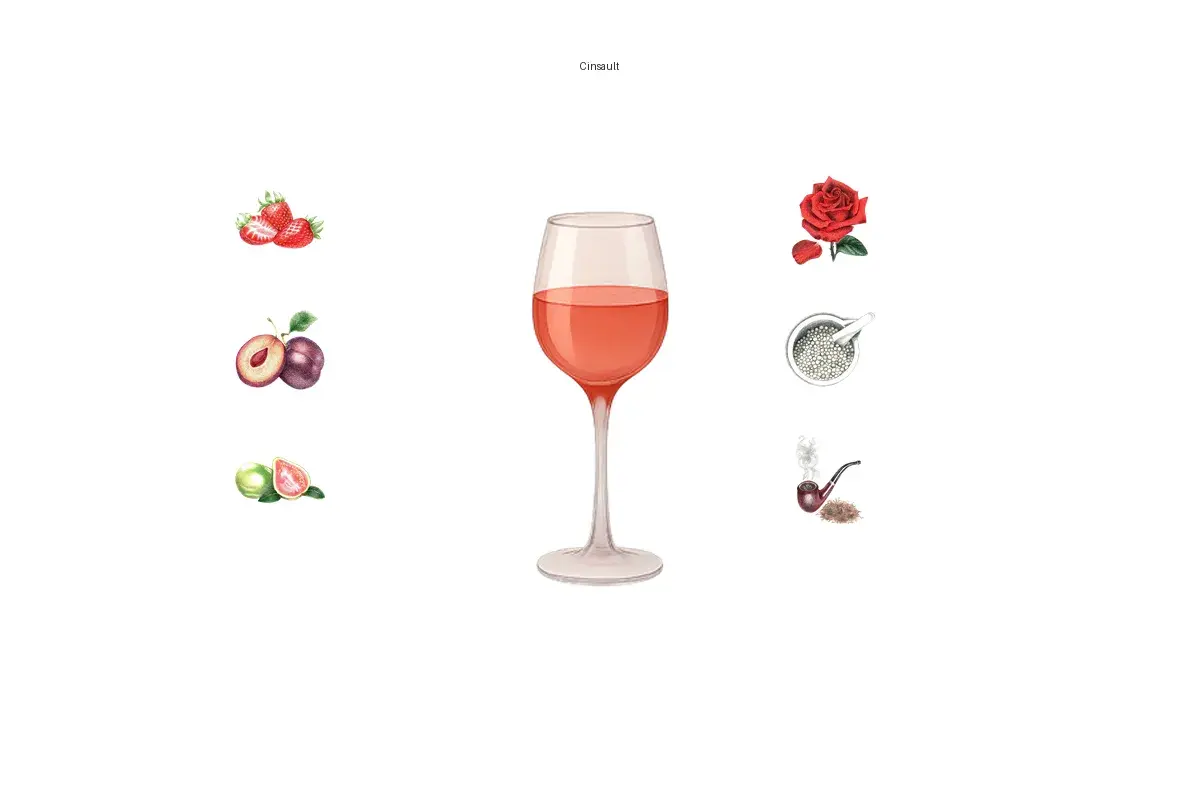
Cinsault is one of those grapes that rewards curiosity. A well-chosen cinsault wine is usually light on its feet, fragrant, and built for the dinner table rather than for sheer power, which is why it can work so well with Mediterranean plates, Basque pintxos, and simple grilled food. In this guide I’m focusing on what the grape tastes like, how to buy it in the UK, and which dishes bring out its best side.
The quickest way to read Cinsault is as a light, aromatic red with real food value
- It comes from southern France, with strong roots in Languedoc and the wider Mediterranean wine map.
- Expect red cherry, strawberry, herbs, spice, and a soft tannic frame rather than heavy oak or dense fruit.
- Most bottles are best served slightly cool, especially if the wine is young or unoaked.
- In the UK, good value usually sits around £7-12; more characterful bottles often land around £15-20.
- It shines with grilled vegetables, seafood, sausage, and Basque dishes that are savoury rather than creamy.
- Varietal bottles are worth chasing, but blends and rosés often show the grape beautifully too.
What Cinsault brings to the glass
I think of Cinsault as a grape that values finesse over muscle. It thrives in warm, dry conditions, which is part of why it became important across southern France and the Mediterranean, but the real appeal is how it keeps red wine feeling bright and drinkable even when the climate is hot.
It is usually written as Cinsault, sometimes as Cinsaut, and it has long been used in blends because it softens firmer grapes without blunting their personality. When yields are controlled, it can also make a genuinely expressive single-variety wine. That shift from workhorse to serious bottle is the main reason this grape deserves more attention.
- Low tannin gives the wine a supple, easy texture.
- Bright fruit keeps the palate lively rather than heavy.
- Heat tolerance makes it useful in warmer vineyards.
- Blend value helps soften firmer grapes without making the wine dull.
The practical takeaway is simple: if you like reds that feel fresh and drinkable rather than dense and brooding, Cinsault belongs on your shortlist. From there, the next question is what it actually tastes like in the glass.
What it tastes like and how it differs from similar grapes
On the nose, I usually find red cherry, strawberry, raspberry, rose petal, cracked pepper, and a little dried herb. The best bottles have a savoury edge that stops the fruit from feeling sugary. Alcohol is often moderate, and the finish is more about clarity than weight.
It helps to compare it with better-known grapes, because that makes the style much easier to place on the shelf.
| Grape | Typical feel | Why it matters |
|---|---|---|
| Cinsault | Light to medium-bodied, floral, red-fruited, low in tannin | Best for freshness, easy drinking, and flexible food pairing |
| Grenache | Riper strawberry and cherry, softer acidity, often a little warmer in style | Usually fuller and richer, with more alcohol and sweetness of fruit |
| Pinot Noir | Fine red fruit, earth, higher perfume, more acidity | More delicate and often pricier, with a tighter, more lifted profile |
| Syrah | Darker fruit, pepper, smoke, firmer structure | More intense and muscular, especially in cooler or oak-driven styles |
| Carignan | Deeper colour, earthy spice, higher acidity and tannin | More rustic and angular, often used to add grip and character |
When I taste Cinsault in a blend, it usually plays the role of softener and freshness-giver. When I taste it on its own, I look for the red fruit and floral lift to stay clear rather than turning jammy. Once you know that profile, the useful part is spotting which bottles are worth paying for.
How I’d choose a bottle in the UK
In the UK market in 2026, I’d treat Cinsault as a category with a surprisingly wide spread. You can find inexpensive supermarket bottles, better-made single-variety wines, and serious old-vine expressions that taste far more focused than the grape’s old reputation suggests. I’d use price as a first filter, then look at origin and producer intent.
| Price bracket | What I’d expect | Best for |
|---|---|---|
| £7-12 | Fresh, simple, easy-drinking bottles; often younger fruit, sometimes from supermarkets | Weeknight drinking, picnics, charcuterie |
| £13-20 | Better concentration, more savoury detail, sometimes old vines or careful single-vineyard work | Dinner with food, buying by the case |
| £20+ | Serious varietal examples, older vines, more nuance, more length | When you want to taste what the grape can really do |
When I scan a label, these are the clues that matter most:
- Languedoc, Provence, and South African regions like Swartland or Breedekloof often deliver the clearest variety character.
- Old vines usually mean lower yields and more concentration. It is not a guarantee, but it is a useful clue.
- Dry-farmed or low-yield bottles often taste more focused than bulk styles.
- If the label says blend, expect a softer, more rounded wine rather than a pure varietal portrait.
If you want the shortest path to a good first purchase, I’d skip the most anonymous own-label bottle and aim for a producer that names the grape clearly. That usually gets you closer to the grape’s personality, which matters even more once food enters the picture.
Why it works with Basque food
This is where Cinsault becomes more than a tasting-note exercise. Basque cooking often lives in that sweet spot between simplicity and precision: grilled seafood, peppers, tomatoes, garlic, char, olive oil, paprika, and dishes that rely on texture rather than heavy sauce. A light red with freshness and mild tannin slots into that style far better than many people expect.
- Pintxos with piquillo peppers or grilled vegetables work because the wine’s fruit lifts the sweetness of the peppers.
- Bacalao dishes, especially versions with tomato or pepper, pair well when the wine is chilled a touch.
- Chorizo or txistorra on a small plate gets enough lift from Cinsault’s acidity without needing a heavyweight red.
- Grilled sardines, tuna, or bonito feel natural with the grape’s savoury edge.
- Mushroom pintxos are a smart match because Cinsault can echo the earthy side of the dish without overwhelming it.
I would avoid pairing it with very rich stews, heavy cream sauces, or strongly smoky barbecue. Those dishes can make the wine seem thin. If the Basque plate is deeper and more braised, move up to a firmer blend; if it is grilled, salty, or peppered, Cinsault is usually right in the pocket. That balance is exactly why the grape is so useful on a restaurant list.
Serving, cellaring, and the mistakes to avoid
My default is to serve it slightly cool, not fridge-cold and not warm. Around 15-16°C is a good starting point for most young bottles, and a few minutes on the counter is enough if the wine has come out of a fridge. If the bottle is a richer, more structured example, let it breathe for 20-30 minutes; with a lighter, youthful version, I usually skip decanting altogether.
These are the missteps I see most often:
- Serving it too warm makes the alcohol feel louder and flattens the fruit.
- Expecting Cabernet weight leads to disappointment; this grape is about nuance.
- Using oversized oak can bury the floral, red-fruited profile.
- Leaving it open too long can drain the freshness from a delicate bottle.
As for storage, most bottles are best enjoyed young, usually within 1-3 years of release. The exception is old-vine or carefully made varietal wine, which can hold longer and sometimes improve for 5-8 years, but I would treat that as a bonus rather than a promise. Once you have the serving side right, the final step is figuring out how to buy and explore it without overthinking the whole category.
The smartest way to start with Cinsault without overspending
If I were building a small tasting set in the UK, I would buy three styles rather than three random bottles: one inexpensive everyday red, one better-made single-variety bottle, and one dry rosé. That gives you a clean read on whether you enjoy the grape’s floral, savoury style in different formats.
From there, the pattern becomes obvious. The blends show how Cinsault softens and freshens other grapes, the varietal reds show its red fruit and herbal lift, and the rosés prove why it is so common in southern France. For me, that versatility is the real story: this is not a loud grape, but it is an intelligent one, and with the right food it can be more satisfying than many bigger, more expensive reds.
When you want a bottle for a Basque meal, choose the lighter, brighter end of the spectrum first. That is where the grape feels most natural, and where it earns a place at the table.
