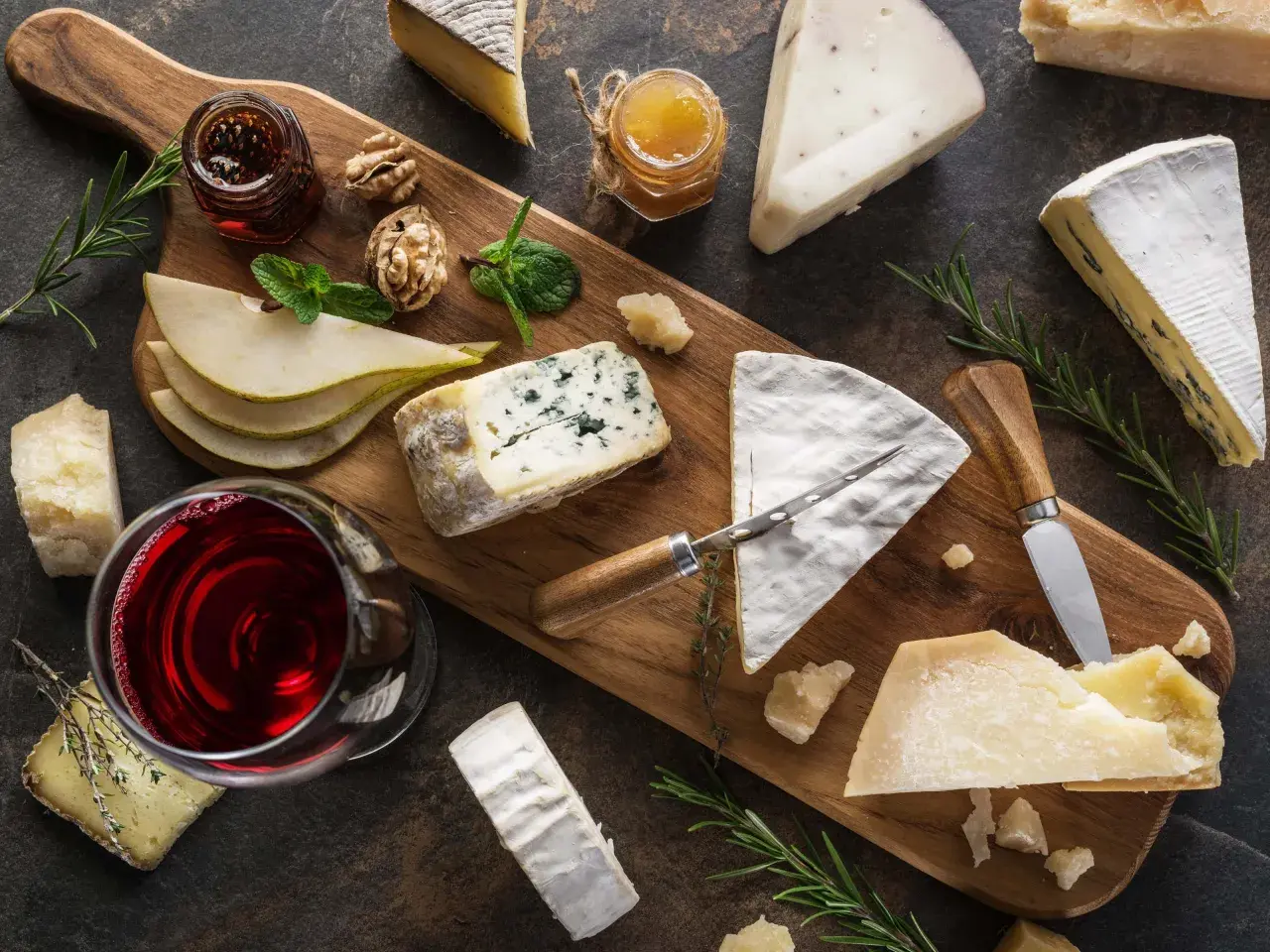
Choosing the right bottle for cheese is less about rules and more about balance. The best wine and cheese pairings are the ones that manage salt, fat, acidity, sweetness, and texture at the same time, so the whole board tastes sharper, cleaner, and more complete. In this guide I focus on combinations I would actually serve, how I build a board for a British table, and where a Basque-style touch with Idiazabal or txakoli makes the spread feel more distinctive.
The fastest way to choose a better match
- Start with the cheese's texture and strength, then choose wine that either refreshes or mirrors it.
- Bubbles and high-acid whites are the safest default for creamy and fresh cheeses.
- Blue cheese usually wants sweetness; firm, nutty cheeses can take more structure.
- For most UK gatherings, 3 or 4 cheeses and 125ml or 175ml pours are enough.
- A little Basque character - Idiazabal, txakoli, and membrillo - adds personality without making the board harder to drink with.
How I choose a match that actually works
When I build a cheese board, I start with the cheese, not the wine. Cheese is usually the heavier element, and its fat, salt, and acidity decide what the wine has to do.
- Match intensity first. A delicate goat cheese disappears next to a huge red, while a mature Cheddar can handle more weight.
- Use contrast when the cheese is rich. Sparkling wine and high-acid whites cut through creaminess better than another soft, broad wine.
- Use sweetness when the cheese is salty or blue. Salt makes sweet wine taste even more generous, which is why blue cheese and Port still works so well.
- Respect tannin. Tannin is the drying grip in red wine, and with a young or acidic cheese it can feel rough rather than elegant.
- Mind temperature. I take cheese out of the fridge 30-45 minutes before serving; cold cheese blunts flavour, and overchilled wine can feel narrow.
If you remember only one thing, make it this: pair texture with texture, then colour with caution. That single habit removes most of the guesswork and makes the rest of the board easier to build.
Classic combinations that always deliver
These are the combinations I reach for when I want a board to work without debate.
| Cheese | Wine style | Why it works | Useful note |
|---|---|---|---|
| Brie or Camembert | Champagne, Cremant, English sparkling | Bubbles cut the cream and keep the finish clean. | Best when the cheese is soft but not runny. |
| Mature Cheddar | Rioja Crianza, Bordeaux blend, Pinot Noir | Savoury depth and firm texture need a wine with enough structure. | Choose fruit over heavy oak. |
| Stilton or other blue | Tawny Port, Sauternes, late-harvest white | Sweetness balances salt and the blue's sharper edge. | This is the most reliable contrast pairing on the table. |
| Goat cheese | Sauvignon Blanc, Sancerre, Albariño | Bright acidity mirrors the cheese's tang instead of flattening it. | Fresh goat cheese wants freshness in the glass. |
| Comte or Gruyere | White Burgundy, Jura Savagnin, dry Chardonnay | Nutty complexity meets layered, slightly oxidative flavours. | Good for diners who want something more serious than Brie. |
| Idiazabal | Txakoli, dry Sherry, young Rioja Blanco | Smoke and sheep's milk richness need lift and freshness. | One of the best ways to give the board a Basque accent. |
If a pairing works on that table, I know it will usually work in a real room with real guests. The next step is getting the board size and serving order right, because that changes the experience more than people expect.
How to build a board for a UK dinner party
For most gatherings, I keep the board smaller than people expect. Three cheeses is enough for a neat after-dinner spread, and four is usually the sweet spot if wine is the main attraction.
- After dinner: plan 75-100g of cheese per person.
- Main event: plan 150-200g per person.
- Wine pours: 125ml is the light UK pour, 175ml is the standard medium pour, and a 750ml bottle gives about 6 small glasses or just over 4 medium ones.
- Composition: one soft cheese, one hard cheese, one blue, and optionally one goat or sheep cheese is enough variety for most tables.
- Accompaniments: choose one sweet item, one savoury pickle, and one plain cracker or bread so the board supports the wine instead of fighting it.
I like to serve the milder wines first and move towards more powerful styles, which keeps the palate from getting tired early. If I am pouring both sparkling and still wine, sparkling goes first because its acidity resets the mouth beautifully. That rhythm also makes the final, richer pairings feel more deliberate.
Why Basque flavours give you a better board
One reason I like Basque cheese boards is that they naturally avoid the generic, oversweet trap. The region gives you clean acidity, smoke, salt, and sheep's milk richness, which are all useful markers when you are choosing wine.
- Txakoli and Idiazabal is the obvious local pairing: the wine's brightness and slight spritz keep the cheese from feeling heavy.
- Smoked Idiazabal likes more lift, so I would stay with crisp whites, dry sherry, or a lighter Rioja rather than a fat, oaky white.
- Fresh Idiazabal can take a little more depth, especially if you add quince paste, toasted almonds, or a few slices of membrillo.
- Rioja Alavesa gives you another useful route, especially for a board that includes mature hard cheeses and a little cured meat alongside the cheese.
This is where a board starts to feel intentional. Instead of piling on random flavours, I lean into a few strong Basque cues and let the wine answer them, which makes the whole spread taste more coherent.
The mistakes that ruin a good pairing
Most pairing failures are not dramatic; they are just slightly out of tune.
- Too much tannin with delicate cheese. A big red can make fresh cheese taste bitter or metallic.
- Too many strong cheeses at once. If every cheese is pungent, the wine has no room to speak.
- Ignoring sweetness for blue cheese. Salt and funk usually need a sweet or off-dry answer.
- Serving everything too cold. Cheese straight from the fridge tastes flatter, and the wines feel less generous beside it.
- Overloading the board with chutney. A little sweet preserve is useful; too much turns the board into jam with no structure.
My practical test is simple: if the wine tastes harsher after the bite, the pairing is too tannic or too lean; if the cheese tastes dull, the wine probably lacks acidity or lift. That quick check saves far more boards than a perfect-looking menu ever will.
The five matches I reach for first
- Champagne and Brie. This is the cleanest way to start a board because the bubbles scrub away richness without making the cheese seem lighter than it is.
- Sancerre and goat cheese. The wine's sharp citrus line mirrors the cheese's tang.
- Rioja Crianza and mature Cheddar. This is one of the safest UK-friendly red pairings because the wine has enough fruit and grip without crushing the cheese.
- Tawny Port and Stilton. It is the classic for a reason: sweetness softens the blue's salt and brings out the nutty edges.
- Txakoli and Idiazabal. I reach for this when I want the board to feel more regional, fresher, and less predictable.
If I had to leave you with one rule, it would be to let the cheese lead and the wine respond. Once you think in terms of salt, fat, acidity, and texture, the board stops being a guessing game and starts feeling like the easiest part of the meal.
