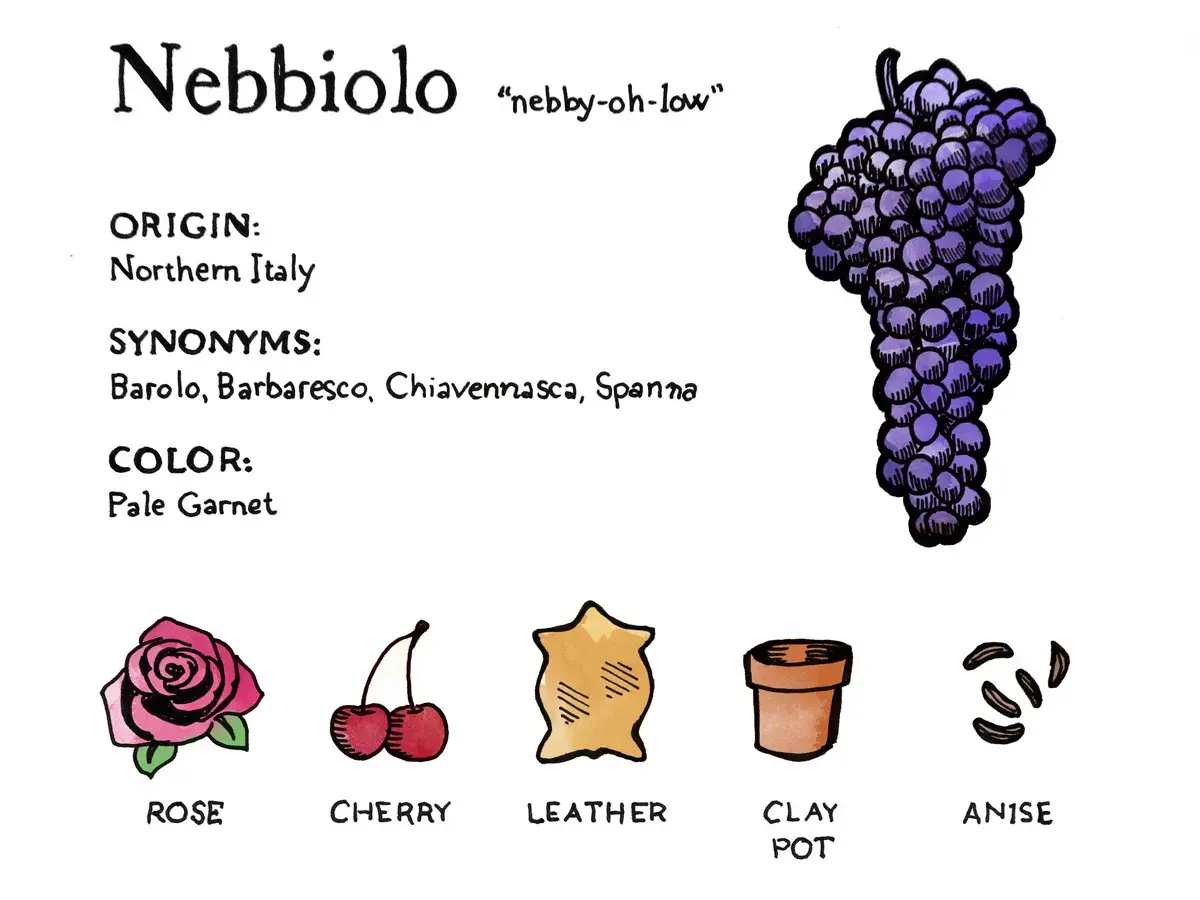
The nebbiolo grape is one of Italy’s most distinctive red varieties: pale in colour, high in acidity, firmly tannic, and capable of producing wines that smell like roses, cherries, herbs, leather, and sometimes tar. In this guide I break down what it tastes like, where it grows best, how I choose a bottle in the UK, and which foods make it shine at the table. If you want a red that is elegant rather than plush, this is the grape to understand.
What matters most before you buy a bottle
- Expect firm tannin and bright acidity; young bottles often feel tighter than their price suggests.
- The flavour profile usually runs to rose, cherry, cranberry, liquorice, tea leaf, and earthy notes.
- Langhe Nebbiolo and Nebbiolo d’Alba are often the smartest entry points for UK buyers.
- Barbaresco tends to feel more lifted and graceful, while Barolo is usually deeper, firmer, and more ageworthy.
- Serve it slightly cool, give it air, and pair it with savoury food rather than delicate dishes.

Why Nebbiolo feels firm before it feels generous
I think the easiest way to understand Nebbiolo is to start with its structure. It ripens late, it has relatively thin skins, and it naturally carries a lot of acidity and tannin, so the first sip can seem stern if you are expecting a soft, fruity red. That is not a fault. It is the reason the wine can age so well and why it often feels more precise than flashy.
In the vineyard, that late-ripening habit matters. Nebbiolo tends to do best in places with long, steady autumns and enough sun to finish ripening without losing freshness. When the season is too cool or wet, the wines can turn angular; when it is balanced, the grape gives you perfume, lift, and a finish that keeps going. The whole experience is built on tension, which is exactly what makes the best bottles memorable.
If you are used to Barbera, Merlot, or even a ripe Cabernet, Nebbiolo can feel less immediate. I would not call it a crowd-pleaser in the lazy sense; I would call it a wine that asks for the right food and a little patience. That leads naturally to the part most people want to know next: what it actually tastes like once the wine opens up.
What I look for in its aroma and flavour profile
When Nebbiolo is showing well, I usually look first for fragrance rather than density. The classic markers are rose, violet, red cherry, cranberry, wild strawberry, and a faint herbal edge. As the wine develops, I often find tea leaf, liquorice, fennel, dried herbs, leather, tobacco, and sometimes truffle or forest floor. The best wines can move from floral to savoury without ever feeling heavy.
One common mistake is assuming every bottle should taste like tar and truffle. Those notes can appear, but they are not the whole story, and they are usually more obvious in mature or highly structured wines. Younger, fresher examples can be surprisingly bright and crunchy, with a lighter colour than many people expect from a serious red. That pale brick-ruby look is normal; it does not mean the wine is weak.
- Young style: rose, cherry, raspberry, pomegranate, tea leaf.
- Mature style: leather, dried mushroom, truffle, cedar, tar, tobacco.
- Textural clue: the tannin often grips the front of the mouth before the fruit fully expands.
- Useful comparison: if Pinot Noir is the reference point, Nebbiolo is usually firmer, more savoury, and more linear.
That balance of perfume and grip changes a lot from one place to another, which is why the region matters so much with this grape.
Where Nebbiolo grows best and what each region changes
Barolo and Barbaresco are the names most drinkers know, but they are not the only expressions worth paying attention to. In Piedmont, the same grape can become muscular, floral, alpine, or almost feather-light depending on soil, altitude, and exposure. I find that the label tells you less about “quality” than it tells you about style.
| Style | What I usually expect | Typical drinking window | Rough UK retail band |
|---|---|---|---|
| Langhe Nebbiolo | Bright cherry, rose, lighter tannin, earlier-drinking fruit | Now to 5 years | £18-£35 |
| Nebbiolo d’Alba | Similar to Langhe, often a touch rounder or fruitier | Now to 6 years | £18-£32 |
| Barbaresco | Floral, polished, precise, with finer tannin | 3-15 years | £35-£80 |
| Barolo | Deeper, more savoury, firmer, built for long ageing | 5-25+ years | £45-£120+ |
| Alto Piemonte or Valtellina Nebbiolo | More alpine, mineral, lifted, and sometimes excellent value | Now to 10 years | £20-£60 |
That spread is the reason I tell people not to think of Nebbiolo as a single style. Barolo has the reputation for power and longevity, but Barbaresco often gives a little more perfume and early clarity. Alto Piemonte can be thrilling if you like a leaner, more mineral line, and it is often where I look when I want the grape’s structure without paying top-tier prices. Once you know that map, buying becomes much easier.
How I would choose a bottle in the UK
In the UK, I would not start by chasing the most famous label. I would start by deciding whether I want immediate drinkability, classic structure, or a bottle to cellar. If I want a weekday bottle with character, I reach for Langhe Nebbiolo or Nebbiolo d’Alba from a producer with a clean track record. If I want the full classical experience, I move up to Barbaresco or Barolo, but only when I am in the mood for something that needs air and a proper meal.
- Choose producer first if you already know the region. Nebbiolo is too sensitive for a weak producer to hide behind the appellation.
- Start lower on the ladder if you are new to the style. A good Langhe Nebbiolo is a much better first step than a young Barolo opened too soon.
- Pay attention to vintage. In warmer, well-balanced years, the fruit is often more welcoming; in cooler years, the wine can feel more austere.
- Use price as a filter, not a verdict. A higher price can mean more complexity, but it does not automatically mean better drinking tonight.
- Look for clarity on the label. Commune, cru, and producer matter more here than flashy packaging.
My practical rule is simple: if I am buying for a dinner this week, I choose value and accessibility; if I am buying for a cellar or a long evening, I choose the classic zones and give the bottle room to breathe. That takes me straight to the question of food, because Nebbiolo is at its best when the plate supports the wine instead of fighting it.
What to serve with it at the table
This is the part where the wine starts to make more sense in a Basque setting. Nebbiolo loves savoury depth, char, and a bit of fat, so it works beautifully with grilled meat, mushrooms, and aged cheese. I especially like it with txuleta, lamb chops, slow-cooked beef cheek, mushroom dishes, and hard cheeses such as Idiazabal. Those foods have the kind of texture and salt that can stand up to the wine’s tannin.
- Best matches: grilled beef, lamb, game, beef cheek, mushroom ragout, truffle dishes, aged cheese.
- Basque-friendly pairings: txuleta, mushroom pintxos, grilled lamb, Idiazabal, slow-cooked red-meat plates.
- Good if the sauce is rich: tomato-based braises, pepper stews, or any dish with smoke and umami.
- Usually too light: delicate seafood pintxos, vinaigrette-heavy salads, and simple fish dishes.
If the menu leans heavily toward seafood, I usually step away from Nebbiolo and choose something with less tannic grip. But when the food has roast flavour, smoke, or earthy depth, this wine can be excellent. It has the rare ability to feel both refined and rugged at the same time, which is why it earns its place on a serious dinner table.
How to serve and age it without flattening the wine
Temperature matters more than people think. I like lighter styles around 14-16°C and fuller bottles closer to 16-18°C. Too warm, and the alcohol can dominate; too cold, and the tannin feels harsher than it really is. For a young bottle, a decanter is usually helpful, even if it is only for 30-60 minutes. For a young Barolo, I often give it 1-3 hours if I want the wine to relax properly.
Ageing is where the grape becomes especially rewarding. Many approachable bottles are best within 2-5 years, but better Barbaresco often improves for 5-15 years, and strong Barolo can go 10-25 years or longer depending on producer, vintage, and storage. I would not cellar every bottle out of principle, though. Some newer, fresher styles are made to be enjoyed earlier, and if you keep those too long, the fruit can fade before the wine has reached its peak.
- Decant young bottles to soften the edge and let the perfume rise.
- Treat older bottles gently; taste first before giving them a long decant.
- Watch the glass; Nebbiolo changes a lot over the course of a meal.
- Do not overchill; this wine needs freshness, not fridge temperature.
I think of Nebbiolo as a wine that rewards small decisions. The right temperature, the right amount of air, and the right plate can turn a stern bottle into something layered and expressive.
The rule I use when a bottle needs patience, not polish
When I recommend Nebbiolo, I start with the drinker rather than the label. If someone wants perfume and freshness, I steer them toward Langhe Nebbiolo or a good Nebbiolo d’Alba. If they want a wine to think about over dinner, I move them toward Barbaresco or Barolo from a producer I trust. That is usually more useful than chasing prestige too early.
If I had to compress the nebbiolo grape into one sentence, I would call it a wine of tension: fragrance on top, structure underneath, and enough acidity to keep both alive at the table. That is why it works so well with grilled, savoury food and why it punishes lazy pairings. Treat it with a little patience, and it gives back far more than simple fruit ever could.
