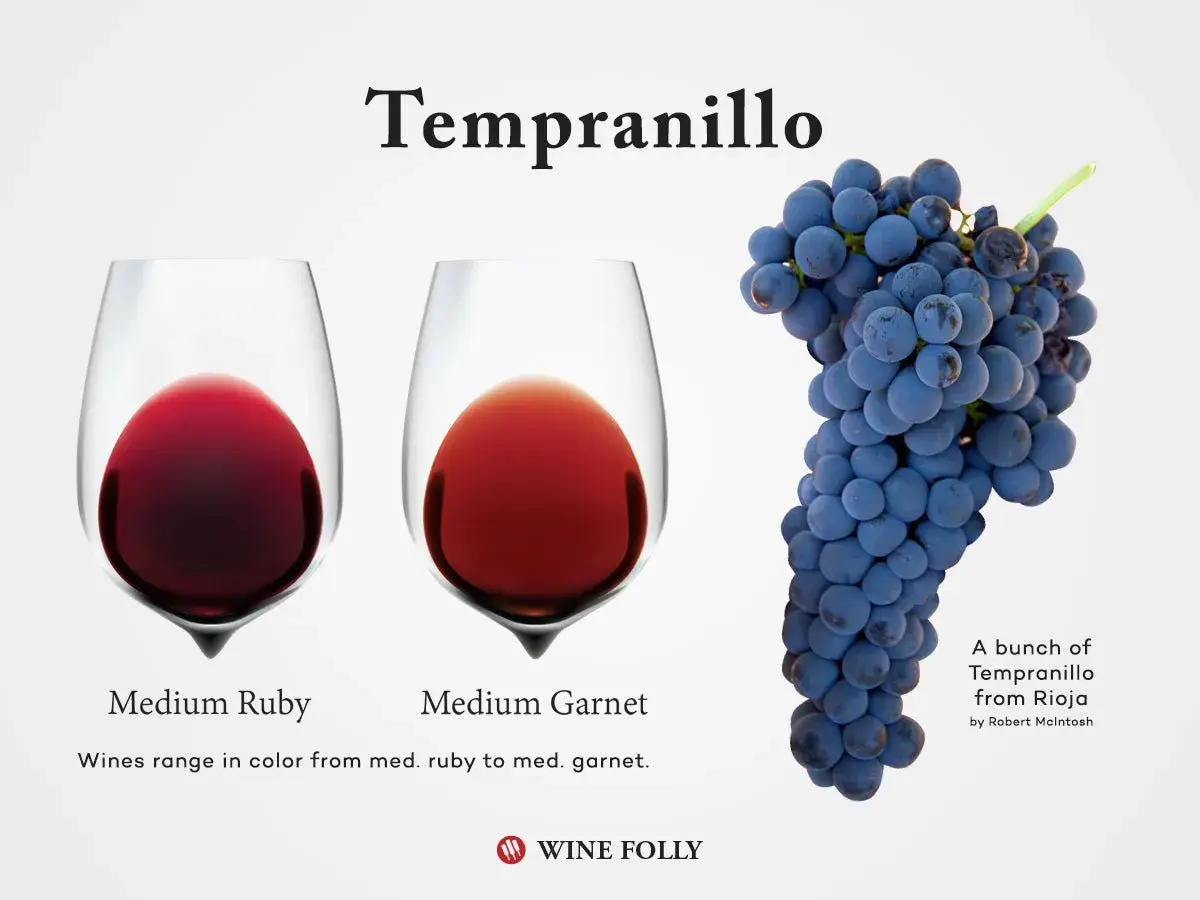
Tempranillo red wine is one of the most useful reds to keep in mind when the food is savoury, smoky, and built around garlic, peppers, mushrooms, or slow-cooked meat. It can be bright and juicy in its youth, then pick up spice, cedar, and leather as oak and bottle age come into play. I’m focusing here on what it tastes like, how to read the label, and which bottles make the most sense with Basque-style cooking in the UK.
The essentials at a glance
- Tempranillo is Spain’s signature red grape and the backbone of many Rioja wines.
- Young bottles are red-fruited and lively; aged versions become smoother, spicier, and more savoury.
- Crianza is the safest all-round food-pairing style; Reserva suits richer meals.
- Most bottles taste best at about 15-17°C, not warm room temperature.
- In the UK, solid everyday bottles often sit around £8-£18, with better reservas and gran reservas costing more.
What makes Tempranillo different from other reds
Tempranillo ripens early, which is why the Spanish nickname often gets translated as “the little early one.” That matters because the grape tends to keep a fresh, food-friendly core even when the wine has enough body to stand up to lamb, sausage, or grilled vegetables. I usually think of it as a red that sits between brightness and depth rather than choosing one side or the other.
In the glass, the best examples usually lean toward cherry, plum, redcurrant, and dried herbs, with firmer versions adding black fruit, spice, tobacco, or cedar. The texture is usually moderate rather than heavy, with enough acidity to keep the wine moving across the palate. That balance is the reason it works so well at the table: it can meet rich food without drowning it out, and it can still feel lively with simpler dishes.
Oak changes the personality quickly. American oak often pushes vanilla and sweeter spice, while French oak feels more restrained and polished. That is why some bottles feel soft and creamy, while others feel more savoury and structured. I reach for Tempranillo when I want a red that can be either immediate or layered, depending on how much ageing the winemaker has given it. Next, the label tells you which version you are actually buying.
How to read the label before you buy
The simplest shortcut is this: in Spain, ageing terms do real work. They tell you whether the wine is meant to taste youthful and fruit-driven or whether it has spent time in barrel and bottle building extra spice, texture, and savoury depth. For a UK shopper, that makes the label more useful than a lot of tasting-note marketing on the front.
| Style | What it usually tastes like | Best with | UK price guide |
|---|---|---|---|
| Joven / young | Bright cherry, plum, light tannin, little oak | Pintxos, roasted peppers, tomato dishes, grilled vegetables | About £8-£12 |
| Crianza | Red fruit, spice, vanilla, more structure | Chorizo, lamb chops, mushrooms, hard cheese | About £10-£18 |
| Reserva | Deeper fruit, cedar, tobacco, smoother tannins | Roast lamb, Idiazabal, game birds, richer stews | About £18-£35 |
| Gran Reserva | Leather, dried fruit, cocoa, polished texture | Slow-cooked meat, long dinners, special occasions | About £30-£70+ |
If you only remember one thing, make it this: Crianza is the most dependable middle ground. It usually has enough fruit to stay friendly, enough oak to feel complete, and enough acidity to work with food. Reserva is the step up when the meal is richer or the evening is slower. That takes us straight to the dishes where Tempranillo shines rather than merely copes.
Which Basque dishes it suits best
Basque cooking gives Tempranillo exactly the kind of company it likes: salt, smoke, good olive oil, garlic, peppers, mushrooms, and meat cooked with confidence rather than fuss. I think that is why the grape feels so natural beside the cuisine rather than simply acceptable. It has the fruit to soften the edges, the acidity to keep the meal moving, and the tannin to handle protein.
- Pintxos with chorizo, mushrooms, or piquillo peppers - A young bottle or light Crianza keeps the meal lively without burying the small plates.
- Chuletillas al sarmiento - Grilled lamb chops deserve a Crianza or Reserva because the wine needs enough grip and spice to meet the char.
- Idiazabal cheese - I prefer Reserva here; the extra savoury depth matches the cheese’s smoky, nutty character.
- Bacalao al pil pil - This works best with a fresher, less-oaked bottle served slightly cooler, so the wine does not overpower the dish.
- Roasted vegetables and peppers - This is where Tempranillo can surprise people, because the wine’s red fruit and moderate tannin add shape without making the plate feel heavy.
When the menu is built around Basque flavours, I avoid extremes. Too much oak can make the wine feel detached from the food, while too much sweetness can flatten the savoury side of the dish. The better question is not “Is this the most famous bottle?” but “Does this bottle fit the meal?” That leads neatly into the buying advice that matters in the UK.
Buying in the UK without overpaying
In British shops, I would start with region and style before I chased grape name alone. Rioja is the easiest entry point because its ageing terms are clear, and it gives you a reliable range from fresh, affordable wines to more developed bottles with real complexity. If you want something a touch firmer and darker, look at regions such as Ribera del Duero or Toro; if you want the most polished food-friendly profile, Rioja is usually the safer bet.
A few practical rules help more than brand loyalty:
- For midweek food, I usually aim around £10-£18 and spend the money on a decent Crianza rather than a flashy label.
- For a dinner with roast lamb or richer cheese, £18-£35 usually gets you a better Reserva with more depth.
- For gifts or cellar-worthy bottles, pay for producer reputation and ageing, not just the words “Gran Reserva” on the front.
- Supermarket own-labels can be excellent value, but specialist merchants are often better for single-estate bottles with more character.
Temperature matters just as much as price. A young bottle can take a slightly cooler pour, while oak-aged wines tend to look better around 16-17°C. If a Tempranillo seems thin, the first thing I check is whether it is too warm or has been opened too long. That brings me to the mistakes that make an otherwise good bottle feel ordinary.
The mistakes that make it taste flatter
Most disappointments with Tempranillo come from handling, not from the grape itself. The wine is forgiving, but it is not magic. If the service is wrong or the pairing is too far off, the bottle loses the very balance that makes it useful.
- Serving it too warm - Alcohol becomes louder, fruit gets blurry, and the finish feels heavier than it should.
- Choosing oak over balance - A wine can sound impressive on paper and still feel clumsy with food if the barrel influence dominates the fruit.
- Pairing it with very delicate dishes - Light fish or minimalist salads usually get lost next to a structured red.
- Assuming all Tempranillo is jammy - Good examples can be savoury, fresh, and quite precise.
- Opening a closed young bottle and expecting instant charm - A structured bottle often benefits from 20-30 minutes of air.
I think the biggest mistake is treating it like a generic supermarket red. The grape has more range than that, and the ageing style changes the whole experience. Once you know what to avoid, choosing the right bottle for the occasion becomes much easier.
A bottle roadmap for a Basque-style table
When I build a Basque-inspired meal, I think in stages rather than in one final pairing. A light start wants freshness, the main course wants structure, and the cheese course wants depth. That simple logic keeps the wine from fighting the food.
- Casual pintxos night - Choose a young bottle or light Crianza.
- Grilled lamb or txuleta - Choose Crianza if the meal is informal, Reserva if it is richer or slower.
- Mushrooms, peppers, and Idiazabal - Choose a Crianza with a touch of oak.
- Long Sunday lunch - Choose Reserva for its extra polish and staying power.
- Gift bottle or special dinner - Choose Gran Reserva only if the occasion can support the extra ageing and cost.
If I were buying a Tempranillo red wine for a Basque dinner tonight, I would usually choose a well-made Crianza unless I knew the menu would be especially rich. That single style covers more ground than most people expect, which is exactly why the grape has stayed so central to Spanish wine culture and to food that values flavour, balance, and a clean finish.
