A good gamay wine sits in a sweet spot that many drinkers miss at first: it can be bright and easygoing, but it can also be precise, structured, and quietly serious. In this article I break down what the grape tastes like, how Beaujolais fits into the picture, which styles are worth buying in the UK, and why it works so well with food, especially dishes with smoke, salt, herbs, and gentle spice.
What matters most before you buy a bottle
- Expect brightness first. Gamay usually brings cherry, raspberry, cranberry, violet, and a clean, juicy finish.
- Beaujolais is the benchmark. The grape is most famous there, but the best cru bottlings can be far more layered than the cheap-image reputation suggests.
- Light chill helps. Most bottles taste best around 13-14°C, while firmer cru wines can sit a little warmer.
- It is one of the easiest reds to pair with food. Charcuterie, roast poultry, mushrooms, grilled fish, and Basque plates all work well.
- UK value is still strong. Simple bottles often land around £9-15, better village wines around £14-25, and cru wines around £18-35.
What Gamay tastes like in the glass
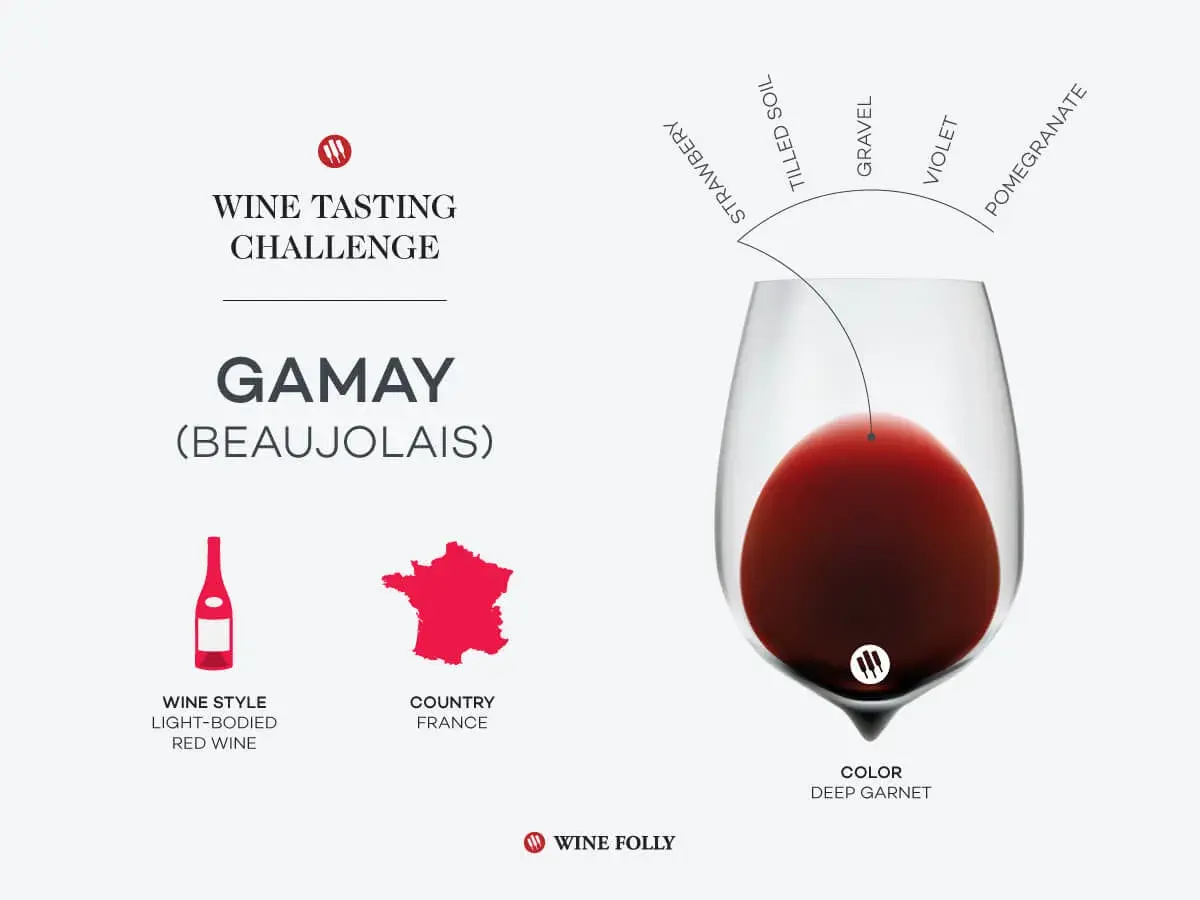
Gamay’s charm is not power; it is clarity. I usually expect red cherry, strawberry, raspberry, and cranberry on the nose, followed by floral notes such as violet or peony, with occasional pepper, earth, or a faint leafy edge in more serious bottles. The body is usually light to medium, the acidity is lively, and the tannin level is low to moderate, which is why the wine feels so drinkable without becoming boring.
One reason the style tastes so distinctive is carbonic maceration, a winemaking method that ferments whole grapes in a low-oxygen environment before crushing them. That process pushes the wine toward fresher fruit, softer tannins, and a lifted, almost crunchy texture rather than a heavy, extracted one. When it is handled well, the result feels vivid rather than simple, which is a big part of Gamay’s appeal.
The best examples do not taste sweet, even when the fruit is generous. They taste bright, dry, and clean, with enough acidity to keep each sip moving. That profile is why the region around Beaujolais matters so much, and it explains why the same grape can feel either cheerful and easy or unexpectedly serious.
Why Beaujolais is the reference point
Beaujolais is where most people learn the grape, and for good reason: the region shows how flexible Gamay can be. The southern and central parts of Beaujolais tend to produce juicier, more immediate wines, while the northern cru villages often give more structure, depth, and ageability. Terroir, which is the local mix of soil, slope, and climate, matters a lot here because granite-heavy sites often sharpen the wine’s shape and mineral edge.
That is why it is a mistake to flatten all Beaujolais into one category. Beaujolais Nouveau is the most famous early-release style, made for immediate drinking and easy fruit. But the ten crus are where the grape becomes more interesting: Saint-Amour, Juliénas, Chénas, Moulin-à-Vent, Fleurie, Chiroubles, Morgon, Régnié, Brouilly, and Côte de Brouilly each tilt the profile in a slightly different direction.
As a quick rule of thumb, Fleurie tends to lean floral and supple, Morgon often feels darker and more serious, and Moulin-à-Vent usually brings the firmer frame. Once you know that, the label stops being confusing and starts being useful. From here, choosing the right bottle becomes much easier.
How to choose the right style in the UK
In the UK in 2026, the sweet spot for value still sits in the middle of the range. I would not judge the grape by the cheapest bottle on the shelf, because Gamay can look far more impressive once you move beyond basic Nouveau into village and cru wine. The table below is the quickest way to map style to use.
| Style | What it usually tastes like | Typical UK price | Best use |
|---|---|---|---|
| Beaujolais Nouveau | Very fresh, light, fruit-forward, and meant for early drinking | £9-15 | Casual drinking, parties, and bottles you plan to open soon |
| Beaujolais or Beaujolais-Villages | Juicy cherry and raspberry, clean acidity, easy texture | £10-20 | Weeknight red, picnic wine, and lightly chilled service |
| Cru Beaujolais | More floral, spicy, mineral, or structured depending on the village | £18-35 | Food pairing, dinner parties, and bottles with real depth |
| Loire Gamay or cooler-climate examples | Slightly more herbal or peppery, sometimes leaner and more savoury | £12-22 | Fans of lighter reds who want a more understated style |
If you are deciding between two bottles, I would usually choose the one with the clearer village or producer identity rather than the cheapest option. That is where you start seeing whether the wine is simply fruity or actually well made. Once you know what to look for, the real payoff comes at the table.

What to serve it with from weeknight meals to Basque plates
This is where Gamay earns its place on a serious wine list. The wine’s acidity keeps it lively, while the low tannin means it does not fight with salt, fat, or smoke the way bigger reds often do. That makes it especially useful for food that has flavour but not overwhelming weight.
Here is how I would pair it in practice:
- Charcuterie and pâté because the salt and fat soften the wine’s acidity and bring out the red fruit.
- Roast chicken or turkey because the wine has enough freshness to stay interesting without overpowering the meat.
- Grilled tuna, salmon, or sardines because the fruit and acidity stand up well to smoke and sear.
- Mushrooms and lentils because the savoury notes echo the wine’s earthy side.
- Basque dishes such as pintxos, piperade, txistorra, and grilled peppers because the wine handles tomato, pepper, and gentle spice beautifully.
- Young sheep’s cheese such as Ossau-Iraty because the creaminess and salt keep the wine feeling fresh.
That pairing range is also why Gamay is such an easy bottle to place on a restaurant list: it can handle a mixed table without demanding special treatment. The next question is how to serve it so the freshness stays intact.
How to serve and store it so the wine stays lively
Temperature changes Gamay more than many drinkers expect. For most Beaujolais and lighter Gamay reds, I aim for about 13-14°C, which is cool enough to sharpen the fruit without making the wine taste narrow. The firmer crus can sit a little warmer, around 15-17°C, because they need space for the structure to open up.
In practical terms, that means a short time in the fridge rather than a full chill. If the bottle is sitting at room temperature, 15 to 20 minutes is usually enough for a lighter style. If it is already cool, I often just pour it and let the glass do the rest. I would also avoid over-decanting fragile, fruit-driven bottles; a young cru may benefit from 20 to 30 minutes of air, but the simplest wines can lose charm if you leave them open too long.
Storage follows the same logic. Basic Beaujolais is usually best within 1-3 years of release, while cru wines can often age for 3-10 years, and the best structured examples can go longer. The mistake I see most often is treating every bottle as if it were meant for immediate casual drinking. That is true for Nouveau, but not for the better crus.
Once you know how to serve it, the grape becomes much easier to enjoy consistently, which is why I always recommend starting with one bottle that shows balance rather than novelty.
The bottle I’d open first to understand the grape
If I wanted one bottle to explain Gamay properly, I would start with a well-made Beaujolais-Villages or a mid-range cru such as Fleurie or Morgon. Beaujolais-Villages usually gives you the grape in its most readable form: bright fruit, clean acidity, and enough shape to keep the wine from feeling one-dimensional. Fleurie is a good choice if you want something floral and supple, while Morgon is better if you want darker fruit and a more serious middle palate.
That is also where the grape makes the most sense for everyday drinking in the UK. It is still affordable enough to buy without much hesitation, but good enough to reward attention, especially if you are serving food. For me, that is the real strength of Gamay: it does not need special treatment, but it gets better when you give it the right table.
When I want a bottle that feels relaxed but not careless, I reach for Gamay before many heavier reds. It has enough personality to stand on its own, enough freshness to stay food-friendly, and enough range to move from a casual pintxos plate to a more thoughtful dinner without changing character.
