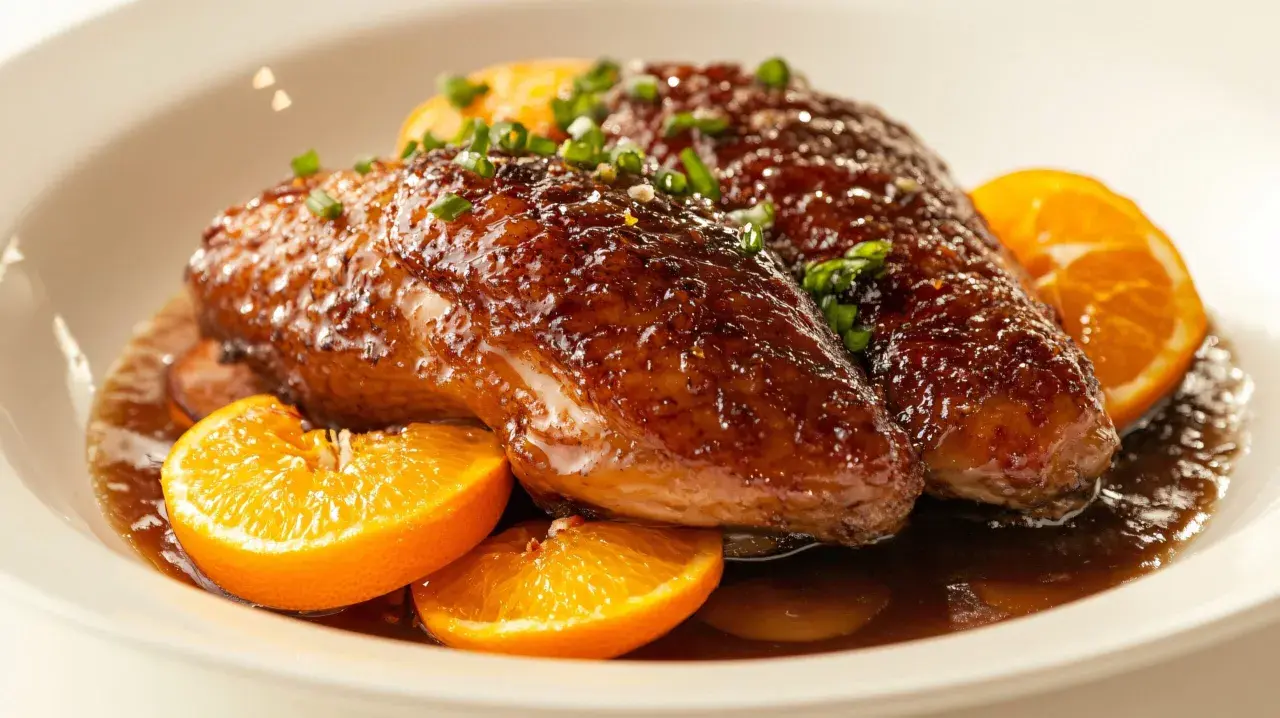
Duck with orange sauce works because it gets three things right at once: richness, acidity, and a touch of bitterness. When the duck is properly crisp and the citrus sauce is kept sharp rather than sugary, the result feels luxurious without becoming heavy. In this article, I break down what the dish should taste like, which cut is best at home, how to build the sauce, and how to serve it without overcomplicating the plate.
What to know before you cook this classic dish
- The best versions balance duck fat with a sauce that is bright, bitter-sweet, and clean.
- Duck breasts are faster and easier; a whole duck is more traditional and better for a dinner party.
- Seville oranges are ideal when available, but sweet orange plus a little lemon or vinegar can work well.
- The sauce should reduce to a glossy consistency, not turn into syrup.
- Simple sides, especially potatoes and bitter greens, keep the flavours focused.
What this dish should taste like
I think the biggest mistake people make is assuming this is meant to be a sweet orange glaze over duck. It is not. The old-school version relies on a sauce with enough acidity and bitterness to cut through the meat, which is why bitter oranges, Seville oranges, or a careful combination of orange juice and vinegar make more sense than a dessert-style sauce.
The duck itself should bring savoury depth, crisp skin, and enough fat to carry the plate. The sauce should lift it, not drown it. If I taste a version and the orange dominates every bite, I know the balance is off. The fruit should read as bright and aromatic, with just enough sweetness to round the edges.
That balance is the real reason the dish still matters: when it works, it feels precise, not dated. And that precision starts with choosing the right cut.

Which cut I would use at home
For a home kitchen, I usually decide between a whole duck and duck breasts based on timing and the kind of meal I want to serve. A whole duck is the more formal option. It gives you deeper flavour, more rendered fat, and a proper centrepiece for a Sunday lunch or a small holiday table. Duck breasts, on the other hand, are easier to control and far less stressful for a weeknight or a two-course dinner.
| Cut | Best for | Typical weight | Approximate cooking time | What it gives you |
|---|---|---|---|---|
| Whole duck | Special occasions, carving at the table | 2.0-2.7 kg | About 1 hour 45 minutes to 2 hours 15 minutes, plus resting | Classic presentation, richer flavour, more rendered fat |
| Duck breasts | Smaller dinner, faster service | 300-350 g each | About 12-15 minutes total, plus resting | Crisp skin, clean slices, easier timing |
If I want the dish to feel elegant but not fussy, I choose breasts and keep the sauce tight. If I want ceremony, I roast the bird whole and serve it with restrained side dishes. Either route works, but the sauce has to be handled properly, otherwise the whole thing turns clumsy.
Once you have chosen the cut, the next decision is the one that actually defines the plate: how to build the orange sauce so it tastes balanced rather than sugary.
How I build the sauce so it stays bright
A good orange sauce needs structure. I usually start with fresh orange juice, a little stock, a sharp note from vinegar, and some zest for aroma. From there, I reduce it until it lightly coats a spoon, then finish with butter for gloss. The whole point is to make the sauce taste layered, not one-dimensional.
- Use about 250 ml fresh orange juice, ideally from good-quality oranges rather than boxed juice.
- Add 150-200 ml duck stock or light chicken stock for savoury depth.
- Balance the sweetness with 1-2 tbsp white wine vinegar, sherry vinegar, or lemon juice.
- Include the zest of 1 orange, but only the orange part, never the white pith.
- Reduce the mixture by roughly one-third until it becomes glossy and slightly syrupy.
- Whisk in 1 tbsp cold butter off the heat just before serving.
If Seville oranges are available, I use them because they give the sauce a sharper, more traditional edge. When they are not, I imitate that bitterness by using sweet orange plus a little extra acid. A teaspoon of sugar can help if the fruit is too tart, but I add it cautiously. Too many recipes go wrong here by chasing sweetness instead of tension.
For the strongest flavour, I also keep the sauce separate from the duck until the last minute. That way the skin stays crisp, the sauce stays vivid, and the whole dish lands with more contrast. The same principle applies to the mistakes I see most often in home cooking.
The mistakes that flatten the flavour
Most weak versions fail for the same few reasons, and they are avoidable.
- The sauce is too sweet. If it tastes like marmalade, it has gone too far. Duck needs acidity and a slight bitter edge.
- The skin is not rendered enough. With duck breasts, I score the skin lightly and start in a cold pan so the fat melts out gradually.
- The meat is overcooked. Duck breast is best when still pink in the centre; if it is grey all the way through, the texture gets dry quickly.
- The sauce is reduced too aggressively. Once it crosses into sticky territory, it stops tasting refined.
- The plate is overbuilt. If you add sweet sides, fruit garnish, and a heavy starch, the dish loses its clarity.
In practical terms, I rest duck breasts for 8-10 minutes before slicing, and a whole duck for at least 15 minutes after roasting. That pause matters more than people think. It keeps the juices where they belong and gives you a cleaner finish on the plate. From there, the question becomes what to serve alongside it without crowding the flavour.
What to serve with it on a British table
I keep the accompaniments simple. Duck and orange already bring a lot of personality, so the best sides are the ones that support the dish without competing with it. On a British table, roast potatoes are the obvious comfort option, but I often prefer something a little lighter and more bitter to echo the sauce.
| Side | Why it works | My note |
|---|---|---|
| Roast potatoes | They absorb sauce well and add crunch | Best for a Sunday-style meal |
| Celeriac purée | Earthy and understated | Good when you want a finer restaurant feel |
| Wilted cavolo nero or spinach | Brings bitterness and freshness | My favourite way to stop the dish becoming too rich |
| Braised chicory or endive | Echoes the sharpness in the sauce | Particularly good if the sauce leans sweet |
| Simple green salad with sherry vinaigrette | Clears the palate | Useful if the duck is part of a larger menu |
For drinks, I usually reach for something with enough acidity to stand beside the sauce: a dry or off-dry Riesling, a white Burgundy with moderate oak, or a light Pinot Noir if you want red. If I were building a menu with a more Basque or southwest-European feel, I would keep the sides rustic and let the duck remain the star rather than chasing elaborate garnishes.
That restraint is what keeps the dish from feeling heavy. Once the plate is simplified, the final question is not whether the recipe is impressive enough. It is whether it still feels worth making now.
Why this dish still earns a place at the table
I would not make this every week, and I do not think it should be treated as casual food. That is part of its appeal. It is a dish for when you want the meal to feel deliberate, but not stiff. A well-cooked duck with orange sauce has enough old-world character to feel special, yet it still rewards a calm, modern approach: crisp the skin, keep the sauce bright, and do not overload the plate.
If you want the easiest route, cook duck breasts and make a compact sauce from orange juice, stock, vinegar, zest, and butter. If you want the more ceremonial version, roast the whole bird and serve it with potatoes and bitter greens. Either way, the formula is the same: rich meat, sharp citrus, and enough control to keep both sides in balance.
That is what makes this classic French dish worth revisiting in 2026. It is not about nostalgia alone. It is about getting a simple contrast exactly right, and serving it while the skin is still crisp and the sauce still sings.
